


Categorization:Product Information
With the development of electronic devices towards high speed, miniaturization, and high integration, camera modules, industrial vision equipment, laptops, and embedded systems have raised increasingly higher requirements for internal high-speed signal connections. The extremely thin coaxial cable assembly, with its small size, flexible wiring, good shielding performance, and stable signal transmission, has become an important interconnection scheme for many electronic products. However, during project development and bulk procurement, the cost of the cable assembly component is often a key concern for enterprises. When the existing cable quotation is high, simply replacing it with low-cost cables or reducing the AWG specification does not necessarily achieve real cost reduction. If the adjusted scheme fails to meet the signal integrity requirements, it may even increase the costs of redesign, testing, and product modification. Therefore, a reasonable way to reduce costs should be to re-evaluate the overall design configuration of the cable assembly component based on the clear actual transmission requirements.
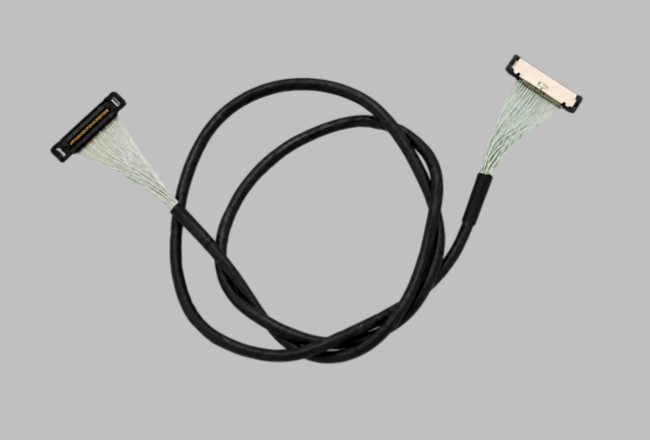
Reduce the cost of internal wiring bundles by first understanding the actual transmission performance required by the product. For high-speed digital signal applications such as MIPI, LVDS, and eDP, it is necessary to evaluate key indicators such as impedance consistency, insertion loss, return loss, crosstalk, and signal delay by combining interface type, signal rate, channel number, cable length, and working environment. Different applications have different requirements for these parameters, for example, longer cables usually require more attention to signal attenuation, while multi-channel dense wiring needs to focus on crosstalk and inter-channel delay differences. If the existing design uses performance configurations beyond the actual needs, further optimization opportunities can be found. By analyzing the performance margin of the entire signal chain rather than simply pursuing the highest transmission rate of the cable, unnecessary performance costs can be avoided.
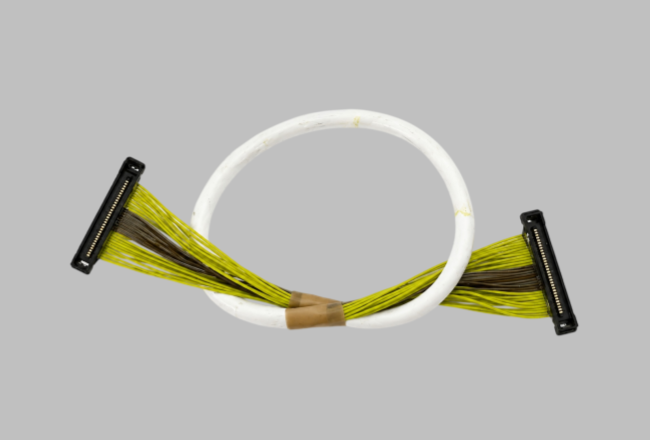
After defining the performance requirements, optimization can be initiated from the cable and connector configurations. Firstly, different AWG specifications of extremely fine coaxial cables have differences in conductor size, outer diameter, flexibility, electrical performance, and processing difficulty. It is advisable to assess whether there are other applicable specifications based on actual transmission needs. Secondly, the brand, series, PIN count, spacing, installation height, and cable exit direction of the connectors also affect the overall cost of the cable assembly. For some projects, it can be evaluated whether there are compatible alternative models that meet the mechanical interface and electrical performance requirements. Additionally, it is necessary to re-examine whether the shielding structure, grounding distribution, cable length, and arrangement are reasonable. However, it should be noted that reducing shielding or changing the impedance structure arbitrarily for cost reduction is not allowed, nor is it permissible to replace directly based on the similar appearance of connectors. All adjustments should ensure that electrical performance, mechanical fit, and termination processes meet the actual requirements.
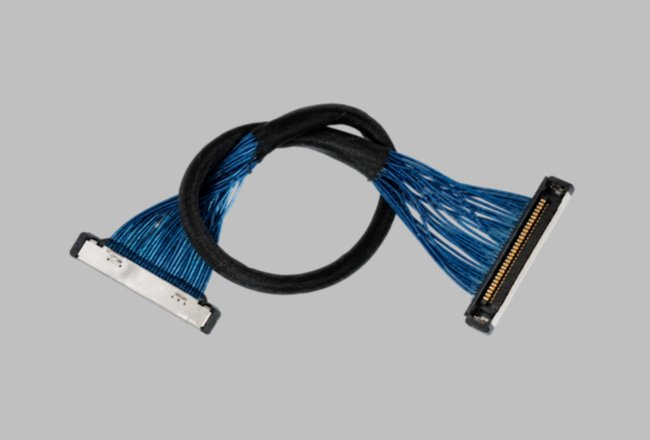
In addition to materials and structures, the wiring harness processing technology is also a crucial link in cost reduction. Extremely fine coaxial harnesses have characteristics such as small wire diameter, compact connector spacing, and high terminal precision requirements. The processes of stripping, welding, crimping, shielding treatment, and assembly will all affect the final cost. By optimizing the harness length, cable exit direction, cable arrangement, and processing procedures, material waste and production time can be reduced, and batch production efficiency can be improved. At the same time, the reduced-cost harness scheme must undergo necessary performance verification. Network analyzers, TDR, and other equipment can be used to check insertion loss, return loss, and impedance continuity according to application requirements, and signal quality can be evaluated by combining eye diagrams, error rates, and actual equipment operating conditions. For applications that require frequent bending, mechanical reliability and service life should also be considered. Only after sample testing and actual application verification can the optimized scheme be confirmed to truly meet product requirements.
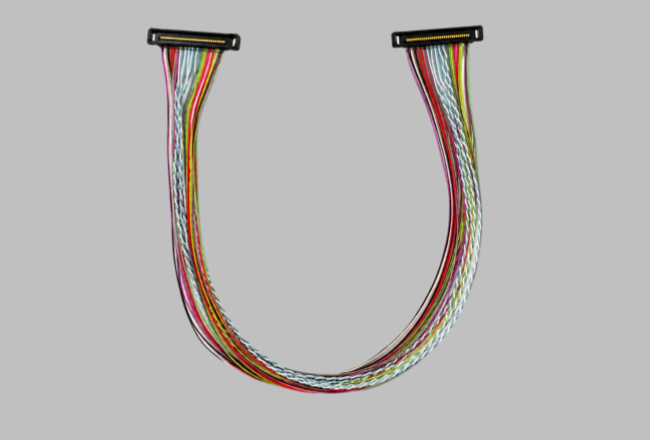
As a fine coaxial cable assembly component manufacturer and solution provider, we not only provide cable assembly processing services but also focus on the performance and cost optimization of customers' entire internal high-speed connection solutions. For projects with high cable assembly costs, we can assist in evaluating AWG specifications, PIN numbers, cable length, shielding structures, and processing technologies based on the connector models, cable assembly drawings, transmission requirements, and installation space provided by the customer. We offer customized development, sample production, and compatible alternative solutions. For projects using I-PEX and other brand connectors, we can also evaluate compatible alternative cable assembly solutions in combination with specific product material numbers and application requirements. By optimizing the overall process from cables, connectors to processing technologies, we help customers reduce unnecessary material and manufacturing costs while ensuring the quality of high-speed signal transmission and product reliability.
“Without the consent or authorization of this site, no one shall reproduce, reprint, distribute, cite, change, broadcast or publish the content in whole or in part in any form, nor shall there be any other violation of the copyright of this site.