


Categorization:Product Information
With the development of electronic devices towards high-speed, miniaturized, and high-integration, camera modules, industrial vision equipment, laptops, and embedded systems have increasingly higher requirements for internal high-speed signal connections. The extremely thin coaxial cable bundles, with their small size, flexible wiring, and good shielding performance, have become an important internal interconnection solution for many electronic products. However, in actual projects, when the cost of cable procurement is high, some enterprises often first consider replacing with low-priced cables or reducing the AWG specifications. In fact, this approach is not necessarily reasonable. Reducing the cost of high-speed cable bundles should first look at the actual transmission requirements of the product, and then evaluate whether there is room for optimization of cable specifications. Because only by clearly defining what kind of electrical performance the system requires, can one determine which configurations must be retained and which can be adjusted.
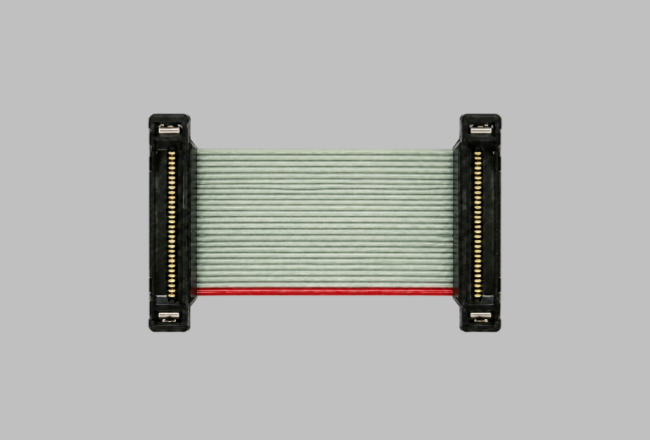
Analyze the transmission requirements and clarify the performance indicators that the harness must meet.
For extremely thin coaxial cable bundles, transmission requirements are the basis for selection. Engineers need to first clarify the interface type, signal rate, channel count, cable length, and actual working environment, and evaluate performance requirements in conjunction with the entire signal chain. Especially for high-speed digital signal applications such as MIPI, LVDS, and eDP, it is necessary to pay close attention to indicators such as impedance consistency, insertion loss, return loss, crosstalk, and signal delay. For example, an increase in cable length may lead to greater signal attenuation, and dense multi-channel wiring requires attention to crosstalk between channels and timing differences. If the system itself has sufficient link margin, one can further evaluate whether there is a more cost-effective cable configuration. However, it cannot be determined solely based on the interface rated speed or the highest transmission rate claimed by the cable, but should be verified in combination with actual working conditions.
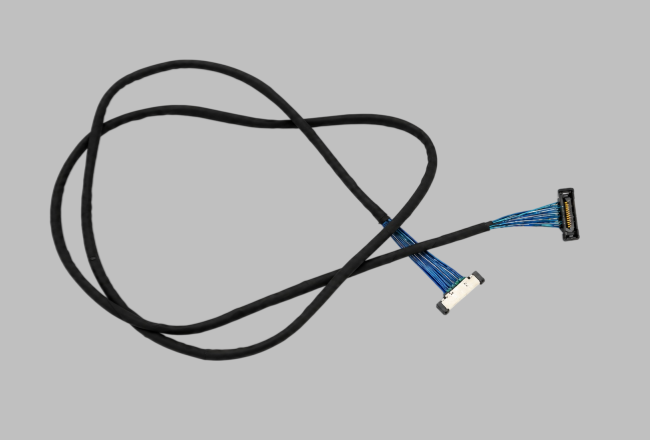
Define performance boundaries before assessing cable specifications and structure
When the transmission requirements are clearly defined, it is appropriate to reassess cable specifications. Different AWG specifications of extremely thin coaxial cables differ in conductor size, outer diameter, flexibility, electrical performance, and processing difficulty. Some projects may have used cables with higher specifications, but the actual application does not require all the performance margin. In such cases, it is advisable to compare other AWG specifications through testing. At the same time, it is also necessary to evaluate whether the cable length, insulation material, shielding structure, and cable arrangement are reasonable. However, cable specifications cannot be adjusted in isolation; they must also consider the connector's termination capability, installation space, and bending radius. For example, reducing cable specifications may reduce material costs, but it may also lead to impedance changes, increased losses, or reduced mechanical reliability, which could actually increase the cost of subsequent testing and maintenance. Therefore, cable optimization must be based on a match between electrical performance and mechanical structure.
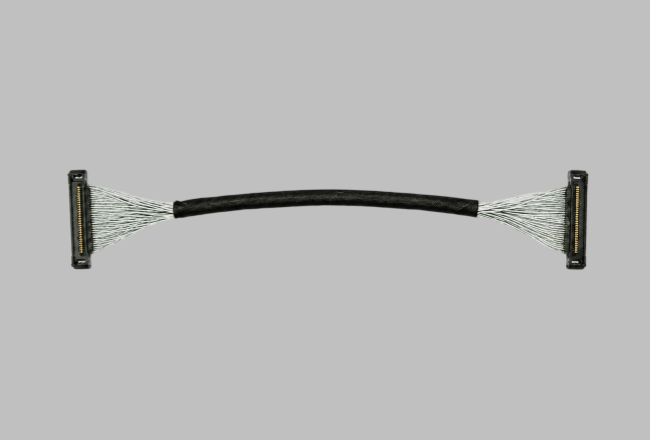
Seek more cost reduction opportunities from connectors, processing technology, and testing stages
The cost of high-speed harnesses does not come solely from the cable material; connectors, termination processes, and production testing also affect the final price. For extremely thin coaxial harnesses, it is advisable to recheck whether the connector brand, series, PIN count, spacing, installation height, and wire exit direction meet the actual requirements, and to assess whether there are compatible alternative solutions that meet the interface requirements. Additionally, reasonably optimizing harness length, cable arrangement, and processing structure can also help reduce material waste and production labor hours. In the verification phase, insertion loss, return loss, and impedance continuity can be evaluated using network analyzers, TDR, and other means, and transmission quality can be judged by combining eye diagrams, error rates, and actual equipment operation conditions. For multi-channel high-speed connections, attention should also be paid to the time delay matching between channels. Only through comprehensive optimization of materials, structure, process, and testing can real cost reduction be achieved, rather than simply lowering cable specifications.
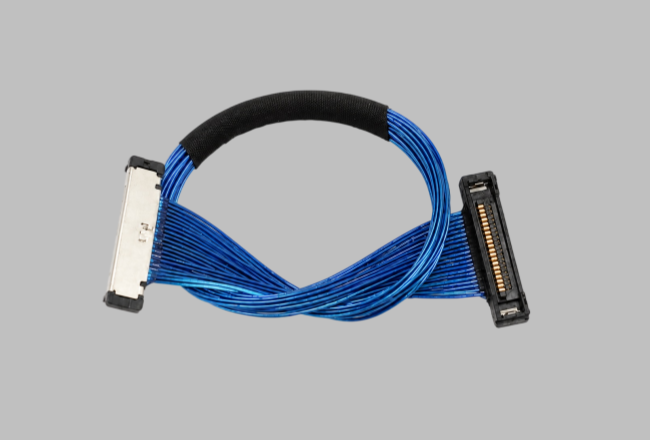
Professional harness solution evaluation, ensuring cost reduction is based on performance satisfaction
As a producer and solution provider for ultra-fine coaxial cable assemblies, we suggest that customers prioritize providing actual transmission requirements and product structure information when aiming to reduce the cost of high-speed cable assembly. We can assist in analyzing AWG specifications, connector configurations, pin numbers, shielding structures, and manufacturing processes based on the customer's interface model, transmission rate, cable length, installation space, and product drawings. We provide customized development, sample production, and compatibility and substitution solutions. For projects using brand-name connectors such as I-PEX, we can also evaluate compatibility and substitution cable assembly solutions based on specific material numbers and application requirements. By optimizing the entire ultra-fine coaxial cable assembly starting from transmission requirements, we help customers reduce unnecessary performance investments. At the same time, we ensure high-speed signal integrity and product reliability while controlling procurement and manufacturing costs.
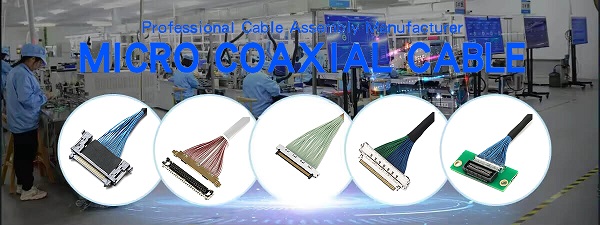
The cost reduction of high-speed cables should first clarify the transmission requirements, then evaluate the cable specifications, rather than directly starting from reducing material costs. For extremely thin coaxial cable bundles, rational cost reduction requires comprehensive consideration of signal rate, cable length, impedance, loss, connector configuration, and processing technology. Only by clearly defining performance boundaries and verifying the optimization effect through actual tests can a truly economic solution suitable for the product be found, achieving a balance between high-speed signal transmission and cost control.
“Without the consent or authorization of this site, no one shall reproduce, reprint, distribute, cite, change, broadcast or publish the content in whole or in part in any form, nor shall there be any other violation of the copyright of this site.