


Categorization:Product Information
Under the development trend of high-speed and miniaturization of electronic devices, camera modules, industrial vision equipment, laptops, and embedded systems have put forward increasingly higher requirements for internal high-speed signal connections. Ultra-fine coaxial cable bundles, with their small size, good shielding performance, and stable signal transmission, have become an important internal interconnection solution for many electronic products. However, in the actual procurement and project development process, a situation often occurs: two cable bundle solutions seem to meet the product's transmission requirements, but the final quotes have a significant gap. This difference does not come entirely from the brand or supplier, but may also be related to cable materials, AWG specifications, connector models, shielding structures, termination processes, and production difficulties. Therefore, when evaluating cable costs, one should not only compare the product unit price but also understand the cost composition behind different design configurations.
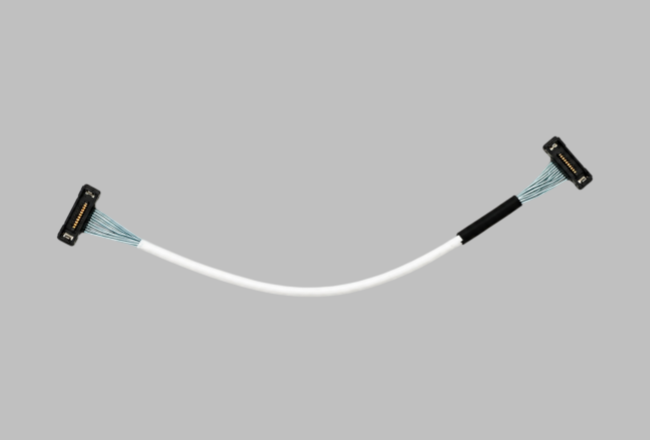
The cost of extremely fine coaxial cable bundles is first affected by the cable itself. Different AWG specifications, conductor materials, insulation media, shielding structures, and outer sheath materials can affect the cable's electrical performance, mechanical properties, and procurement price. For example, cables of different specifications vary in terms of insertion loss, flexibility, outer diameter, and processing adaptability; some low-loss materials or special shielding structures may also lead to higher material costs. However, not all applications require the highest grade of cable. For high-speed digital signal connections such as MIPI, LVDS, eDP, the evaluation should be based on actual transmission speed, cable length, impedance requirements, insertion loss, and crosstalk. If an economy-grade cable can already meet the system link budget, there is no need to blindly pursue higher specifications. However, the cable outer diameter must still comply with connector spacing and termination structure requirements, and specifications should not be arbitrarily changed solely to reduce costs.
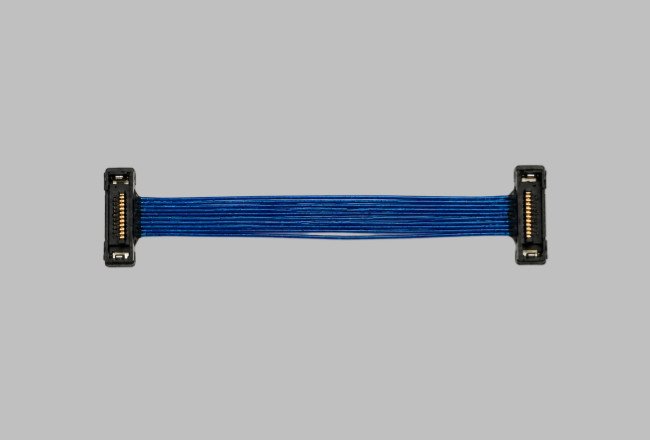
Connectors are another important cost component in ultra-fine coaxial cable assemblies. Connectors from different brands and series have differences in design structure, terminal materials, shielding methods, locking mechanisms, installation heights, and transmission performance. For example, different CABLINE® series products under the I-PEX brand have their own characteristics in terms of connector spacing, applicable cable types, PIN count, and structural design, and cannot be considered interchangeable solely based on their similar appearance. In addition, the PIN count of the connectors, the cable arrangement, and the signal and ground distribution will also affect the overall material cost and processing complexity. For some projects, it is possible to re-evaluate whether there are other connector configurations that can meet the same interface requirements, or to optimize the cable structure through reasonable channel design. However, any alternative solution must confirm the mechanical fit, electrical performance, termination compatibility, and actual installation conditions to ensure that it will not affect the normal operation of the product.
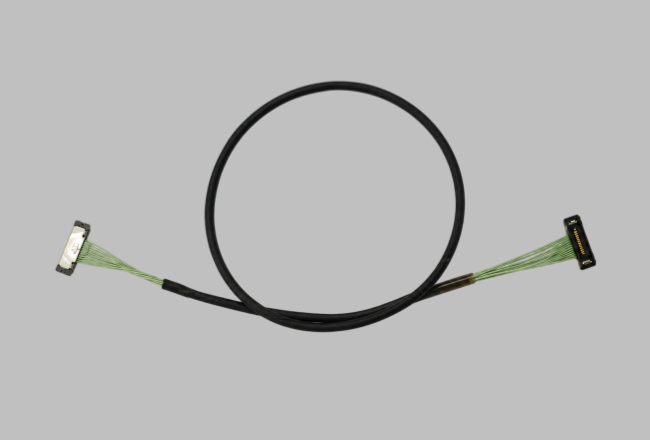
In addition to materials and connectors, the processing cost of extremely thin coaxial cable bundles should not be overlooked. Due to the small cable diameter and compact connector spacing, processes such as stripping, welding, crimping, shielding treatment, and assembly usually require high process control capabilities. Different cable bundle structures may correspond to different processing difficulties, and special wiring directions, complex cable arrangements, and strict size tolerances may also increase production time and quality control costs. At the same time, high-speed cable bundles cannot be judged as qualified solely by the conductance test; their performance must also be evaluated according to application requirements, including impedance continuity, insertion loss, return loss, and crosstalk, among other indicators. For mass production projects, reasonably unifying cable lengths, processing structures, and material specifications may also improve production efficiency and reduce material waste. Therefore, when comparing different cable bundle solutions, comprehensive consideration should be given to materials, processing, testing, yield, and the stability of subsequent supply, rather than focusing solely on the initial quotation.
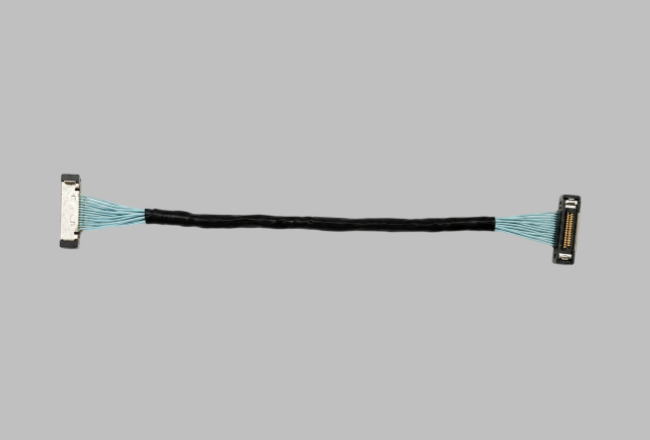
Different cable solutions that meet the same application requirements often have cost gaps due to differences in design configuration and manufacturing methods. As a manufacturer and solution provider of ultra-fine coaxial cable assemblies, we can assist in evaluating cable AWG specifications, connector models, pin counts, cable length, shielding structures, and processing technologies based on the product interfaces, cable drawings, transmission rates, installation space, and actual application requirements provided by customers. We offer customized development, sample production, and compatible alternative solutions. For projects using I-PEX and other brand connectors, we can also evaluate compatible alternative cables based on specific material numbers to help customers find more cost-effective and reasonable internal high-speed connection solutions. Through overall optimization from design, materials to processing, we can reduce unnecessary cost inputs while ensuring signal integrity and product reliability.
“Without the consent or authorization of this site, no one shall reproduce, reprint, distribute, cite, change, broadcast or publish the content in whole or in part in any form, nor shall there be any other violation of the copyright of this site.