


Categorization:Product Information
With the development of electronic devices towards high speed, miniaturization, and high integration, camera modules, industrial vision equipment, laptops, and various embedded products have put forward increasingly higher requirements for internal high-speed signal connections. The extremely thin coaxial cable bundles, with their small size, good shielding performance, and stable signal transmission, have become an important connection solution for many compact electronic devices. However, in actual projects, some products, in order to reserve performance margin, often directly adopt high specification cables, high-performance connectors, and complex shielding structures, leading to the overall high cost of the cable assembly components. In fact, high specification does not necessarily equal the most suitable. If the existing configuration exceeds the actual product requirements, it is necessary to re-evaluate some of the designs, and find a more economical cable solution while ensuring the quality of signal transmission and reliability of use.
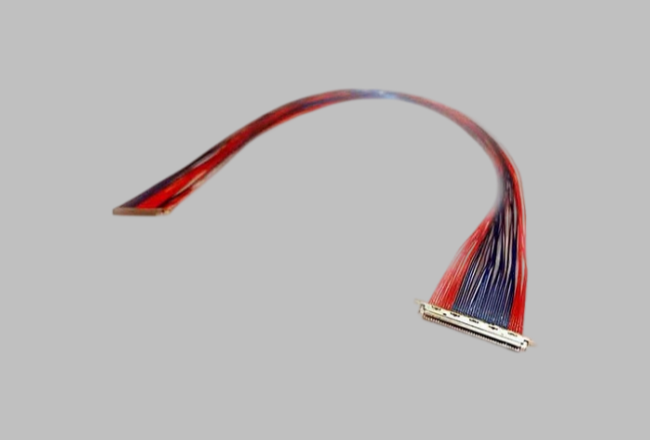
The cable specification is one of the important factors affecting the cost of extremely thin coaxial cable assemblies. Cables with different AWG specifications vary in conductor size, outer diameter, flexibility, processing difficulty, and electrical characteristics. When selecting, it cannot be simply assumed that a thicker conductor and higher performance are always more suitable for the product. Instead, a comprehensive judgment should be made based on indicators such as signal transmission speed, cable length, impedance requirements, insertion loss, and crosstalk. For example, for applications with shorter cable lengths and sufficient link loss budget, it is possible to evaluate whether there are other cable specifications that meet the requirements without necessarily pursuing the highest performance level. At the same time, it should also be considered whether the cable outer diameter matches the connector termination capability, as well as the actual installation space and bending requirements, to avoid increasing material and processing costs due to unreasonable specification selection.
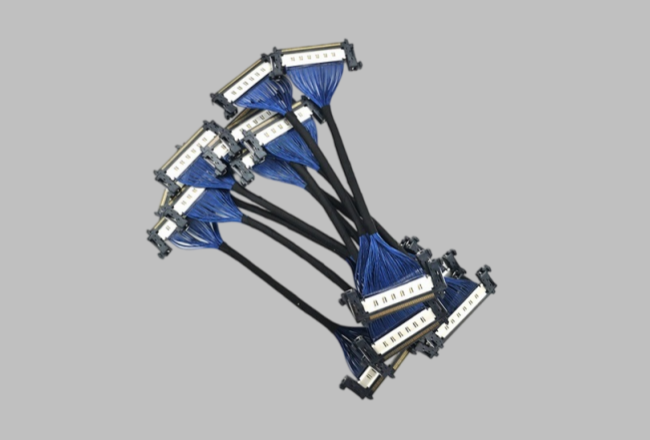
In addition to the cable itself, the connector model and shielding design are also parts that can be re-evaluated. For ultra-thin coaxial cable projects using connectors from brands such as I-PEX, the existing connector series, PIN count, spacing, installation height, and cable exit direction can be checked for other applicable configurations based on actual interface requirements. Some projects can also re-evaluate the allocation of signal and ground PINs, as well as whether the shielding structure meets the actual EMI requirements, to avoid over-configuration. However, connector replacement must confirm compatibility with mechanical fitting, electrical performance, and termination process, and cannot be replaced solely based on similar appearance. For high-speed digital signal connections, impedance continuity, grounding return path, and shielding integrity are all very important, and any structural adjustment must undergo corresponding verification.
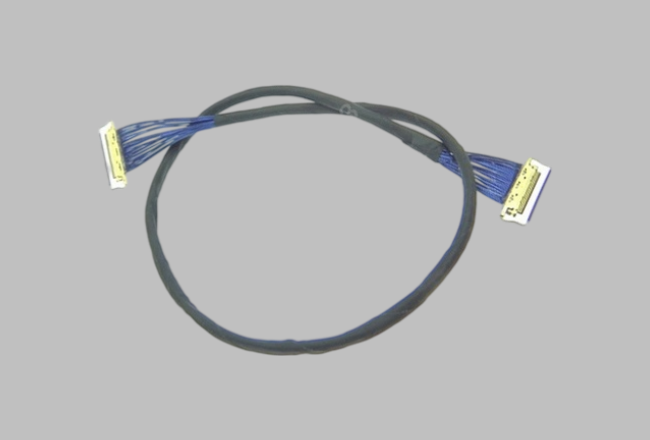
Cable length, wiring method, and processing technology all affect the final cost. Under the premise of meeting the product structure layout, it is possible to re-examine the cable routing path to reduce unnecessary length and material waste, while avoiding additional losses and space occupation caused by excessively long cables. For multi-channel cables, it is also possible to evaluate whether the channel arrangement, cable combination, and termination method are reasonable to improve processing efficiency and production consistency. In addition, special termination processes, complex shielding treatments, and overly high manufacturing precision requirements should also be re-evaluated in combination with actual applications. It should be emphasized that economy-oriented cables do not mean lowering necessary quality standards, but rather reducing unnecessary manufacturing costs through structural optimization and process improvement. Ultimately, the optimized scheme must still be confirmed to meet design requirements through insertion loss, return loss, crosstalk, impedance, and actual equipment operation tests.
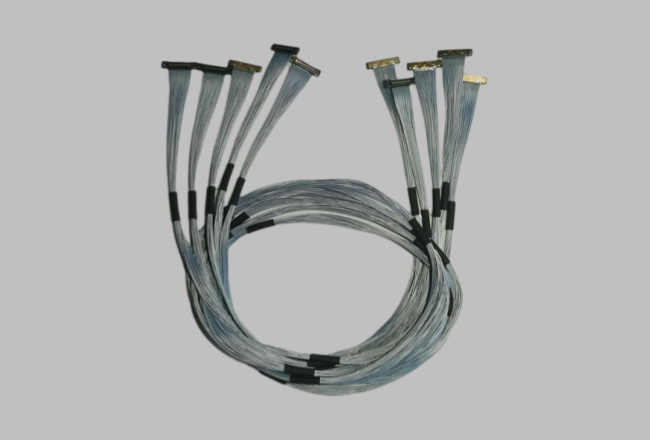
Shifting from high-specification harnesses to economy harnesses is not simply a matter of replacing low-cost materials, but requires an overall assessment of various aspects such as cables, connectors, shielding structures, harness length, and processing technology. As a manufacturer and solution provider of ultra-thin coaxial cable assemblies, we can assist in evaluating different AWG specifications, connector combinations, and harness structures based on the interface models, product drawings, transmission requirements, and installation space provided by customers. We offer customized development, compatible alternatives, and sample verification services. For projects using I-PEX and other brand connectors, we can also evaluate compatible alternative harness solutions in combination with specific material numbers and application conditions. By reasonably adjusting the design configuration, we help customers reduce unnecessary performance investments while meeting the requirements for high-speed signal transmission, mechanical installation, and reliability, achieving a more cost-effective internal high-speed connection solution.
“Without the consent or authorization of this site, no one shall reproduce, reprint, distribute, cite, change, broadcast or publish the content in whole or in part in any form, nor shall there be any other violation of the copyright of this site.