


Categorization:Product Information
With the development of electronic devices towards high speed, miniaturization, and high integration, camera modules, industrial vision equipment, laptops, and embedded systems have higher requirements for internal high-speed signal connections, and ultra-thin coaxial cables have also gradually become an important internal interconnection solution. In the process of product development, to ensure stable signal transmission, engineers tend to choose cable configurations with higher transmission speeds, lower losses, and stronger shielding capabilities. However, high-performance configurations usually come with higher material costs, connector costs, and processing costs. More importantly, some projects may reserve too much specification for performance that is not needed in actual applications, leading to a continuous increase in cable procurement costs. Therefore, in the selection of high-speed cables, in addition to focusing on performance indicators, attention should also be paid to those easily overlooked hidden costs.
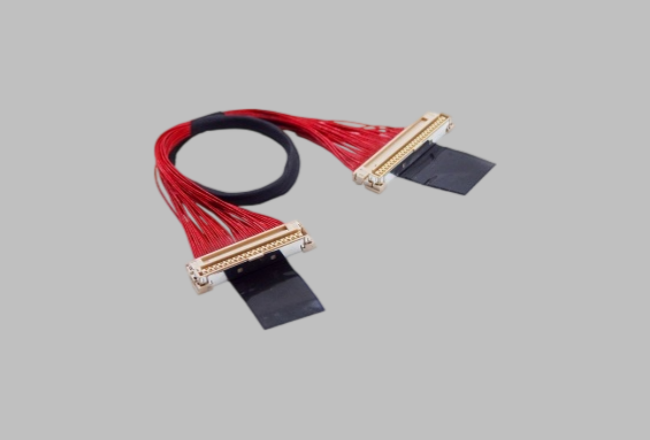
For extremely thin coaxial cable bundles, the transmission performance mainly involves characteristics such as characteristic impedance, insertion loss, return loss, crosstalk, and signal delay. Different cable structures, AWG specifications, and shielding methods can have varying effects on these parameters. For example, lower insertion loss is beneficial for improving long-distance or high-frequency signal transmission, but if the actual cable bundle length is short and the system itself has sufficient link margin, continuing to pursue lower loss cables may not bring significant system benefits. Similarly, an excessively high shielding configuration may not be suitable for all application scenarios. For high-speed digital signal connections such as MIPI, LVDS, and eDP, evaluation should be based on actual transmission rates, channel numbers, cable bundle length, and system signal integrity requirements, rather than simply selecting products based on the highest supported rate.
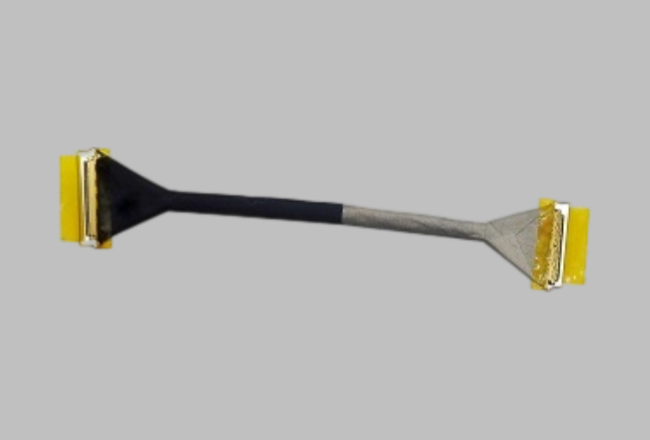
The overall cost of high-speed harnesses is not solely dependent on the cable material price, but also includes multiple aspects such as connectors, termination processing, shielding treatment, production yield, and post-maintenance. For example, choosing special specifications of ultra-thin coaxial cables may increase the pressure on material procurement and supply cycle; using specific high-performance connectors may raise the overall procurement cost; complex termination structures and processing requirements may also increase production hours and the difficulty of quality control. Moreover, if the harness specifications do not match the actual product structure, issues such as insufficient wiring space, difficulty in bending, and reduced installation efficiency may arise. Therefore, engineers should consider the complete harness components when selecting, taking into account factors such as cable AWG, connector model, PIN count, spacing, harness length, output direction, and processing technology, to avoid focusing solely on single electrical parameters and ignoring the overall cost.
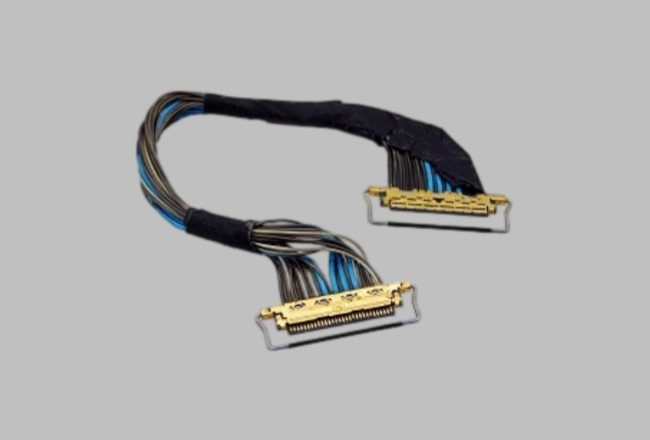
Reduce hidden costs does not mean simply lowering cable specifications, but rather determining which performance is necessary and which configurations have optimization space through testing. At the design stage, signal loss generated by PCB routing, connectors, and extremely thin coaxial cables can be evaluated based on the system link budget, and then different cable specifications and connector combinations can be compared. In the sample verification stage, network analyzers, TDR, and other testing means can be used to evaluate insertion loss, return loss, and impedance continuity, and combined with eye diagrams, bit error rates, and actual equipment operation to judge transmission stability. At the same time, for products that need to be bent frequently or are in complex environments, mechanical reliability and temperature adaptability should also be considered. By actual testing rather than solely relying on specification parameters, unnecessary performance redundancy can be reduced while meeting signal transmission requirements.
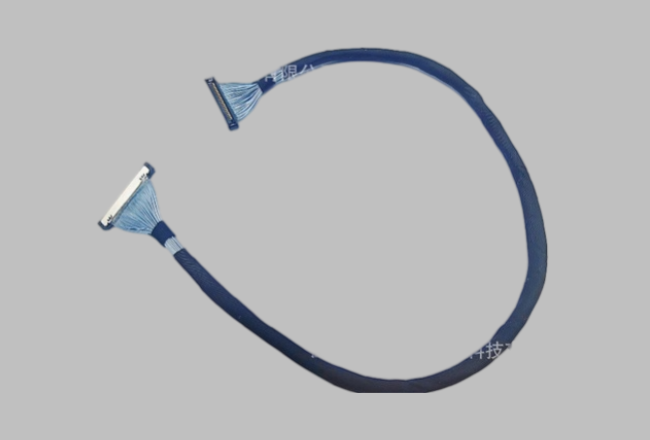
As a high-quality coaxial cable assembly manufacturer and solution provider, we believe that the cost reduction of high-speed cable assembly should not be limited to finding cheaper cables, but should be evaluated from the entire internal connection scheme. For customers' existing high-speed cable assembly projects, we can assist in evaluating appropriate cable specifications, connector combinations, pin counts, lengths, and processing techniques based on interface models, transmission requirements, cable drawings, and internal product space. We provide customized development and sample verification services. For projects using brand connectors such as I-PEX, we can also evaluate compatible alternative cable assembly solutions in conjunction with specific models and application requirements. By optimizing cable specifications, matching connectors, and adjusting processing techniques, we help customers reduce unnecessary performance investments. While ensuring the quality of high-speed signal transmission and product reliability, we achieve more reasonable procurement and manufacturing costs.
“Without the consent or authorization of this site, no one shall reproduce, reprint, distribute, cite, change, broadcast or publish the content in whole or in part in any form, nor shall there be any other violation of the copyright of this site.