


Categorization:Product Information
With the continuous increase in the transmission speed of electronic devices, camera modules, industrial vision equipment, laptops, and various embedded products have higher requirements for internal high-speed signal connections, and extremely thin coaxial cable bundles have also gradually become an important interconnection choice. During the product development process, in order to ensure stable signal transmission, some projects directly adopt higher specification cables, more complex shielding structures, or higher-performance connectors. However, high specification configurations often mean higher material costs, processing costs, and procurement costs. In fact, the higher the specification is not always better for internal high-speed connections. If the existing solution can already meet the system's transmission requirements, continuing to increase the cable specification may not bring significant benefits. Therefore, when the cable cost exceeds expectations, re-evaluating the internal connection scheme may be a worthy cost-reduction direction to consider.
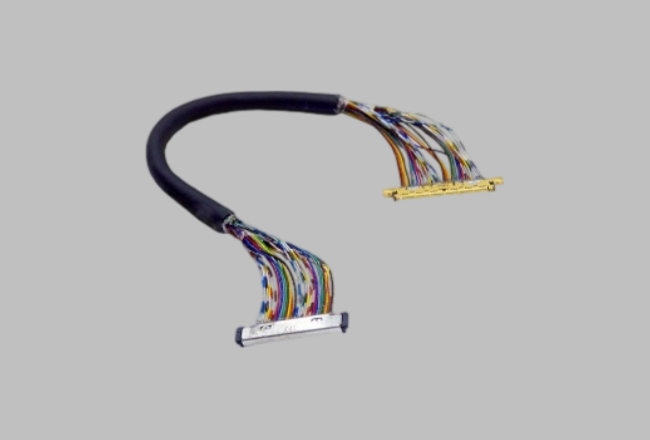
Optimize the internal connection scheme first by clarifying the true electrical performance required by the system. For MIPI, LVDS, eDP, and other high-speed digital signal applications, it is necessary to assess insertion loss, return loss, impedance consistency, crosstalk, and signal delay, etc., by combining transmission rate, number of signal channels, cable length, and system link budget. For example, not all high-speed signal connections need to use cables with the lowest loss level, and not all applications need to configure the highest level of shielding structure. Engineers can compare different AWG specifications, cable structures, and materials under the premise of meeting signal integrity requirements and determine a reasonable configuration through sample testing. This can avoid unnecessary performance redundancy and reduce the cost pressure from high-grade materials.
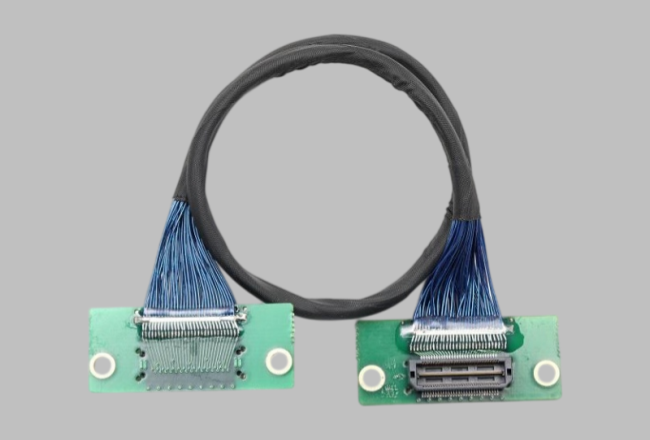
The cost of high-grade harnesses not only comes from the cables themselves but is also closely related to connectors, termination processes, shielding treatments, and production complexity. For extremely thin coaxial harnesses, the brand, series, PIN count, spacing, installation height, and matching cable specifications of the connectors all affect the overall cost. In some projects, it is possible to re-evaluate whether there are other connector series that can meet the same interface requirements and also optimize harness length, cable exit direction, and routing paths in line with the actual wiring space to reduce unnecessary material consumption. At the same time, the consistency of harness processing, the reliability of termination, and the efficiency of mass production should also be considered. It is important to note that it is not advisable to arbitrarily reduce shielding, change impedance structure, or replace connectors to lower costs, as this may introduce signal reflections, crosstalk, and connection reliability issues. Truly effective cost reduction should be based on the verification of both electrical performance and mechanical structure.
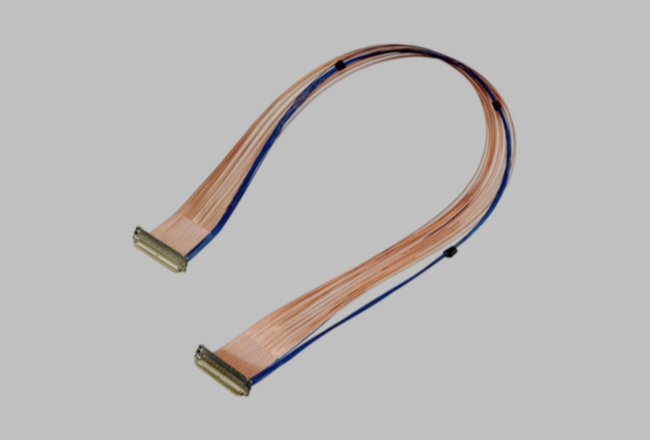
Re-evaluate the internal connection schemes; it is not enough to compare the unit price of different cables; it is also necessary to consider the comprehensive cost of the entire system. It is recommended to establish a signal chain budget at the design stage, comprehensively evaluate the losses of PCB routing, connectors, extremely thin coaxial cables, and terminal interfaces, and then conduct sample comparisons for different cable harness configurations. By using network analyzers, TDRs, and other testing means, impedance continuity, insertion loss, and return loss can be evaluated; combining with actual equipment, eye diagrams, bit error rates, and long-term operation tests can further determine whether the scheme meets the application requirements. In addition, for products that require frequent bending or are in complex working environments, the bend life, connection stability, and temperature adaptability of the cable harness should also be verified. Only after complete verification can it be determined whether a certain cost-reduced configuration is truly suitable for mass production, rather than simply replacing the original high-specification products with low-cost cables.
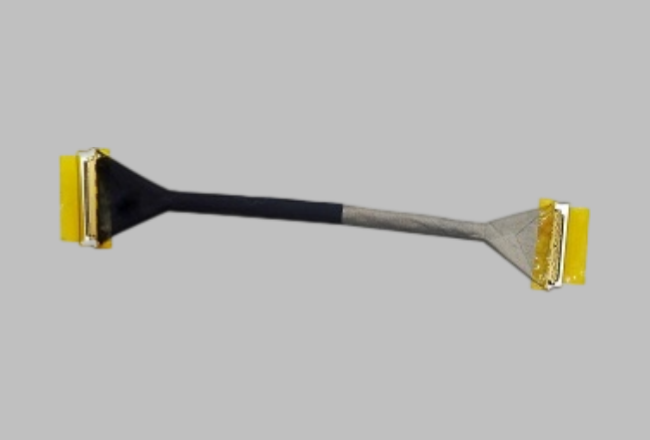
As a manufacturer and solution provider of ultra-fine coaxial cable assembly components, we not only focus on the specifications of the cable itself but also pay attention to connector matching, cable assembly structure design, and actual application requirements. For customers' existing high-speed connection solutions, we can assist in evaluating different AWG cable, connector combinations, and processing methods based on product interfaces, cable drawings, transmission requirements, and installation space. We provide customized cable assembly development and sample verification services. For projects using I-PEX and other branded connectors, we can also evaluate compatible alternative cable assembly solutions based on specific models and application requirements, helping customers find more cost-effective choices that meet performance requirements. Through overall optimization from cables, connectors to processing technology, we make internal high-speed connection solutions no longer solely pursue high specifications but instead better align with actual product needs.
“Without the consent or authorization of this site, no one shall reproduce, reprint, distribute, cite, change, broadcast or publish the content in whole or in part in any form, nor shall there be any other violation of the copyright of this site.