


Categorization:Product Information
With the development of electronic devices towards high-speed, miniaturization, and high integration, camera modules, display devices, industrial vision systems, and embedded devices have higher requirements for internal high-speed signal transmission. In actual design, Twinax (double-axis) and extremely fine coaxial cables (Micro-Coaxial) are common high-speed interconnection solutions. Both can be used for high-speed signal transmission in compact spaces, but there are significant differences in internal structure, signal transmission methods, and application characteristics. Some engineers, when selecting cables, tend to regard them as directly interchangeable cable types. In fact, they each have different electrical characteristics and structural advantages and require comprehensive evaluation based on interface types, signal transmission methods, impedance requirements, and internal space of the device.
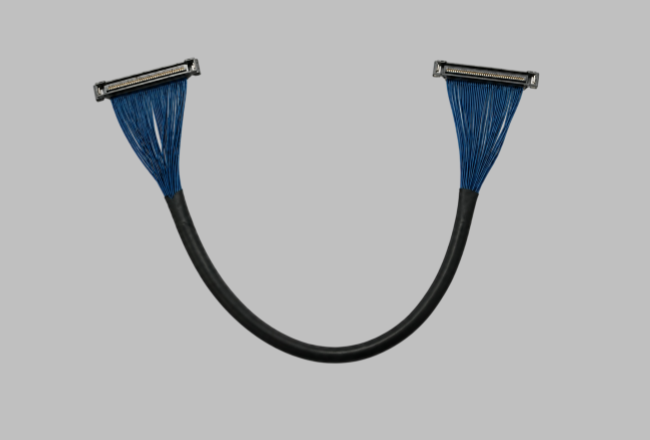
Twinaxial cables are typically composed of a central conductor, insulating medium, outer metal shielding layer, and an outer sheath. The central conductor is responsible for transmitting signals, while the outer shielding layer provides electromagnetic shielding and also serves as a return path for signals. This structure has good resistance to electromagnetic interference and can support the independent transmission of multi-channel high-speed signals, making it suitable for high-density wiring environments. Twinax cables use two central conductors, which are isolated from each other by insulating material, and are further enclosed by an insulating medium, metal shielding layer, and sheath. The two central conductors are usually used to transmit a set of differential signals, reducing the impact of common-mode noise through differential signaling. Simply put, thin coaxial cables typically use a single central conductor for each signal channel, while Twinax cables usually use two central conductors to form a differential signal channel. The different structures determine the differences in connector termination methods and PCB pin assignments.
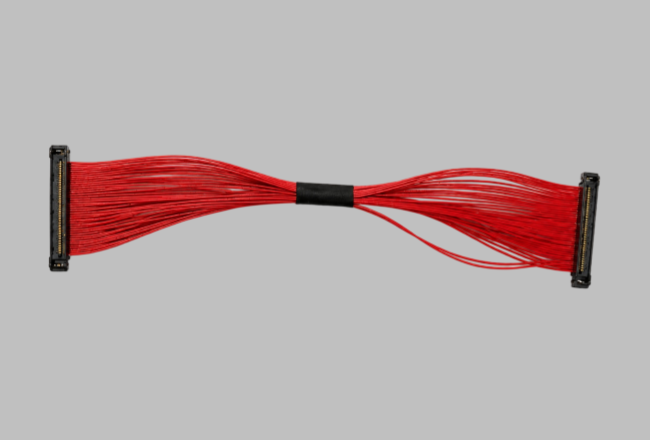
In terms of electrical performance, extremely fine coaxial cables and Twinax require the selection of the corresponding impedance based on different signal transmission architectures. The common characteristic impedances of extremely fine coaxial cables include 45Ω and 50Ω, and there are also cables designed for specific differential applications; Twinax commonly has differential impedance specifications of 85Ω, 90Ω, and 100Ω. The two conductors of Twinax have a relatively fixed geometric relationship, making it suitable for high-speed digital signal transmission with high requirements for differential impedance, signal delay matching, and skew. Extremely fine coaxial cables can be composed of multiple independent cables to form multi-channel signal connections, and they can also utilize the outer shielding structure to reduce electromagnetic interference between channels. It should be noted that the actual transmission effect not only depends on the cable type but is also closely related to AWG specifications, cable length, connector termination, PCB layout, and grounding design. Therefore, it cannot be simply assumed that Twinax is always better in performance than extremely fine coaxial cables, or that a certain type of cable can be suitable for all high-speed signal applications.
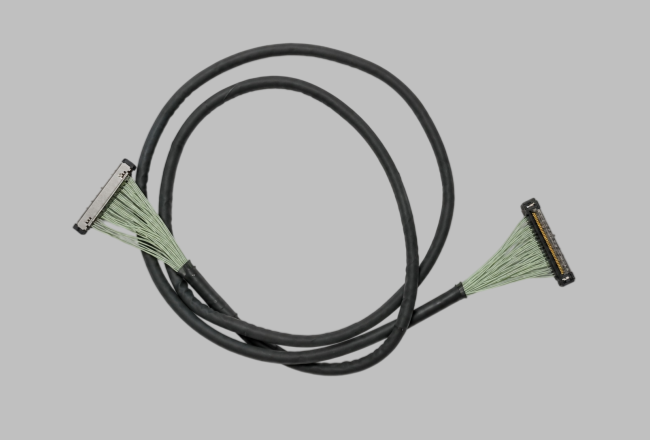
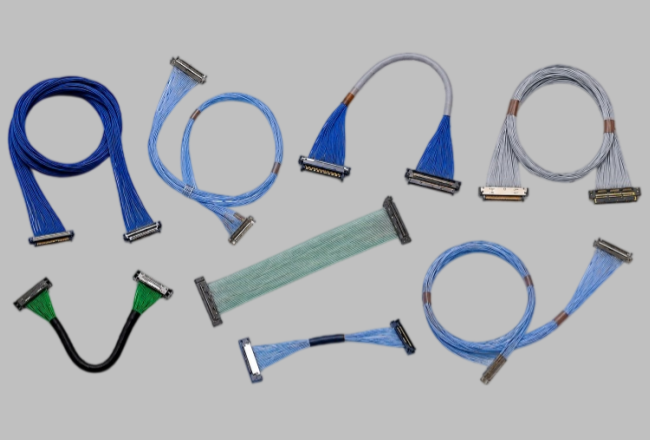
In practical applications, extremely thin coaxial cable bundles are commonly used in camera modules, display modules, internal connections of laptops, and multi-channel high-speed digital signal transmission scenarios, especially suitable for products that require multiple independent shielded signal lines and high wiring density. Twinax is more suitable for applications that adopt differential transmission architecture and have high requirements for signal skew and high-speed transmission loss, such as some high-speed board-to-board interconnections, display data transmission, and high-speed digital interface connections. Both solutions also require special attention to connector compatibility, for example, some I-PEX CABLINE® series support extremely thin coaxial cables or Twinax cables, but the cable specifications, impedance requirements, and termination structures for different series are not entirely the same. When selecting, it is necessary to check the connector model, applicable AWG, cable outer diameter, PIN definition, and actual transmission requirements simultaneously, and cannot be judged solely based on the connector appearance or PIN number.
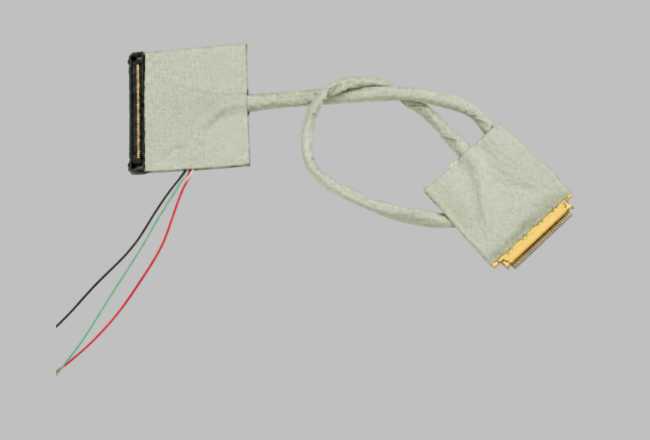
Twinax and ultra-fine coaxial cable assemblies do not have absolute advantages or disadvantages; the key lies in whether they meet the product's signal architecture and structural requirements. As a manufacturer and solution provider of ultra-fine coaxial cable assembly components, we can assist in evaluating the applicability of Micro-Coaxial and Twinax solutions based on the customer's signal type, transmission speed, interface model, cable length, and installation space. We can also provide corresponding cable customization, connector matching, and sample development services. For projects using I-PEX and other brand connectors, we can also provide compatible alternative cable assembly solutions by combining specific connector material numbers and cable specifications. Through comprehensive evaluation of cable structure, AWG specification, impedance, connectors, and processing technology, we can help customers choose a more suitable internal high-speed connection solution for actual applications.
“Without the consent or authorization of this site, no one shall reproduce, reprint, distribute, cite, change, broadcast or publish the content in whole or in part in any form, nor shall there be any other violation of the copyright of this site.