


Categorization:Product Information
With the continuous upgrading of electronic products, the internal data transmission rate is also increasing. For example, devices originally using 1 Gbps transmission schemes may need to support 5 Gbps, 10 Gbps, and even higher data rates after upgrading. Many researchers and developers prioritize the performance of chips, interfaces, and circuit boards when upgrading products, but often ignore whether the existing internal wiring harnesses are still applicable. In fact, ultra-thin coaxial cable harnesses (Micro Coaxial Cable Harness) are also an important part of the high-speed signal transmission chain. Even if the existing harnesses can connect normally, it does not mean they can meet the high-speed signal requirements after the upgrade. If the unverified harnesses are continued to be used, issues such as increased signal attenuation, transmission errors, and unstable communication may arise.
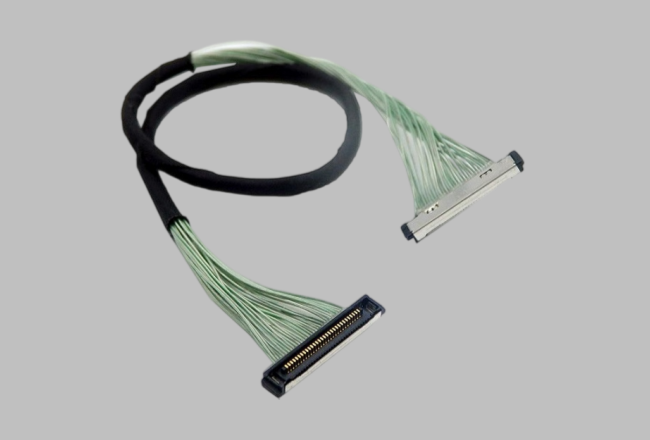
In low-speed applications, some impedance mismatches, signal reflections, and crosstalk issues may not be prominent. However, as the signal edge speed increases, the impact of these issues on signal integrity becomes more pronounced. Particularly in the process of high-speed digital signal transmission, the harness needs to pay close attention to parameters such as characteristic impedance, insertion loss, return loss, crosstalk, and propagation delay. If the impedance design of the existing harness is not suitable for the new interface requirements, or if the cable itself has significant loss, it may lead to a decrease in signal quality at the receiving end. In addition, although extremely thin coaxial harnesses have an independent shielding structure that can reduce external electromagnetic interference, different wire diameters, shielding structures, and manufacturing processes also affect the final transmission performance. Therefore, it cannot be assumed that an existing harness that can work normally can be directly used for products with higher speeds.
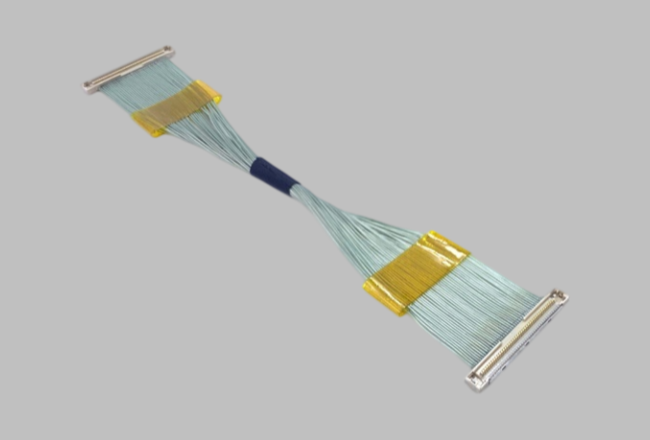
Product upgrade not only means an increase in transmission speed, but may also be accompanied by changes in interface schemes, connector models, and Pin definitions. The actual performance of extremely thin coaxial cables depends on the complete transmission chain composed of cables and connectors, rather than being determined solely by the cables themselves. If the existing connectors or cable assembly components are continued to be used, issues such as mismatched connector impedance and cables, impedance discontinuity at the termination position, and unreasonable grounding structures may arise, which in turn can affect signal quality. For high-speed cameras, display modules, MIPI interfaces, and SerDes applications, it is also necessary to evaluate whether Micro Coax or Twinax solutions are appropriate in combination with the actual signal types, and to reconfirm parameters such as connector Pitch, Pin count, cable length, AWG specifications, and Pin definitions.
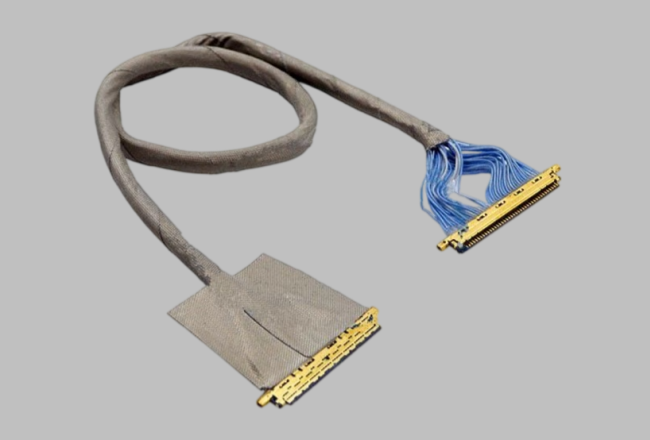
Assess from three aspects: first, verify the interface protocol, signal rate, impedance requirements, and channel count of the new and old products, to confirm whether the existing cable meets the electrical specifications of the new design; second, inspect the insertion loss, return loss, crosstalk, and shielding performance of the cable, and, if necessary, verify the transmission link through test methods such as TDR and network analyzers; finally, check the connector compatibility, cable length, bending radius, installation space, and processing terminal quality. If the existing cable passes the tests and meets the signal integrity and mechanical reliability requirements of the new product, it can be continued to be used; if there are performance deficiencies, it should be reselected cable specifications, connectors, or adjusted the overall cable structure, rather than simply continuing with the old scheme.
“Without the consent or authorization of this site, no one shall reproduce, reprint, distribute, cite, change, broadcast or publish the content in whole or in part in any form, nor shall there be any other violation of the copyright of this site.