


Categorization:Product Information
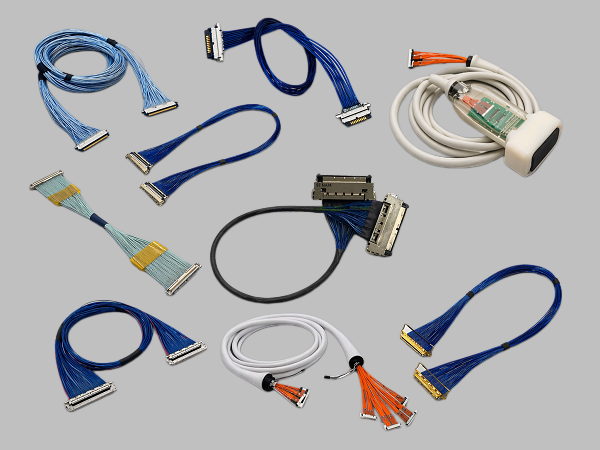
With the development of electronic devices towards miniaturization, high integration, and high-speed operation, the data transmission requirements within the devices are increasingly higher. From 100 Mbps to 1 Gbps, and then to 5 Gbps and even higher speeds, different applications have different requirements for the electrical performance, structural dimensions, and signal stability of internal wiring harnesses. For camera modules, displays, laptops, industrial vision equipment, and intelligent terminals, internal high-speed signal transmission not only requires consideration of the performance of chips and interfaces but also attention to whether the wiring harness can meet the corresponding signal integrity requirements. Extremely fine coaxial cable harnesses (Micro Coaxial Cable Harness) have characteristics such as small wire diameter, good shielding performance, flexible wiring, and suitability for high-density connections, and are an important choice for internal high-speed signal connections in many compact electronic devices.
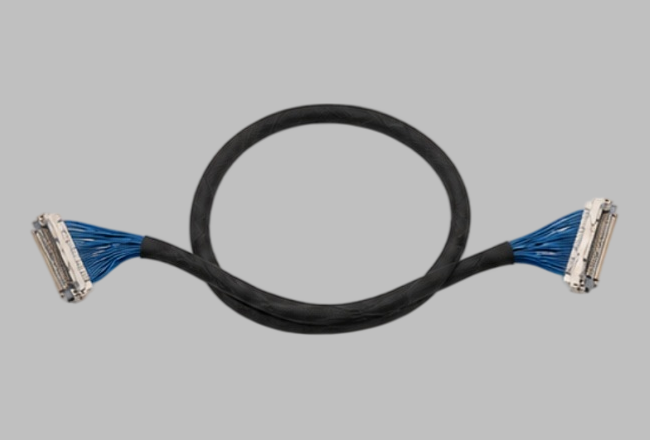
For signal transmission at 100 Mbps levels, it may not be necessary to use extremely thin coaxial cables if the internal connection distance is short, the working environment has low electromagnetic interference, and ordinary cables meet the interface specifications. However, if the internal space of the product is limited, there are many high-speed circuits or sensitive signals around, and even if the transmission rate is not particularly high, attention should be paid to the shielding capability and wiring structure of the cable bundle. When the transmission rate is increased to 1 Gbps, the signal becomes more sensitive to factors such as impedance matching, insertion loss, return loss, and crosstalk. At this point, extremely thin coaxial cables can reduce external interference through independent shielding structures and achieve multi-channel signal connections in limited spaces, making them suitable for applications such as camera modules, display equipment, and high-speed data transmission modules.
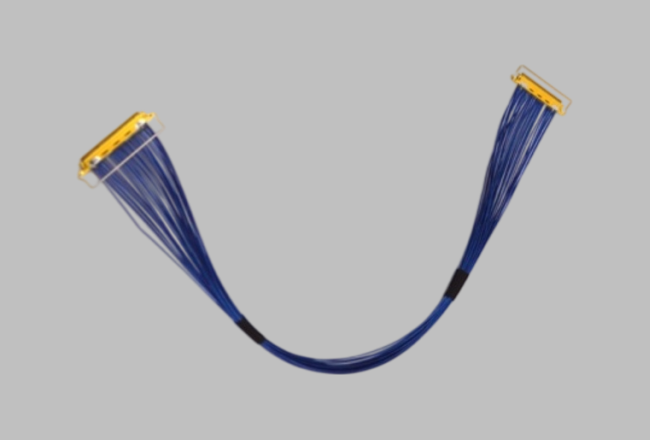
When the internal signal transmission rate reaches 5 Gbps or even higher, the selection of cable bundles cannot only focus on wire diameter and connector size, but needs to be evaluated from the entire transmission chain. High-speed signals may be affected during transmission by factors such as impedance discontinuity, connector transition structures, cable losses, signal reflections, and adjacent channel crosstalk, leading to waveform distortion and data transmission errors. Extremely thin coaxial cable bundles adopt a central conductor, insulating medium, and outer conductor shielding structure, which can provide a relatively stable transmission path for high-speed signals while meeting the high-density wiring requirements inside the equipment. For multi-channel high-speed cameras, MIPI high-speed interfaces, display signal transmission, and other high-speed SerDes applications, it is also necessary to select appropriate Micro Coax or Twinax cables according to the specific interface architecture, and to carry out comprehensive design in combination with connectors, cable length, impedance, and termination technology.
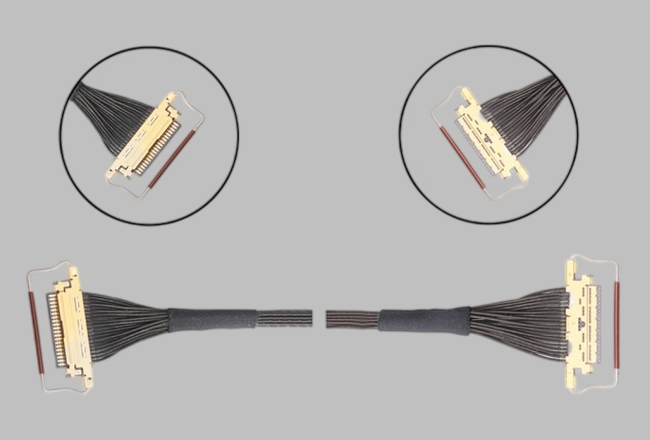
When selecting actual types, it cannot be simply assumed that 100 Mbps uses ordinary cables, 1 Gbps uses shielded cables, and 5 Gbps uses extremely thin coaxial cable bundles. Transmission speed is just one of the criteria; it also requires analysis based on signal frequency, coding method, transmission distance, channel number, and internal space of the device. For different speed applications, it is recommended to focus on the following parameters: first, characteristic impedance, to ensure that the cable, connectors, and device interfaces match; second, insertion loss and return loss, to evaluate signal attenuation and reflection during transmission; third, crosstalk and shielding performance, to reduce interference from adjacent channels and external electromagnetic interference; fourth, wire diameter, AWG specification, cable length, and bending requirements, to ensure that the cable bundle can adapt to the actual installation space; fifth, connector type, pin count, pitch spacing, and pin definition, to ensure compatibility with the device interface. Only by combining electrical performance and mechanical structure can a truly suitable cable solution for product needs be selected.
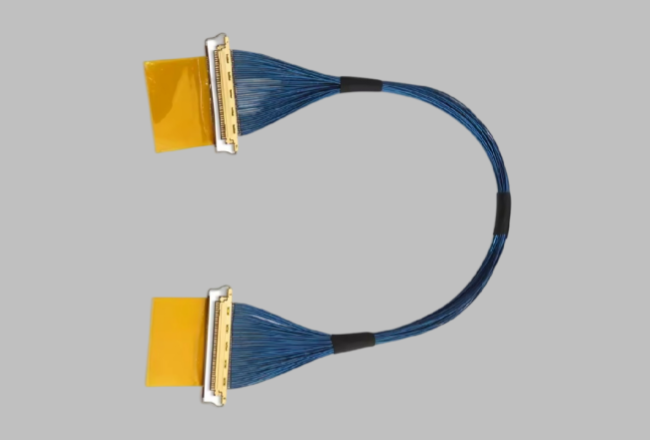
For electronic equipment research and development enterprises, internal wiring is not only a signal transmission connection component but also an important factor affecting product structural design and overall performance. As a manufacturer and solution provider of ultra-fine coaxial cable assembly components, we can provide corresponding ultra-fine coaxial cable customization, processing, and connection solutions based on the customer's transmission speed, interface type, connector model, cable length, Pin number, Pitch spacing, and internal installation space. Whether it is 100 Mbps, 1 Gbps, 5 Gbps, or higher-speed internal signal connections, we can combine actual application requirements to evaluate cable specifications, connectors, and processing technologies, assist customers in optimizing internal wiring structures, and provide compatible alternatives, sample development, and mass production support.
“Without the consent or authorization of this site, no one shall reproduce, reprint, distribute, cite, change, broadcast or publish the content in whole or in part in any form, nor shall there be any other violation of the copyright of this site.