


Categorization:Product Information
With the development of smartphones, industrial vision, vehicle-mounted cameras, drones, and intelligent terminals, camera modules are upgrading towards high resolution, high frame rate, and multi-camera directions, and the internal image data volume is also increasing. MIPI CSI-2, as a common camera data transmission interface, can achieve high-speed image signal transmission through multiple data Lanes and complete device connections with the physical layer of D-PHY or C-PHY. As the interface rate continues to increase, the internal connection cables between the camera module and the main control board also face more stringent requirements. Especially in situations where the device space is limited, the cables need to be bent, or there is a complex electromagnetic environment, traditional connection schemes may be difficult to balance high-speed transmission, structural dimensions, and signal stability. The ultra-thin coaxial cable harness (Micro Coaxial Cable Harness) with its slender structure, independent shielding, and high-density wiring advantages has become an important choice for high-speed internal connections of cameras.
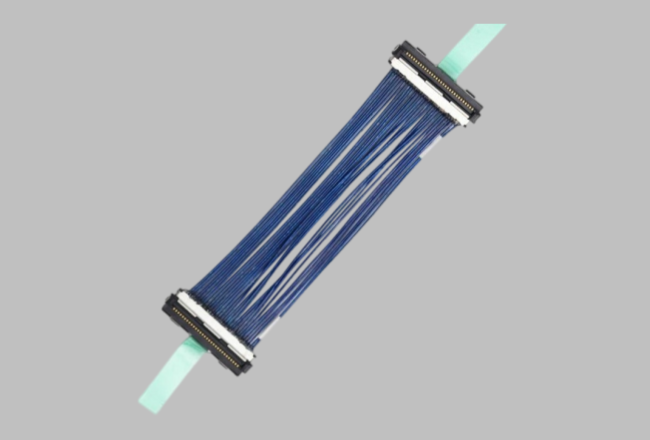
Before selecting the camera cable assembly, it is necessary to clarify the data transmission requirements of MIPI CSI-2. Taking D-PHY as an example, the interface usually consists of a clock channel and multiple differential data channels, and the overall transmission bandwidth is affected by both the single Lane rate and the number of Lanes. The camera resolution, frame rate, pixel bit width, and image data format will all affect the actual bandwidth requirements. For example, high-resolution, high-frame-rate image sensors usually require a higher single Lane rate or more data Lanes. At the same time, C-PHY adopts a transmission structure of three wires per group, realizing data transmission through three-phase encoding and embedded clock, which is different from D-PHY in terms of signal organization and cable connection methods. Therefore, it is not enough to determine the cable specification based on the camera resolution alone; it is also necessary to confirm whether D-PHY or C-PHY is used, the specific number of Lanes, the single Lane rate, and the connector Pin definition.
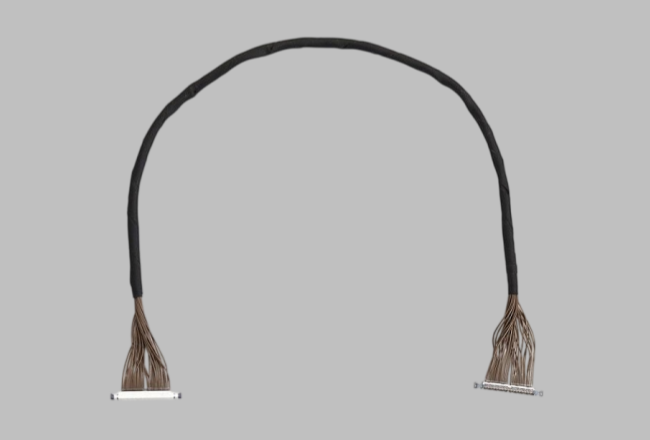
MIPI CSI-2, the higher the data rate, the stricter the requirements for the signal integrity of the cable harness. When selecting a camera cable harness, the first thing to pay attention to is characteristic impedance, ensuring that the cable, connector, and PCB transmission path match each other to reduce signal reflections; secondly, attention should be given to insertion loss and return loss to avoid excessive attenuation of the signal during transmission; at the same time, it is also necessary to consider the timing deviation of differential pairs, inter-channel crosstalk, and shielding performance. For D-PHY differential signals, special attention needs to be paid to the pairing and length consistency of the positive and negative signal lines; for C-PHY, the connection design needs to be carried out according to the signal structure of three wires per group. The ultra-thin coaxial cable harness can improve the signal isolation capability through an independent shielding structure, while Twinax cable can also be used for high-speed differential signal connections suitable for its structure. The specific scheme to be adopted needs to be determined in combination with the interface specification, transmission distance, and actual test results.
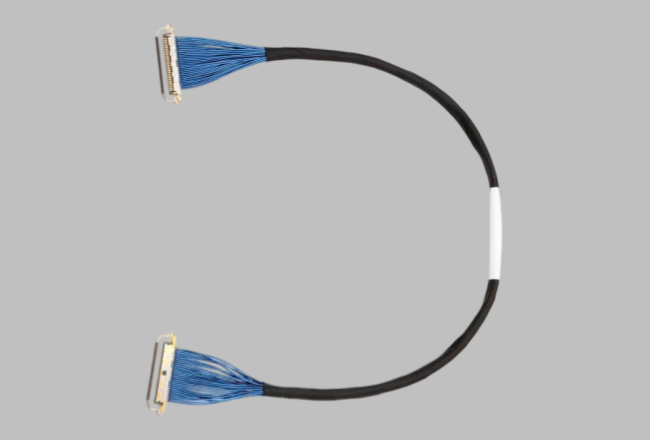
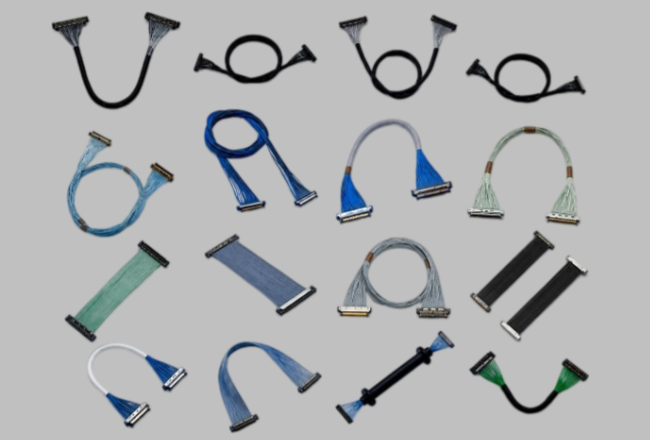
In addition to electrical performance, the installation space of the camera module is also an important factor in cable selection. For mobile phone camera modules, laptop camera modules, automotive camera modules, and industrial vision modules, the internal space is usually quite compact. The cable needs to complete multi-channel signal connections within a limited space and meet bending, fixing, and assembly requirements. Therefore, it is also necessary to confirm parameters such as connector type, Pin count, Pitch spacing, cable AWG specification, cable length, wire exit direction, and bending radius during selection. If multi-channel ultra-fine coaxial cables are used, it is also necessary to ensure that each signal line is accurately matched with the Pin definition of the connector terminals. As a producer and solution provider for ultra-fine coaxial cable components, we can provide selection evaluation, customized processing, and compatible alternative solutions for Micro Coax, Twinax cable components based on the customer's MIPI CSI-2 interface type, D-PHY/C-PHY structure, transmission rate, and camera internal space, to assist customers in optimizing the internal high-speed camera connection design.
“Without the consent or authorization of this site, no one shall reproduce, reprint, distribute, cite, change, broadcast or publish the content in whole or in part in any form, nor shall there be any other violation of the copyright of this site.