


Categorization:Product Information
In the development and testing of high-speed electronic devices, it is not uncommon to encounter issues such as abnormal data transmission, screen flickering, frame loss in images, communication interruption, or increased error rates. When these phenomena occur, many engineers will first suspect the chip performance, driver capability, or motherboard design. However, in fact, the problem may also lie in internal connection aspects such as cables and connectors. High-speed signals need to pass through multiple parts from the transmitting end to the receiving end, including chips, PCB routing, connectors, and cables. Any signal loss, impedance mismatch, or electromagnetic interference at any stage can affect the final data transmission quality. Therefore, when encountering high-speed signal errors, one should not rush to replace the chip but should first investigate the entire signal transmission chain.
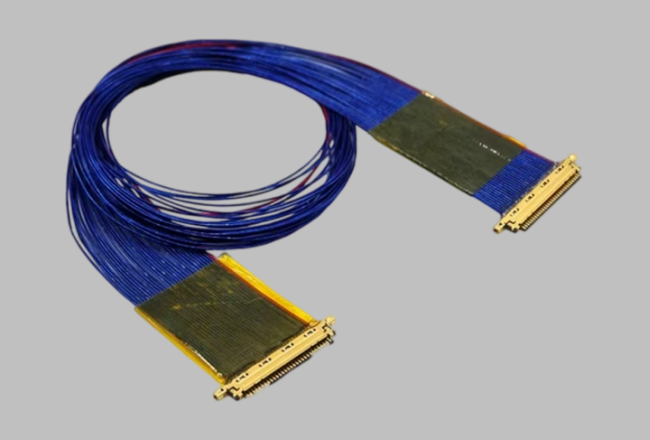
Impedance mismatch may be an important cause of error code generation.
High-speed signals are very sensitive to the impedance continuity of the transmission channel. When the signal passes through the connection points between PCB, connectors, and cables, if there is a significant change in impedance, it may cause signal reflections, resulting in waveform distortion, ringing, and overshoot issues. As the transmission rate increases, these effects may further compress the signal judgment margin at the receiving end, increasing the risk of bit errors. Especially for extremely thin coaxial bundles, if the impedance parameters of the cable itself do not match the connector, or if the termination area is not processed reasonably, even if the bundle can conduct normally, it does not mean that it can stabilize the transmission of high-speed signals. Therefore, during the troubleshooting process, attention should be paid to the cable characteristic impedance, insertion loss, return loss, and the termination structure of the connector.
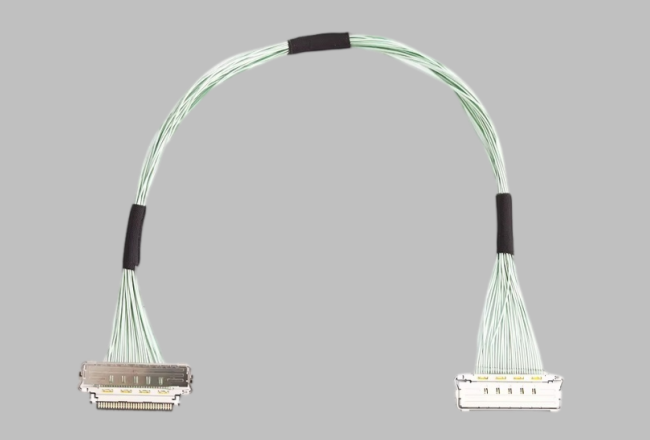
Shielding effectiveness and crosstalk may also affect data stability.
In camera module, laptop, display equipment and other high-density electronic products, multiple high-speed signals are often concentratedly arranged, with relatively compact internal space. If the cable shielding structure is unreasonable, the grounding connection is unreliable, or the distance between adjacent signal channels is too close, they may be affected by electromagnetic interference and crosstalk. In addition, cable length, excessive bending, and structural changes near the connector may also increase the risk of signal transmission. Extremely thin coaxial cables use a structure composed of a central conductor, an insulating layer, and a shielding layer, which can achieve high-speed signal transmission with a smaller outer diameter and provide an independent shielding path. However, the actual application effect still depends on the cable structure, shielding continuity, connector matching, and overall processing quality.
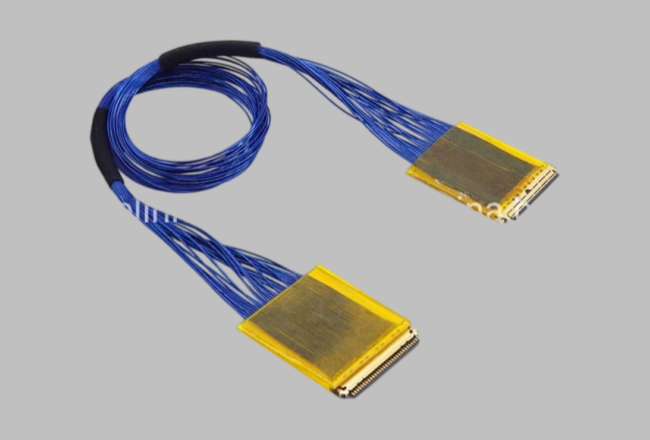
How to troubleshoot harness issues when a coding error is found?
When high-speed signals experience bit errors, it is advisable to start by checking the connection status, cable specification, and actual wiring conditions. This includes verifying whether the connectors match, the wiring sequence is correct, the termination is reliable, and whether the cables are subjected to compression, damage, or excessive bending. Further, signal quality can be observed using an eye diagram, and transmission stability can be evaluated using bit error rate tests. Impedance continuity and transmission loss can be analyzed by combining test methods such as TDR and network analyzers. Additionally, comparative tests can be conducted by replacing verified cable harness components under consistent conditions to determine if the issue is related to the original connection chain. Through segmented troubleshooting and data analysis of test results, it is possible to more accurately locate the problem and avoid blindly replacing chips or modifying motherboard designs without confirming the cause.
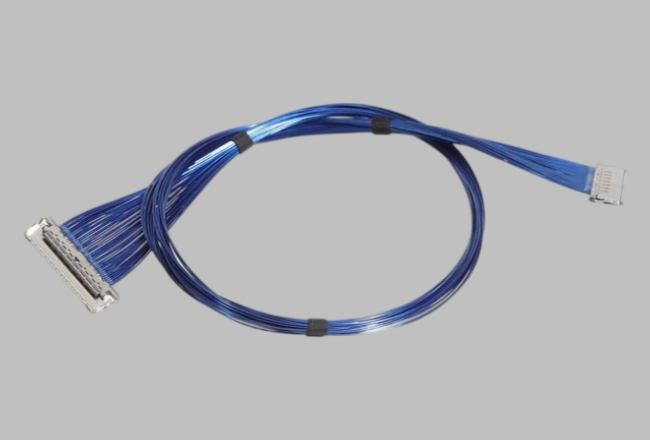
Start with harness selection and processing to reduce the hazards of high-speed connections
For high-speed signal transmission applications, the cable harness is not just a simple connecting component, but an important part of the entire signal channel. We focus on the production, customization, and development of matching connection solutions for extremely fine coaxial cable harness components. We can assist with AWG wire gauge selection, connector matching, wire sequence confirmation, length design, and development of compatible alternative solutions based on the original cable harness model, connector specifications, product drawings, or physical samples provided by the customer. For projects such as high-speed signal误码 errors, unstable connections, and optimization of existing cable harnesses, we can also analyze specifications, make samples, and adjust processing plans in conjunction with actual structure and application requirements, helping customers to identify potential issues in the internal connection links and improve the stability of high-speed signal transmission.
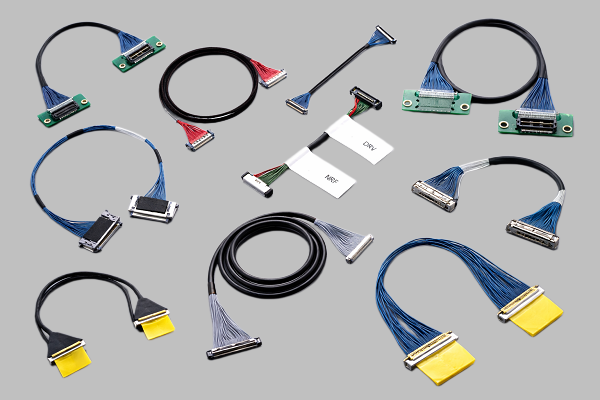
High-speed signal errors do not necessarily mean that the chip has a problem. Impedance mismatch, signal loss, insufficient shielding, crosstalk, and poor connector termination can all affect the entire transmission link. Compared to directly replacing the chip, starting with the cable, connector, and PCB connection area for system troubleshooting is often more helpful in finding the root cause. For high-speed, miniaturized electronic devices, reasonably selecting and processing extremely fine coaxial cable assemblies is also an important link in ensuring signal integrity and connection reliability.
“Without the consent or authorization of this site, no one shall reproduce, reprint, distribute, cite, change, broadcast or publish the content in whole or in part in any form, nor shall there be any other violation of the copyright of this site.