


Categorization:Product Information
With the continuous upgrade of smart cameras, laptops, medical imaging equipment, industrial vision systems, and video surveillance equipment, 4K cameras have gradually been applied to an increasing number of electronic products. Many people believe that the internal cables of the camera are only responsible for transmitting the captured images, but in fact, the internal transmission of the camera module is high-speed digital signals converted by the image sensor. The image sensor receives the light collected by the lens and converts it into digital pixel data, which is then transmitted to the main control chip or image processor through a high-speed interface. Due to the high resolution of 4K images, combined with frame rate and color bit depth, a large amount of data that needs to be transmitted in real time is generated, thus putting higher requirements on the transmission capability of the internal connection cables.
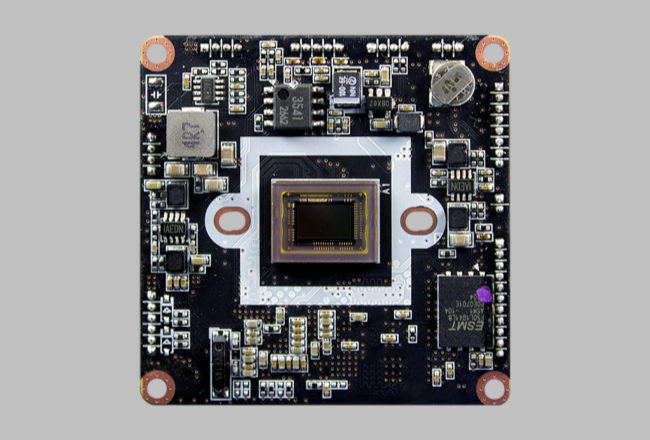
In modern electronic devices, MIPI CSI-2 is a common high-speed image transmission interface between camera modules and processors. It usually adopts the MIPI D-PHY or C-PHY physical layer, transmitting image information through high-speed data channels. The D-PHY typically includes a clock channel and one or more data channels, while the C-PHY uses a three-wire data channel and implements clock and data transmission through encoding. The image data generated by the camera can be in RAW, RGB, or YUV formats and transmitted through multiple data channels. For 4K cameras, the actual required bandwidth is also related to frame rate, pixel bit depth, data format, and transmission protocol. Therefore, it cannot be solely judged by the 4K resolution that the cable needs to reach a certain fixed rate, but should be calculated and selected based on specific system parameters.
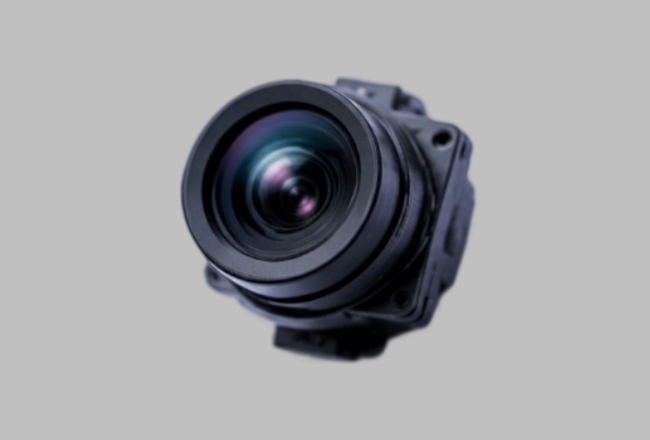
The internal data transmission of 4K cameras has characteristics such as high speed, dense channels, and high requirements for signal integrity. If the cable impedance is not matched, signal reflections may occur; if there is excessive transmission loss, it may affect the data recognition at the receiving end; and if the shielding structure or grounding treatment is unreasonable, it may also increase the risks of electromagnetic interference and channel crosstalk. Therefore, the cable inside the camera cannot only consider whether it can be connected, but also need to pay attention to characteristic impedance, insertion loss, return loss, crosstalk, cable length, and connector termination quality. Especially as the volume of the camera module continues to shrink, the cable also needs to meet the requirements of smaller outer diameter, reasonable bending radius, and compact installation space.
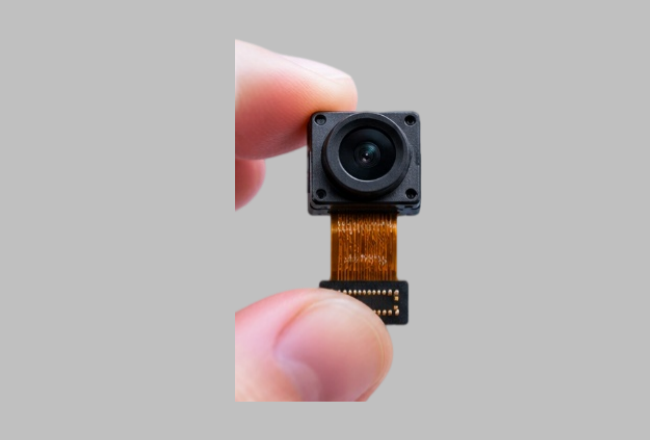
In view of the limited internal space of 4K camera module and the high data transmission rate, ultra-fine coaxial cable assembly is a worthy consideration for the connection solution. Unlike ordinary single-core wire, ultra-fine coaxial cable assembly adopts a structure composed of a central conductor, insulation layer, outer conductor shielding layer, and outer sheath, which can achieve high-speed signal transmission under a smaller outer diameter and provide corresponding shielding capability. According to the specific interface design, multiple ultra-fine coaxial cables can be combined into multi-channel cable assembly components for high-speed connection between image sensors and mainboards or processors. In practical applications, it is necessary to match the MIPI interface type, data channel count, connector model, AWG wire gauge, cable length, and pin definition to ensure that the cable assembly component meets the electrical and mechanical requirements of the system.
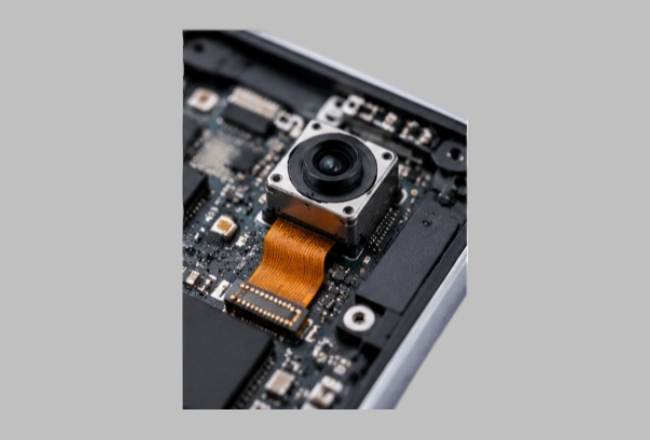
The high-speed connection solution for 4K cameras is not simply about choosing a cable that can transmit high-speed signals; it requires a comprehensive consideration of sensor interfaces, connectors, cable assembly structures, PCB layouts, and manufacturing processes. We specialize in the production, customization, and development of配套 connection schemes for ultra-fine coaxial cable assemblies. We can assist with wire specification selection, connector matching, pin count confirmation, wire sequence definition, and cable length design based on the camera module specifications, connector models, original factory cable drawings, or physical samples provided by the customer. For 4K cameras and other high-speed image transmission applications, we can also carry out cable assembly sample development and compatibility alternative solution assessment based on the actual project requirements, providing more suitable internal high-speed connection components between camera modules and main control devices.
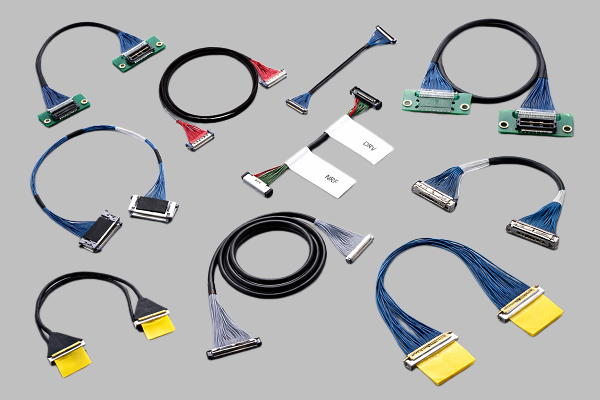
The internal transmission of a 4K camera is not just a simple image signal, but digital image data generated by the image sensor and transmitted to the processor via a high-speed interface. With the increase in resolution and frame rate, the internal connections' requirements for signal integrity, impedance matching, shielding performance, and wire harness processing accuracy also improve. The extremely thin coaxial cable harness, with its small outer diameter and shielding structure, provides a flexible implementation for high-speed internal connections in miniaturized devices such as 4K cameras. Rational cable harness selection and component design are important for ensuring stable transmission of image data.
“Without the consent or authorization of this site, no one shall reproduce, reprint, distribute, cite, change, broadcast or publish the content in whole or in part in any form, nor shall there be any other violation of the copyright of this site.