


Categorization:Product Information
During the development of high-speed electronic equipment, a common situation often occurs: two harnesses use similar connectors, the cable outer diameter is nearly the same, and the length and pin count are also basically consistent. However, after high-speed signal testing, one can pass smoothly while the other exhibits excessive signal loss, substandard eye diagram, or high error rate. This is because the performance of high-speed harnesses cannot be simply judged by appearance and basic specifications. The conductor of the cable, insulation material, shielding structure, characteristic impedance, and the termination method of the connector may all affect the final signal transmission effect. For extremely thin coaxial harnesses, even if the appearance and dimensions are similar, differences in internal structure and processing details may also result in different test results.
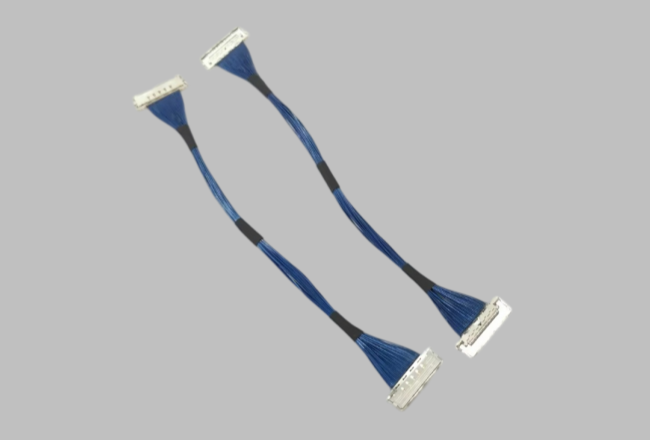
High-speed signal transmission has a high requirement for impedance continuity. If the internal structure of the cable is unstable, or there is impedance mismatch between the cable and the connector, signal reflections may occur, affecting the data recognition at the receiving end. At the same time, insertion loss will change with factors such as transmission frequency, cable length, and material characteristics. If the loss is too great, the effective signal amplitude received at the receiving end may decrease, leading to insufficient eye diagram margin. Therefore, high-speed cables cannot only be subjected to ordinary conduction tests but also need to evaluate characteristics such as characteristic impedance, insertion loss, return loss, and crosstalk according to application requirements. For projects with specific high-speed performance requirements, verification should be carried out by combining means such as TDR, network analyzers, and eye diagram tests.
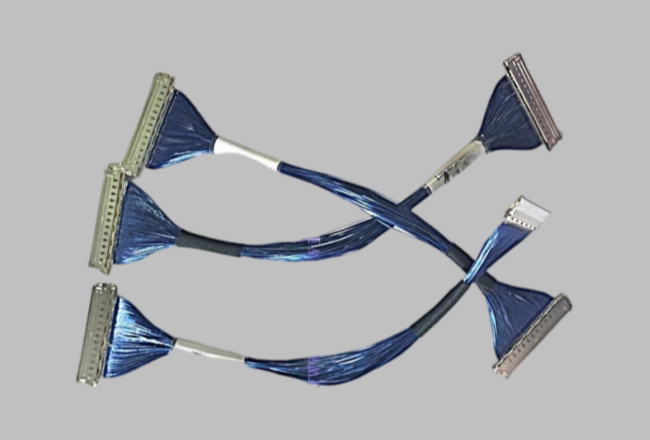
Many high-speed harness testing issues may not necessarily be caused by the cables themselves but may also occur at the connection points between the connectors and the cables. The center conductor, insulation layer, and outer conductor shielding layer of extremely thin coaxial cable harnesses all have smaller processing dimensions, which require higher precision in wire stripping length, conductor positioning, shielding layer treatment, and welding. If the center conductor connection position is offset, the insulation layer is damaged, or the shielding layer is not sufficiently connected to the grounding structure of the connector, it may affect the impedance continuity and shielding effect. In addition, different connectors have different requirements for applicable AWG wire specifications, cable outer diameter, and termination structure. Therefore, even when using connectors of the same series, one cannot ignore the matching between specific models and cable specifications.
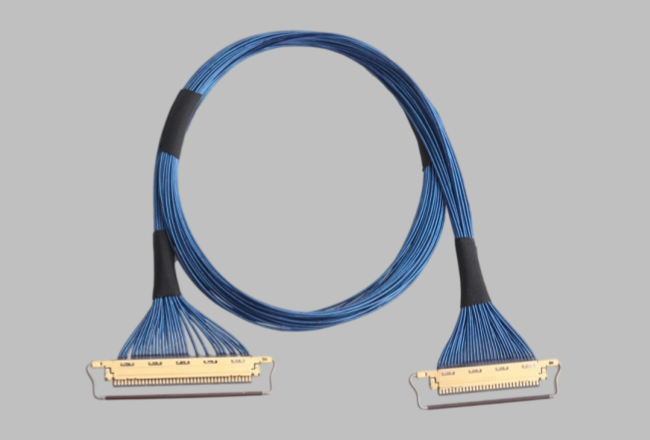
A wiring harness sample passing the test does not necessarily mean that subsequent batches will reach the same level. For extremely thin coaxial cable components, factors such as material size fluctuations, stripping parameters, termination positions, welding technology, and minor differences during assembly may all affect product consistency. If there is a lack of stable process control during the manufacturing process, it may lead to the situation where samples are qualified while the performance of bulk products fluctuates. Therefore, in addition to focusing on the test results of the initial sample, it is also necessary to pay attention to dimension checks, continuity tests, insulation checks, and necessary high-speed electrical performance sampling during the production process to ensure that components from different batches maintain stable quality performance.
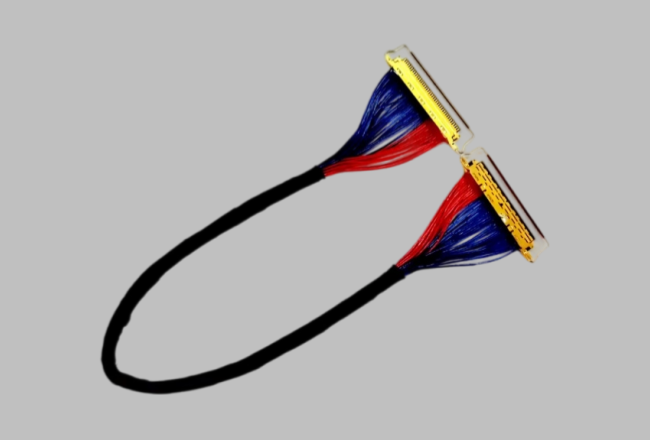
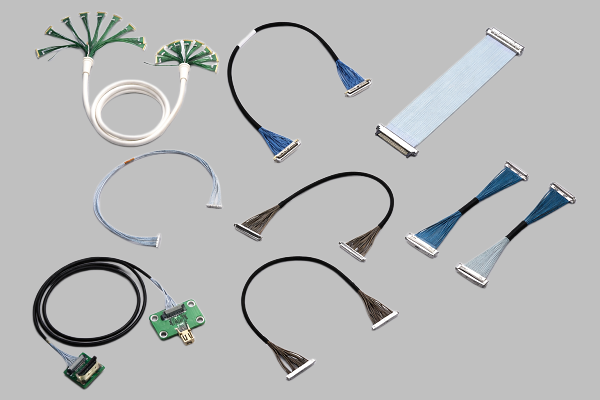
High-speed harness selection cannot be based solely on connector models, cable outer diameters, and product prices; it is more important to conduct a comprehensive evaluation that combines transmission speed, impedance requirements, cable length, connector structure, and actual installation environment. We focus on the production, customization, and development of compatible alternative solutions for ultra-fine coaxial cable assembly components. We can select wire gauges, match cable structures, adapt connectors, and design processing solutions based on the original factory harness model, connector specifications, product drawings, or physical samples provided by customers. For needs such as failed high-speed signal tests, replacement of existing harnesses, or unstable performance in mass production, we can also carry out sample production and solution optimization in combination with actual application conditions to help customers better control the quality of high-speed connections from cable selection, component processing to testing and verification.
“Without the consent or authorization of this site, no one shall reproduce, reprint, distribute, cite, change, broadcast or publish the content in whole or in part in any form, nor shall there be any other violation of the copyright of this site.