


Categorization:Harness Component
MIPI is mainly applied in high-speed data transmission scenarios such as cameras and displays. As the physical layer commonly used in MIPI CSI-2 and other protocols, MIPI D-PHY needs to maintain stable signal transmission under high-speed conditions. MIPI official materials indicate that D-PHY is aimed at high-performance camera and display applications, and emphasizes characteristics such as high speed, low power consumption, and low EMI. Therefore, when camera modules adopt high-speed MIPI interfaces, the cable cannot only meet the "conduction" requirements, but also need to pay attention to issues such as transmission line impedance, signal reflection, crosstalk, loss, and connector transition. The ultra-thin coaxial cable integrates the signal conductor, insulating layer, and shielding structure into a single wire, which is easier to form a relatively stable high-speed transmission structure compared to ordinary multi-core ribbon cables. At the same time, it can realize independent wiring of multiple channels in a limited space, making it a cable scheme worthy of attention in high-speed camera, image acquisition equipment, and other applications.
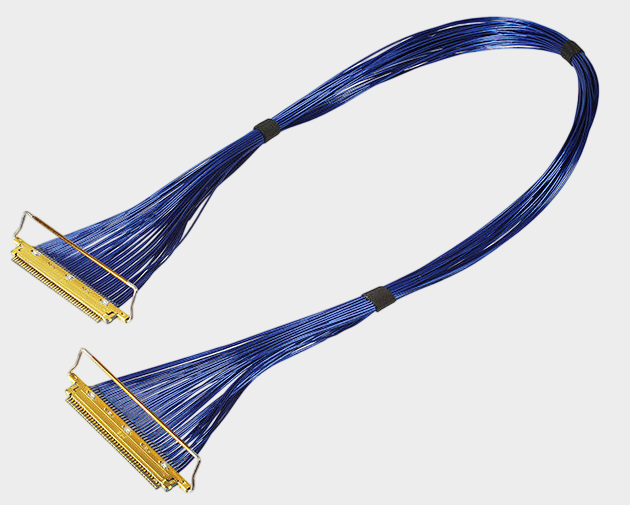
The core of a high-speed MIPI link is not merely to pursue thicker cables, but to maintain the stable electrical characteristics of the entire transmission path as much as possible. The MIPI D-PHY documentation clearly specifies requirements for the impedance and signal integrity of the transmission line interconnection structure, and emphasizes that the reference layer near the signal lines helps to achieve good signal integrity and lower EMI. The extremely thin coaxial cable itself has a continuous coaxial structure, which can effectively isolate high-speed signals from the external environment and reduce the coupling effect between adjacent channels; at the same time, the AWG#40 wire diameter is finer, which is conducive to compact wiring inside the camera module while maintaining the high-speed signal transmission capability. The official data of I-PEX CABLINE®-SS indicates that this series adopts a 0.4mm contact spacing, vertical right-angle insertion and extraction, and horizontal outlet structure, and has been verified for high-speed performance for AWG#40 Micro-Coaxial Cable. Therefore, from the perspective of engineering design, the value of the extremely thin coaxial cable lies in combining high-speed transmission, space utilization, and cable flexibility, rather than simply understanding it as "the thinner the wire, the faster the speed."
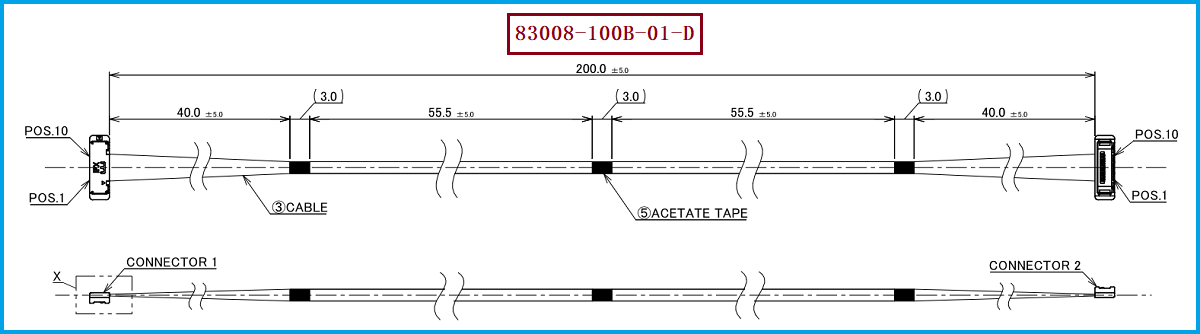
The specific product introduced this time is I-PEX 83008-100B-01-D, corresponding to I-PEX CABLINE®-SS 10P HARNESS. According to the official PDF drawings of this model, the total length of this harness is 200.0±5.0mm, using 10 Micro-Coaxial Cable AWG#40, 50Ω ultra-fine coaxial cables, and the wire position is defined as 1-1 straight-through; the connector model used at the end of the wire is 20373-R10T-06, corresponding to the CABLINE®-SS 10PIN structure. For engineers, this means that when designing high-speed MIPI links, it is necessary to confirm the specific IMX sensor Lane count, operating rate, wire length, and interface requirements of the master control end, and then combine it with the actual wiring space of the 200mm harness for signal integrity verification. For purchasers, I-PEX 83008-100B-01-D, 20373-R10T-06, AWG#40, 50Ω, 200MM, 1-1, 10PIN are important identification information for specification confirmation, sample comparison, and inquiry of alternative suppliers. It should be particularly noted that the 45Ω given on the CABLINE®-SS webpage belongs to specific high-speed test conditions, while the specific drawings of 83008-100B-01-D are explicitly marked as 50Ω, and the two cannot be used directly.
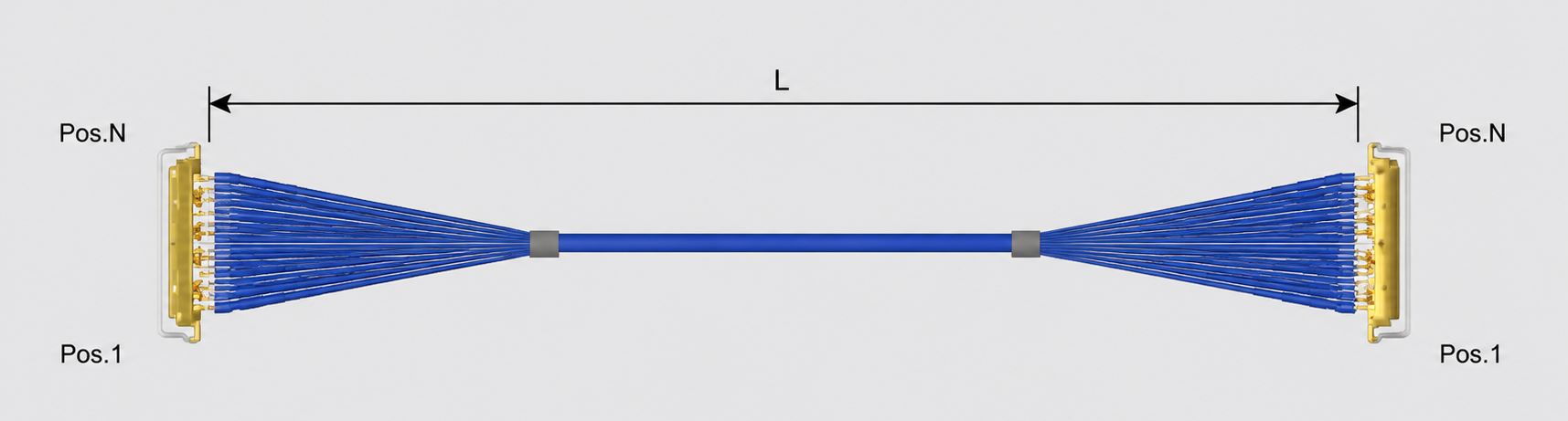
For cameras, industrial cameras, and visual devices using high-speed MIPI interfaces, it is recommended to select the ultra-fine coaxial cable from multiple dimensions such as "interface, cable material, length, wire sequence, mechanical space, and signal integrity." First, confirm the specific MIPI interface and Lane configuration, then check the connector PIN count and matching relationship; second, verify the AWG, impedance, and length of the Micro-Coaxial Cable, and do not simply judge the electrical parameters of the entire cable based on the connector model. For this product, the key specifications are I-PEX 83008-100B-01-D + 20373-R10T-06 + AWG#40 + 50Ω + 200MM + 1-1 + 10PIN. The I-PEX official CABLINE®-SS series currently covers 10P, 14P, 20P, 30P, 32P, 35P, 40P, and 50P, and provides Harness models with different lengths and wire sequences such as 1-N and 1-1, which can be selected according to the specific equipment requirements. In domestic compatibility and replacement projects, it is also necessary to confirm key indicators such as eye diagrams, bit errors, insertion loss, return loss, and crosstalk through actual MIPI high-speed signal testing, rather than simply judging compatibility based on appearance size or conduction tests. Our company can provide: I-PEX 83008-100B-01-D compatibility and replacement cable solution, which can be developed and manufactured for ultra-fine coaxial cable compatibility according to the requirements of the customer's connector, AWG, impedance, length, wire sequence, and space structure.
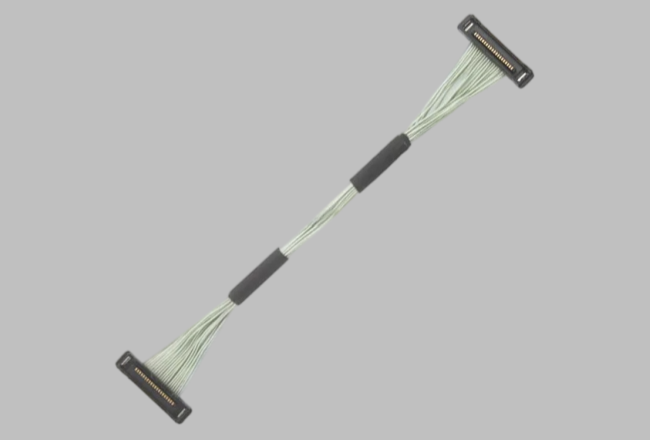
“Without the consent or authorization of this site, no one shall reproduce, reprint, distribute, cite, change, broadcast or publish the content in whole or in part in any form, nor shall there be any other violation of the copyright of this site.