


Categorization:Harness Component
With the increasing application of the NVIDIA Jetson platform in AI vision, robotics, industrial inspection, and edge computing devices, the data transmission speed and stability between the camera module and the main control platform have become increasingly concerned by engineers. It should be noted that NVIDIA does not uniformly stipulate for all Jetson cameras that "it is necessary to use extremely thin coaxial cables and not FFC ribbon cables." The actual choice of wire material still depends on specific interfaces, rates, distances, structural spaces, and EMI design. However, the camera solutions for the NVIDIA Jetson platform involve a large number of high-speed data links such as MIPI CSI-2 and GMSL, and high-speed links are more sensitive to factors such as impedance, crosstalk, EMI, and wiring length. Compared with traditional FFC ribbon cables, extremely thin coaxial cables use a coaxial structure composed of a central conductor, insulation layer, shielding layer, and sheath, with each signal line having a relatively independent transmission environment, which is more suitable for camera modules with compact spaces, high signal rates, and requirements for signal integrity. Therefore, in Jetson AI vision devices, the core reason for engineers to choose extremely thin coaxial cables is not simply to pursue "thinner," but to comprehensively consider factors such as high-speed signal transmission, anti-interference, structural layout, and reliable connections.
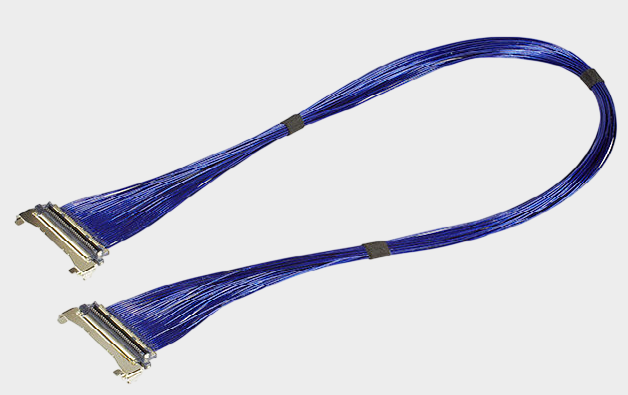
For camera module, the data generated by the image sensor needs to be continuously and stably transmitted to the Jetson platform for processing, and the connection cable itself is part of the high-speed signal chain. FFC ribbon cables have characteristics such as flexibility, low cost, and multi-core integration, but in high-speed, high-density, and complex EMI environments, engineers usually need to pay further attention to differential impedance, crosstalk, shielding, and routing issues; extremely fine coaxial cables can combine signal and shielding through a single coaxial structure, and under reasonable impedance design and termination technology, provide a clearer transmission environment for high-speed signals. I-PEX CABLINE®-SS uses a 0.4mm pitch, vertical right-angle insertion and extraction, and horizontal wiring structure, officially positioned to support the highest 16Gbps/Lane high-speed applications, and adopts W-Point contact design; its narrow structure is also suitable for wiring inside space-limited electronic devices. Therefore, for Jetson camera module that needs to balance high-speed transmission, thinness, and space utilization, extremely fine coaxial cables are a wiring scheme worth focusing on.
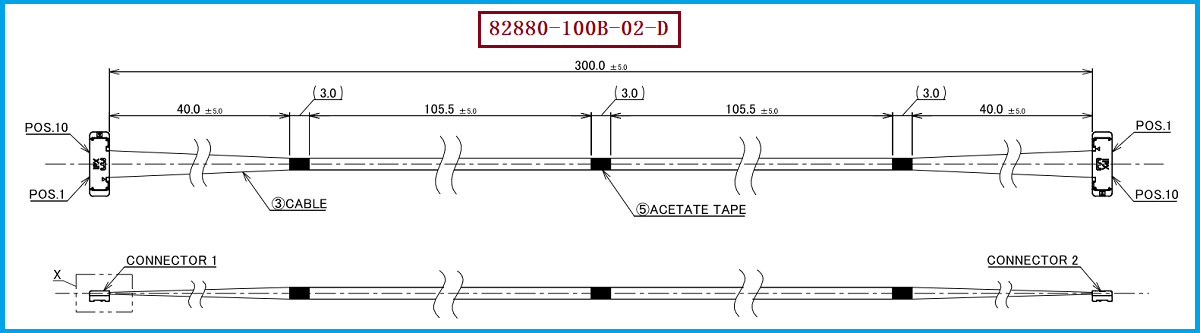
For Jetson camera modules, AI vision devices, and other high-speed internal connection applications, our company can provide compatible and alternative harness solutions that correspond to the I-PEX drawings specifications. The model belongs to the CABLINE®-SS 10P ultra-thin coaxial cable assembly, with a cable length of 300MM and wire positions defined as 1-N. It uses 10 AWG#40, 50Ω Micro-Coaxial ultra-thin coaxial cables, and the connector model used at the cable end is 20373-R10T-06. The corresponding drawings also specify the 20380-R10T-06 Plug Cable Assembly, 2182-010-03 Metal Cover, and 20374-R10E-31 mating connector as配套 structures. I-PEX official materials also confirm that the 20373-R10T-06 is a CABLINE-SS 10Pin Plug Housing and list its compatibility with Micro-Coaxial Cable and other specifications. For engineers, when selecting or replacing such harnesses, it is not only the "10Pin" and "300MM" that should be considered, but also the AWG specification, 50Ω impedance, connector model, 1-N wire position relationship, end dimensions, and actual installation direction in the equipment; for purchasing personnel, the complete material number, length, wire gauge, impedance, Pin number, and connector model should be used as important bases for supplier inquiries and sample acceptance.
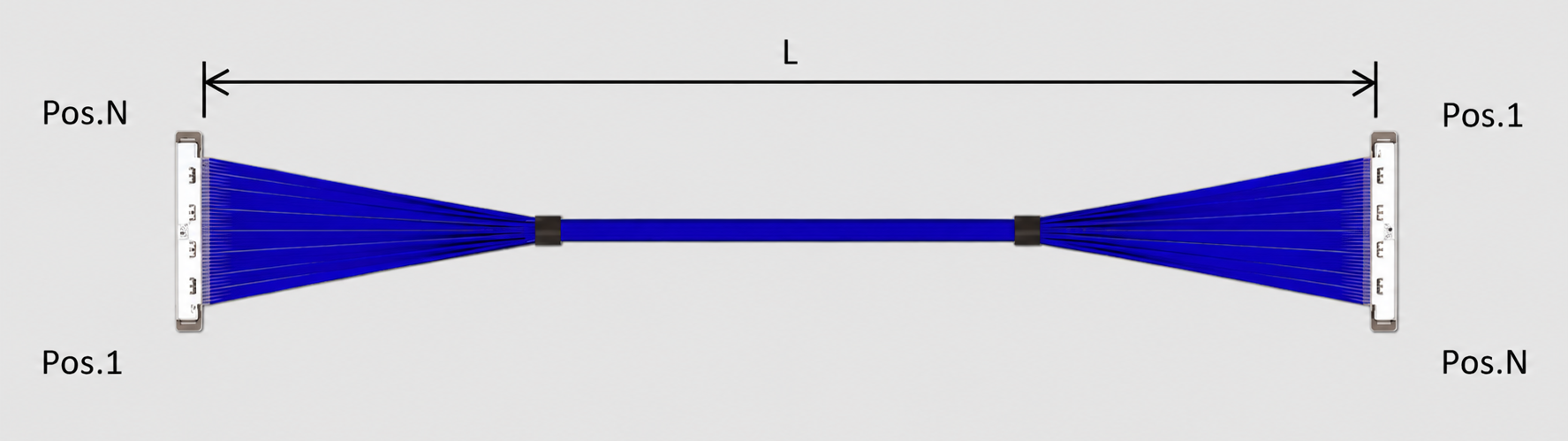
When selecting an extremely fine coaxial cable assembly for the Jetson camera module, if the original design corresponds to 82880-100B-02-D, the engineering team should first confirm the 10P interface, 300MM cable length, 1-N cable position, AWG#40, and 50Ω cable specifications. Then, confirm whether the 20373-R10T-06 connector and the overall cable exit and molding dimensions match the original equipment. It should be noted that the 45Ω, AWG#40, and 100mm high-speed test conditions displayed on the official I-PEX CABLINE®-SS page are specific performance verification conditions, while the specific cable assembly 82880C0 for this time is explicitly marked as AWG#40, 50Ω, 300MM, and the two cannot be mixed as the same specification. For projects that require domestication, supply chain optimization, or seeking a second supply source, the alternative cable assembly cannot be judged solely by whether the connector can be plugged in, but should also verify the wire sequence, electrical performance, signal integrity, end Bonding, tape position, and assembly space. Our company can provide: I-PEX 82880-100B-02-D compatible alternative cable assembly solutions, which can match the specifications, customize the length, and develop alternative development for extremely fine coaxial cable assemblies according to the actual equipment structure and drawing requirements of customers.
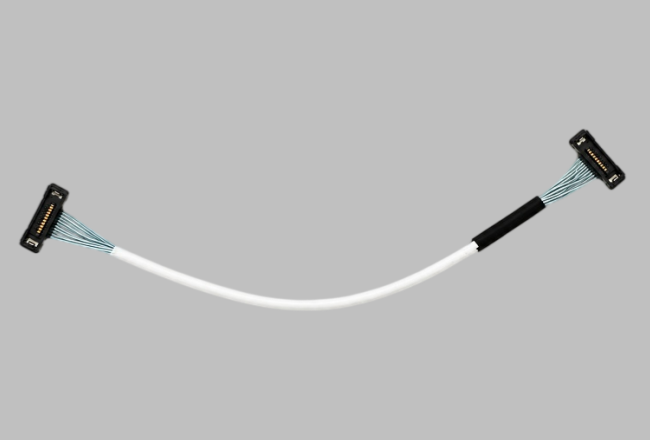
“Without the consent or authorization of this site, no one shall reproduce, reprint, distribute, cite, change, broadcast or publish the content in whole or in part in any form, nor shall there be any other violation of the copyright of this site.