


Categorization:Harness Component
In applications such as AI vision, robotics, intelligent driving assistance, and industrial inspection, the NVIDIA Jetson platform often requires connection to MIPI CSI-2 cameras. Official NVIDIA documentation indicates that the Jetson platform provides MIPI CSI-2 camera interfaces and supports multi-camera connections; the number of MIPI CSI-2 channels and bandwidth on different Jetson platforms are continuously improving. This means that the connection between the camera module and the main control board not only needs to meet the requirements of high-speed differential signal transmission but also take into account the internal space of the device, cable flexibility, EMI control, and long-term stability. Compared to ordinary ribbon cables, ultra-fine coaxial cables adopt a coaxial structure, with each channel having an independent shielding path, which is more advantageous for controlling external interference and crosstalk in high-speed signal transmission scenarios. Additionally, the smaller diameter and better flexibility of the cables make them very suitable for connection scenarios in Jetson vision devices where space is tight, and the camera position needs to be frequently adjusted or passed through narrow structures. It should be noted that not all Jetson cameras "universally" use ultra-fine coaxial cables; the actual selection depends on camera interfaces, transmission distance, bandwidth, and device structure; NVIDIA also points out that interface schemes such as MIPI CSI-2, GMSL2, and FPD-Link III need to be selected comprehensively based on bandwidth, cable length, and application environment.
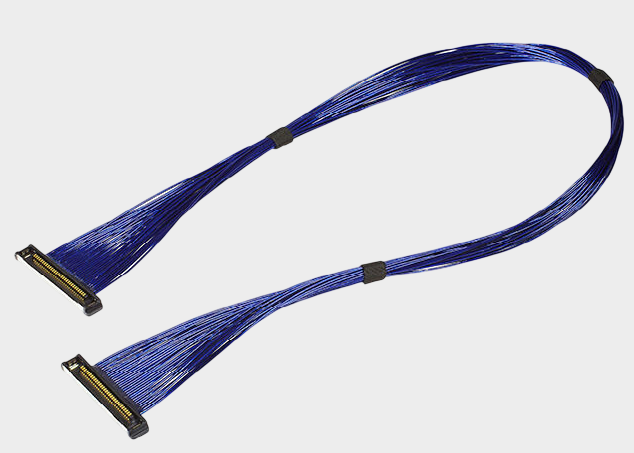
For engineers, the core of the camera cable assembly is not just "whether it can conduct," but whether the high-speed signal can maintain sufficient signal integrity after passing through the cable. The extremely thin coaxial cable is composed of a central conductor, insulating layer, shielding layer, and outer sheath, forming a relatively complete transmission structure, which can be designed for impedance, attenuation, crosstalk, and shielding performance; especially in high-speed differential signal environments such as MIPI, reasonable control of the wire structure, impedance, and connector termination helps to reduce the impact of reflection, crosstalk, and external noise on the signal. At the same time, Jetson devices often pursue miniaturization and multi-camera integration, so the cable needs to complete wiring within a limited space. Therefore, "small outer diameter + high flexibility + shielding transmission" becomes an important value of the extremely thin coaxial cable. Taking the I-PEX CABLINE®-SS series as an example, its connectors adopt a 0.4mm spacing, vertical insertion and extraction, and horizontal out-line structure, combined with a height of about 1.65mm, and support Micro-Coaxial Cable; the official product information also gives the highest 16Gbps/Lane high-speed transmission capability.
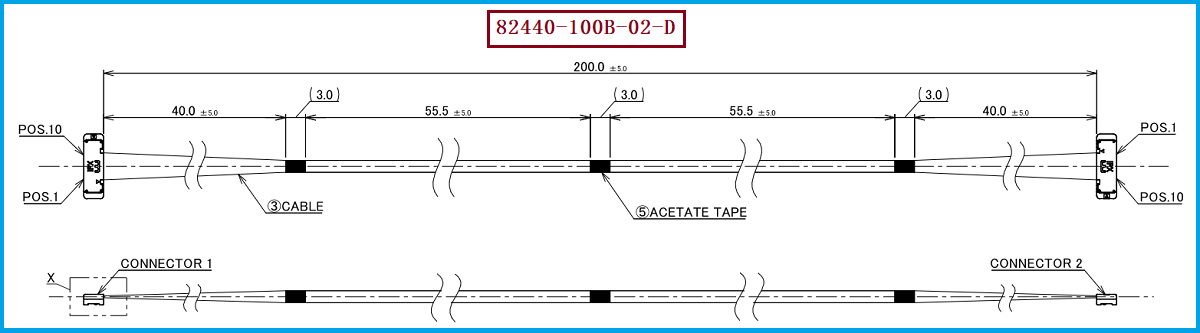
This product introduced is I-PEX 82440-100B-02-D, which belongs to the CABLINE®-SS series 10Pin ultra-thin coaxial cable assembly, with a length of 200MM. The connector model used at the end of the cable material is 20373-R10T-06. From the perspective of engineering selection, the 10Pin structure is suitable for multi-channel high-speed signals, control signals, and power/ground lines in camera module applications; the 200MM length is also suitable for short-distance connections between the main control board and the camera module inside the equipment. According to the official information from I-PEX, the 20373-R10T-06 is categorized as a CABLINE-SS 10Pin Plug Housing, and this model is still listed by I-PEX as a corresponding alternative. CABLINE-SS supports Micro-Coaxial Cable specifications AWG36, AWG38, AWG40, and AWG42, with the AWG42 having注意事项 regarding characteristic impedance mismatch. For engineers, when designing Jetson camera cable assemblies, they should focus on checking the pin count, wire sequence, wire diameter, characteristic impedance, length, shielding structure, and connector fitment dimensions. For purchasers, they should focus on confirming the material number correlation, batch consistency, delivery date, and verification conditions for domestic compatibility and alternative products.
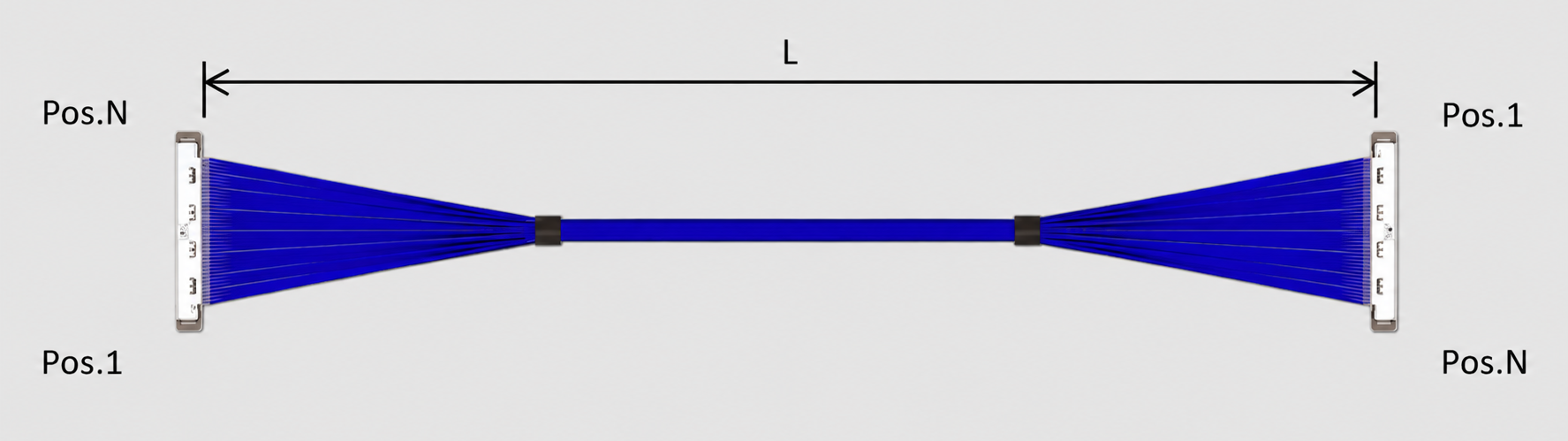
For customers seeking domestic alternatives for the I-PEX CABLINE®-SS series cables, it is recommended not to judge compatibility solely based on "consistent connector appearance", but to comprehensively confirm according to connector model + pin count + cable specification + cable length + wire sequence + impedance + shielding structure + actual high-speed signal testing. The target product of this solution is I-PEX 82440-100B-02-D, 200MM, 10Pin, cable end connector 20373-R10T-06; if applied to the NVIDIA Jetson camera module, it should also be verified in combination with the specific Jetson carrier board, camera sensor, MIPI CSI-2 channel configuration, and actual wiring space. Our company can provide a compatible alternative ultra-thin coaxial cable solution for I-PEX 82440-100B-02-D, and can match and develop according to the customer's provided original cable, drawings, or samples, for cable length, pin count, wire sequence, connector, cable specification, and processing technology, providing ultra-thin coaxial cable alternative solutions for engineering verification, sample trial production, and bulk purchasing.
“Without the consent or authorization of this site, no one shall reproduce, reprint, distribute, cite, change, broadcast or publish the content in whole or in part in any form, nor shall there be any other violation of the copyright of this site.