


Categorization:Harness Component
In high-speed electronic equipment, although the extremely thin coaxial cables are small in size, they often undertake the task of high-speed differential signal transmission. Therefore, "how thin the wire is" is not the only criterion for engineering selection; the stability of impedance and the matching of signal transmission are also important. When high-speed signals are transmitted between cables, connectors, and PCBs, if there is a significant discontinuity in impedance, it may cause signal reflection, which in turn affects insertion loss, return loss, crosstalk, and the overall signal integrity. The official high-speed performance test of I-PEX CABLINE®-SS uses AWG#40, 45Ω, 100mm Micro-Coaxial Cable, and is tested with a 40Pin connector and GSSGSSG wire order. At the same time, V-By-One US 16Gbps/Lane, HDMI 2.1 12Gbps/Lane, USB 3.2 Gen2 10Gbps/Lane, and other high-speed applications are listed as references. Therefore, for engineers, the impedance control of extremely thin coaxial cables actually relates to whether the high-speed system can operate stably; for procurement personnel, they cannot only compare the wire diameter and price but also confirm the impedance of the wire material and its matching relationship with the connector and PCB system.
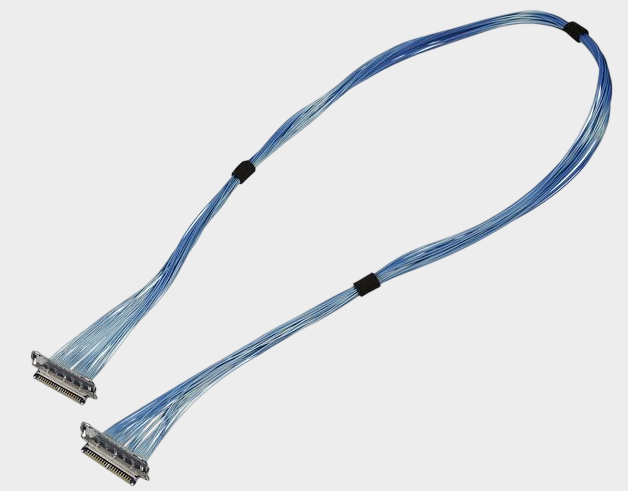
This product material number for the corresponding ultra-fine coaxial cable assembly is I-PEX 82879-100B-02-D, according to official documentation, it is a 10Pin Micro-Coaxial Cable, AWG#40, 100mm, 1-N wire sequence. The cable assembly uses the wire-end connector model 20373-R10T-06, which belongs to the CABLINE®-SS 10Pin Plug Housing. The official product page clearly lists the Micro-Coaxial Cable compatibility range including AWG36, AWG38, AWG40, and AWG42, with AWG42 particularly noted for the impedance mismatch issue. It can be seen that for AWG#40 ultra-fine wire materials, engineering design cannot simply be understood as "the thinner the better", but should simultaneously control the conductor structure, insulating medium, shielding structure, and the overall geometric dimensions of the cable to keep the actual impedance close to the design target. Especially when the cable assembly is used in scenarios such as high-speed display, data transmission, or high-speed cameras, stable impedance control can reduce discontinuity issues in the signal transmission process.
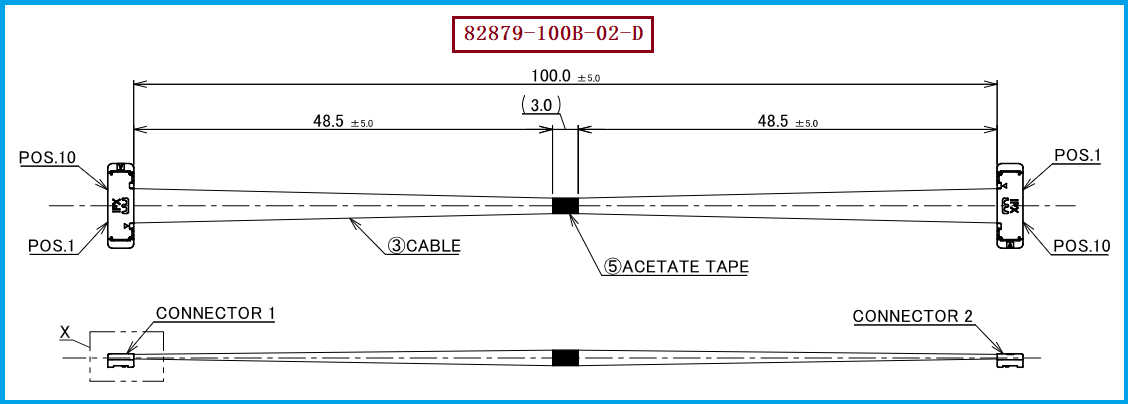
From the perspective of engineering replacement, the I-PEX 82879-100B-02-D cannot be directly replaced simply by being made as "10Pin + AWG#40 + 100mm". This model belongs to the CABLINE®-SS 10Pin Harness, with the official corresponding description of 10Pin Micro-Coaxial 40AWG, L=100mm, 1-N; its matching cable end connector is 20373-R10T-06. At the same time, CABLINE®-SS itself uses a 0.4mm Contact Pitch, Vertical Right Angle structure, 1.65±0.2mm mating height, and 3mm Depth, so attention also needs to be paid to the connector mating, wire direction, wire sequence, length, installation space, and high-speed signal requirements during the replacement development. Especially in terms of wire sequence, there are both 1-N and 1-1 structures in the same series, so it cannot be determined solely based on the number of pins whether it can be directly replaced.
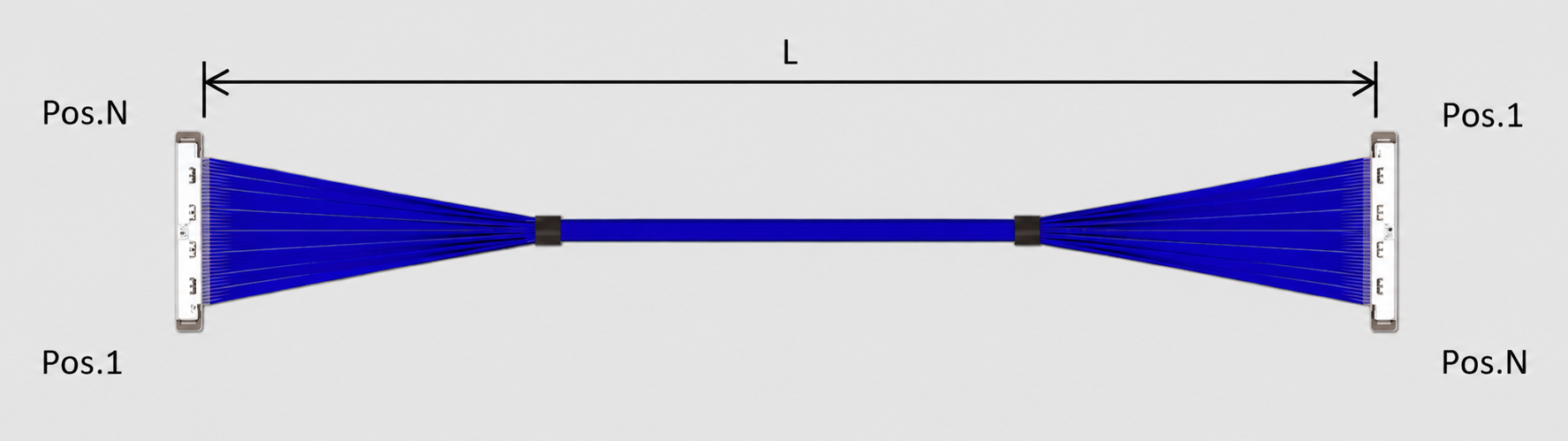
For engineers, it is recommended to confirm the basic compatibility alternatives for the I-PEX 82879-100B-02-D by considering the following items: 10Pin, AWG#40, 100mm, 1-N, 20373-R10T-06, and impedance requirements. Then, verify signal integrity based on the actual system's high-speed signal rate; if the original equipment has specific impedance requirements for high-speed signals, further confirm the impedance continuity between the wire, connector, and PCB ends. For purchasers, it is suggested not to simply compare prices based on "same model connector" or "same AWG wire," but to check the complete BOM and key electrical and mechanical specifications. Our company can provide I-PEX 82879-100B-02-D compatible alternative cable solutions. We can match the 10Pin, AWG#40, 100mm, 1-N wiring sequence, and the 20373-R10T-06配套 structure according to the original cable, drawings, or technical specifications provided by the customer, and carry out corresponding cable manufacturing and verification for the impedance and high-speed signal transmission requirements of the extremely thin coaxial cables.
“Without the consent or authorization of this site, no one shall reproduce, reprint, distribute, cite, change, broadcast or publish the content in whole or in part in any form, nor shall there be any other violation of the copyright of this site.