


Categorization:Harness Component
With the development of high-definition, ultra-high-definition, digital imaging, and intelligent diagnosis and treatment technology, modern endoscopes are no longer just simple "camera + cable" systems, but integrated precision electronic systems that incorporate image collection, high-speed data transmission, illumination, and control functions. For engineers, one of the most challenging issues within the endoscope is the contradiction between limited space and high-speed signal transmission: the body, lens module, and internal structure need to be as slender as possible, but the image data generated by the camera module is becoming increasingly large. Traditional thicker cables not only occupy space but also easily increase the pressure on bending, assembly, and signal integrity during high-density wiring. Therefore, extremely thin coaxial cables have gradually become an important choice for high-speed signal connections within precision imaging equipment. What is meant by "extremely thin" is not just making the wire thinner, but achieving precise control between the conductor, insulating layer, shielding layer, and structural dimensions, realizing stable high-speed signal transmission under the smallest possible outer diameter. For products like endoscopes that have requirements for volume, flexibility, signal quality, and reliability, this characteristic is particularly valuable.
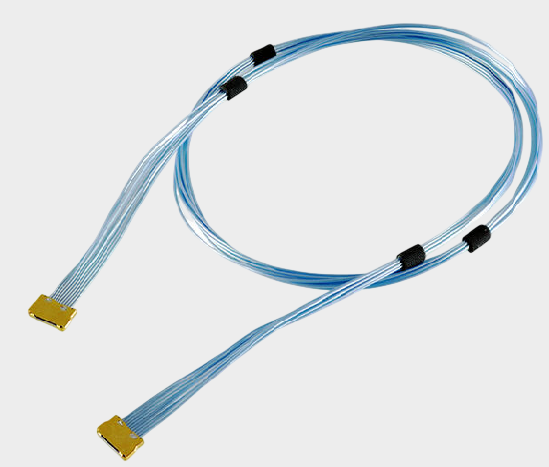
From the perspective of engineering applications, the true advantage of ultra-fine coaxial cables is not simply the "thinness," but the comprehensive balance of miniaturization, high-speed transmission, anti-interference, and high-density wiring capabilities. The coaxial structure forms a relatively stable signal transmission environment through the central conductor, insulating medium, and external shielding structure, which can reduce the impact of external electromagnetic interference on high-speed signals and also help control cross-talk between signals. For endoscopic camera systems, when image data is transmitted from the front-end camera module to the back-end processing circuit, if the cable is restricted by space, bent, or interfered with by surrounding electronic devices, the signal quality may be affected; while using a reasonable specification of ultra-fine coaxial cable bundle, multi-channel high-speed signal wiring can be completed within a limited space. In addition, the ultra-fine wire diameter can reduce the space occupied by the cable bundle in narrow structures, giving engineers greater freedom in designing the internal wiring, turns, and module layout of the mirror body. In other words, the core value of ultra-fine coaxial cables can be summarized as: carrying high-speed signal connections in a smaller space while taking into account signal integrity and electromagnetic compatibility requirements.
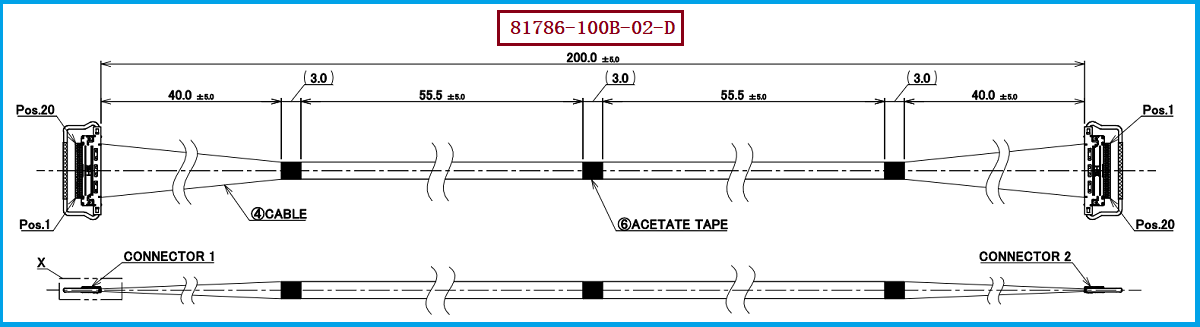
This product model introduced is I-PEX 81786-100B-02-D, which belongs to the I-PEX CABLINE®-CA series ultra-fine coaxial cable solution. According to the corresponding product information, this model is a 20Pin Micro-Coaxial ultra-fine coaxial cable, AWG40, with a length of 200mm, and uses a 1-N wiring scheme. The connector model used with the cable end is 20634-120T-02. The 20634-120T-02 belongs to the CABLINE®-CA Plug Housing 20Pin model and is matched with the CABLINE®-CA series connection scheme with a 0.4mm pitch. The CABLINE®-CA uses a small spacing, high-density structure and has design features such as mechanical lock, shielding, and multi-point grounding, targeting high-speed, miniaturized internal connection applications. For R&D engineers, the combination of 20Pin + AWG40 + 200mm is suitable for solution verification in devices that require multi-channel signal connections and are restricted by internal space; for procurement personnel, they can directly use the I-PEX 81786-100B-02-D as the model basis for the existing scheme and perform compatibility checks from dimensions such as pin count, wire diameter, length, wiring sequence, connector, and termination process, rather than just replacing based on "外观相似" (similar appearance).
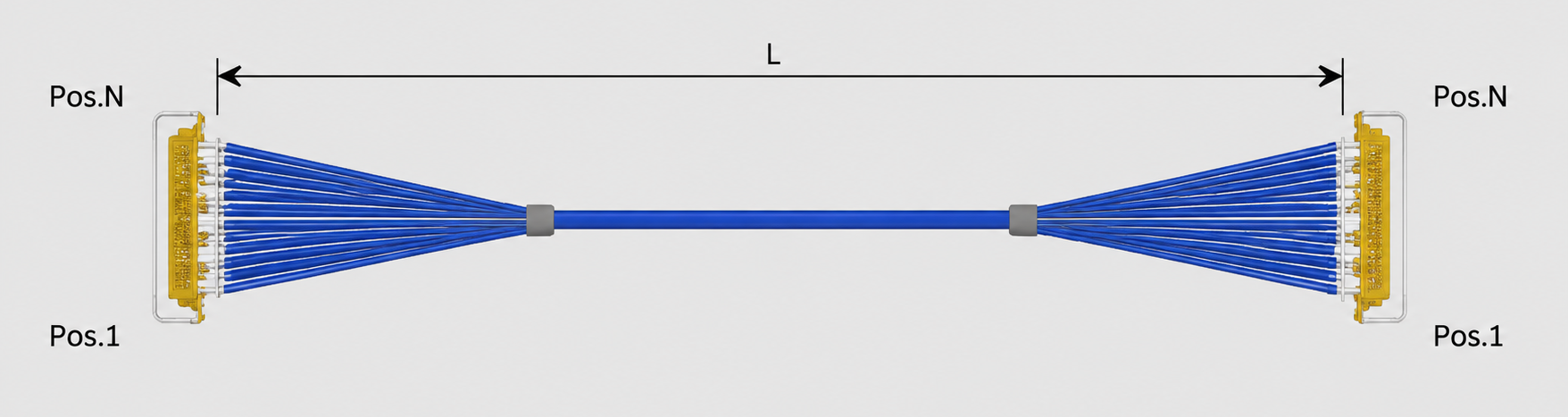
If research and development or procurement are looking for a domestic, compatible, or alternative solution for I-PEX 81786-100B-02-D, it is recommended to first confirm the 20Pin configuration, AWG40 wire, 200mm length, and 1-N wire sequence requirements in the original design. At the same time, focus on checking the connector model 20634-120T-02 used at the terminal end. For high-speed ultra-thin coaxial cable assemblies, what truly determines whether the alternative solution can be stably introduced is not only whether the connector can be mated, but also factors such as wire structure, characteristic impedance, shielding method, terminal crimp quality, stripping size, coaxial structure consistency, wire sequence definition, and finished product electrical performance. Especially for applications such as endoscopes, industrial vision, and precision camera equipment, cable assemblies usually need to be routed in confined spaces, so it is also necessary to confirm the cable outer diameter, bend radius, exit direction, and length tolerance in combination with the actual assembly space. For such requirements, our company can provide an I-PEX 81786-100B-02-D compatible alternative cable assembly solution. It can match the key parameters such as 20Pin, AWG40, 200mm, and corresponding connectors based on the original factory samples, drawings, or BOM provided by customers, and carry out customized production around wire materials, termination, wire sequence, and finished product testing, providing engineers with domestic alternative verification samples, and also providing supply chain alternative options for procurement personnel during bulk introduction.
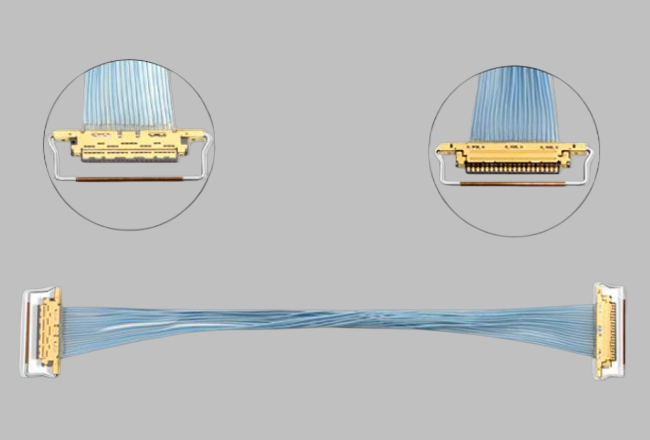
“Without the consent or authorization of this site, no one shall reproduce, reprint, distribute, cite, change, broadcast or publish the content in whole or in part in any form, nor shall there be any other violation of the copyright of this site.