


Categorization:Harness Component
In notebook computers, AI devices, industrial cameras, high-resolution displays, machine vision, robots, and other high-density electronic devices, engineers often encounter a problem: why is the price of extremely fine coaxial cables often significantly higher than that of ordinary wires, FFC, or some FPC solutions, even though they are all cables used to connect internal signals of devices? For purchasing personnel, this price difference is often a key issue in cost assessment and supplier selection. In fact, the cost of extremely fine coaxial cables is not determined solely by "how long the copper wire is," but is closely related to conductor size, insulation structure, coaxial shielding structure, impedance control, high-speed transmission performance, termination precision, and cable manufacturing process. Taking the I-PEX 82861-100B-02-D as an example, it is a 20 Pin, AWG40 specification CABLINE®-CA series extremely fine coaxial cable, with a配套 wire end connector model of 20634-120T-02, and the cable compatible with connector specification of AWG#40. AWG40 itself already belongs to a very fine wire diameter, and it is necessary to complete the stable structure of conductors, insulation layers, and shielding layers on such tiny cables, and finally terminate multiple extremely fine coaxial cables with a high degree of consistency. Therefore, its manufacturing difficulty is much higher than that of ordinary wires. For engineers, extremely fine coaxial cables truly provide the comprehensive ability to "achieve high-speed, stable, and low-crosstalk signal transmission within limited space"; for purchasing personnel, what they buy is not just a piece of cable, but a precision manufactured and quality-controlled high-speed signal connection solution.
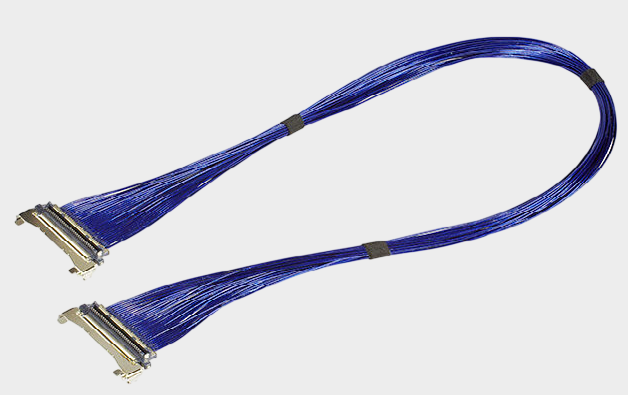
The technical value of extremely thin coaxial cables is directly related to their special internal structure. Ordinary conductors usually consist of a conductor and an insulating layer as their basic structure, while extremely thin coaxial cables need to precisely control multiple structures such as the central conductor, insulating medium, shielding layer, and outer sheath under the condition of extremely small outer diameter, to ensure that signals maintain more stable transmission characteristics in high-speed, high-frequency environments. Especially in high-speed differential signal applications, impedance consistency, signal attenuation, crosstalk, and EMI anti-interference ability will directly affect the final system performance. CABLINE®-CA adopts a 0.4mm contact spacing and horizontal insertion structure, and is配合 shielding and multi-point grounding design, it can be used in high-density, high-speed internal connection scenarios. For 20 Pin, AWG40 extremely thin coaxial cable assemblies such as 82861-100B-02-D, the finer the wire, the higher the difficulty in size control and termination during the manufacturing process; cable assembly manufacturers need to control multiple aspects such as conductor stripping, insulating layer processing, shielding layer processing, coaxial structure consistency, and terminal pressing. Particularly in multi-core cable assemblies, if there is a deviation in the processing size or termination position of a line, it may affect the overall assembly and high-speed signal performance. Therefore, the price difference of extremely thin coaxial cables essentially reflects the cost of materials + precision processing cost + high-speed signal performance guarantee cost + quality control cost. From the perspective of engineering selection, it is better to pay more attention to factors such as wire diameter, impedance, structure, length, Pin number, connector matching, and actual high-speed signal performance, rather than simply comparing "how much per meter". From the perspective of procurement, it should also combine the one-time purchase price with product yield, delivery stability, batch consistency, and the comprehensive cost after domestic substitution for evaluation.
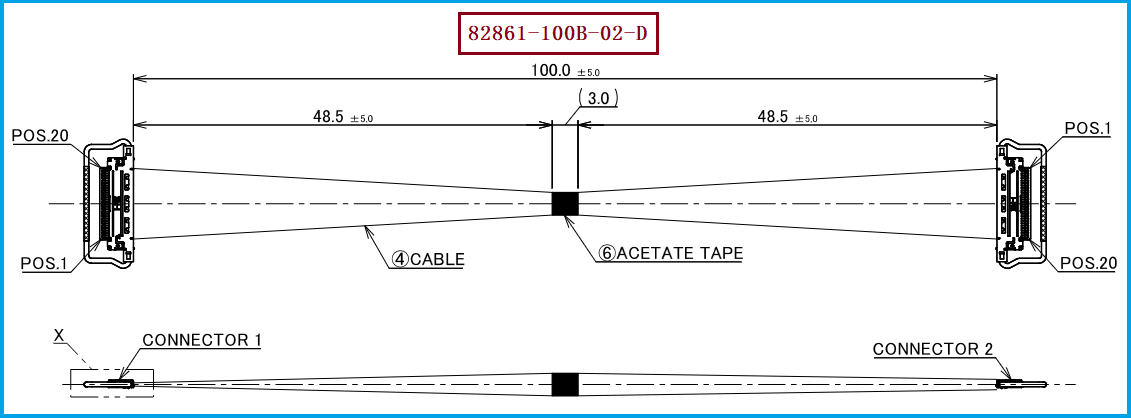
For equipment using the CABLINE®-CA series connection scheme, if I-PEX 82861-100B-02-D is used in the project BOM, engineers need to focus on confirming key conditions such as connector, Pin count, wire specification, wire length, Pin Assignment, and termination structure during domestication, second supplier introduction, or cost optimization. According to the corresponding product information, 82861-100B-02-D belongs to a 20 Pin Micro-Coaxial 40AWG cable scheme; its matching cable terminal connector model is 20634-120T-02, and the compatible cable specification is AWG#40. Therefore, during compatible alternative design, it is not enough to simply achieve "looking the same"; verification is also required from aspects such as connector mating dimensions, terminal position, wire AWG, coaxial structure, shielding continuity, wire sequence, wire length, and assembly reliability. For engineers, it is recommended to focus on verifying connector mating, mechanical lock, cable bending space, signal integrity, and EMI performance during the sample stage; for purchasers, they can further compare the comprehensive cost of original factory supply and domestic compatible supply in terms of unit price, MOQ, lead time, mass production capacity, quality stability, and after-sales response. Our company can provide: I-PEX 82861-100B-02-D compatible alternative cable scheme, which can provide customers with ultra-fine coaxial cable sample making, specification confirmation, and mass production services around the application requirements of 20 Pin, AWG#40, and the corresponding 20634-120T-02 connector, helping customers reduce dependency on a single supply source and providing new choices for product domestication, supply chain optimization, and cost control.
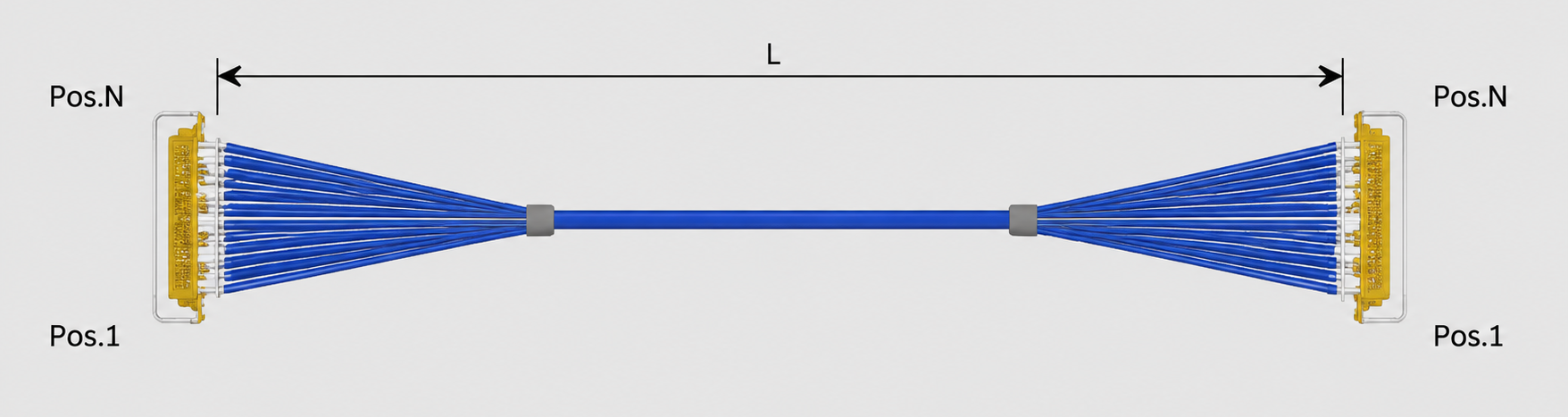
In the selection and substitution process of ultra-fine coaxial cable bundles, it is recommended that engineers first confirm the complete specifications of the original cable. Purchasing personnel need to convert the technical requirements into quantifiable supplier delivery standards. For I-PEX 82861-100B-02-D, it is suggested to focus on confirming the combination relationship of "20 Pin+AWG40+20634-120T-02 connector+corresponding cable length and wire sequence". If the equipment belongs to high-speed display, camera, machine vision, or other high-speed data transmission applications, it is also necessary to further verify the insertion loss, return loss, impedance consistency, crosstalk, and shielding effect under the actual working frequency, rather than just judge compatibility based on the connector model or cable appearance. At the same time, the substitution of ultra-fine coaxial cables does not mean a simple copy of the original product, but it can be customized according to the customer's actual usage length, bending direction, wire exit method, and assembly space while maintaining interface size, Pin definition, and key electrical performance to meet equipment requirements. For the purchasing side, a truly valuable alternative supplier not only needs to be "lower in price" but also need to have stable AWG40 ultra-fine coaxial cable processing capabilities, precise termination capabilities, mass production capabilities, and continuous quality control capabilities. Especially for long-term mass production projects, it is recommended to prioritize the "sample verification—small batch verification—mass production introduction" approach to reduce the engineering risk brought by direct replacement.
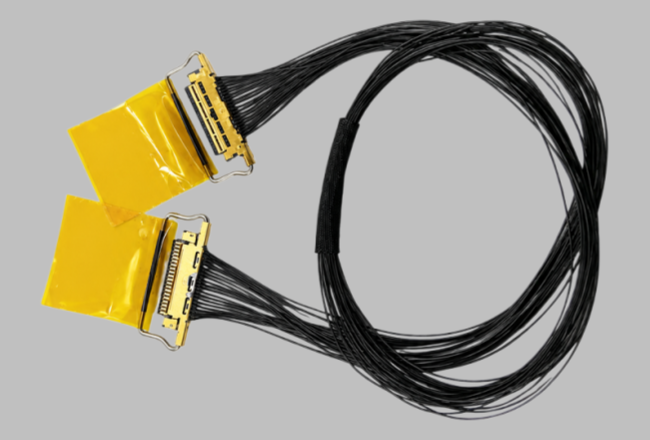
“Without the consent or authorization of this site, no one shall reproduce, reprint, distribute, cite, change, broadcast or publish the content in whole or in part in any form, nor shall there be any other violation of the copyright of this site.