


Categorization:Harness Component
With the continuous development of laptops, high-resolution display devices, industrial vision, AI equipment, intelligent robots, and high-speed computing equipment towards high-speed, miniaturized, and high-density directions, the internal cables of the equipment are no longer just simple "conductive connectors," but have become an important part of the whole machine's signal quality and operational stability. Especially in the high-speed differential signal transmission environment, traditional ordinary wires are prone to be affected by external electromagnetic interference, signal crosstalk, impedance changes, and spatial layout factors. The extremely thin coaxial cables, through the structure of "center conductor + insulating layer + shielding layer + outer sheath," provide better electrical isolation and shielding protection for high-speed signals, thereby helping to reduce EMI interference, reduce signal crosstalk, and improve the consistency of high-speed signal transmission. For engineers, this means that in the limited internal space of the equipment, using reasonable specifications of extremely thin coaxial cable bundles can meet the requirements of high-density wiring, signal integrity, and structural space control at the same time; for purchasers, it means that choosing suppliers of extremely thin coaxial cable bundles with mature manufacturing processes and stable consistency is of great significance for reducing batch differences and improving product mass production stability.
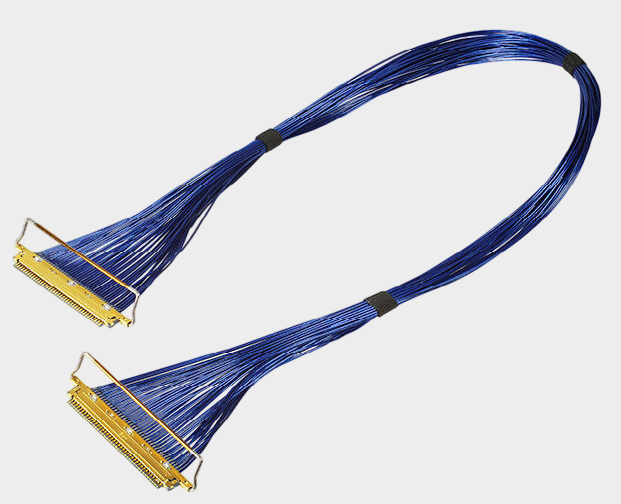
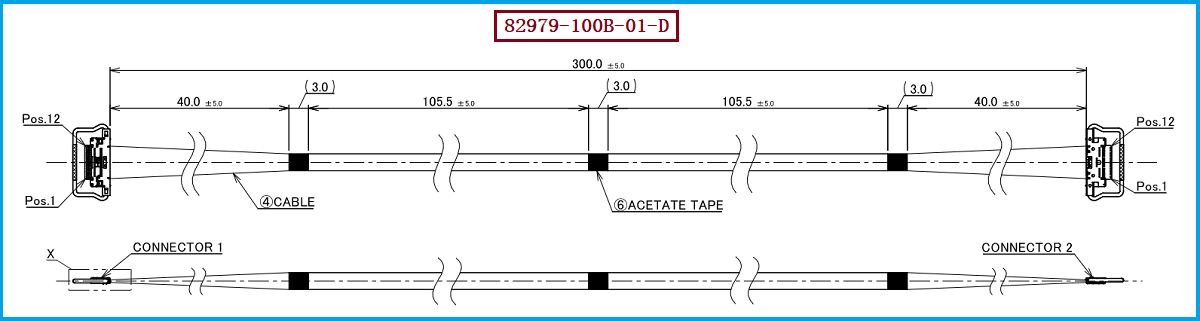
This product corresponds to I-PEX 82979-100B-01-D, which belongs to the I-PEX CABLINE®-CA series ultra-thin coaxial cable assembly products. Its typical specifications are 12 pins, AWG40 Micro-Coaxial ultra-thin coaxial cable, 300mm in length, and 1-1 wire sequence. The cable assembly is matched with the I-PEX 20634-112T-02 connector at the cable end, which is a high-density structure with 12 pins and 0.4mm pitch (terminal spacing). The 0.4mm ultra-fine spacing can complete multi-channel signal connections within a smaller PCB space, while the AWG40 ultra-thin coaxial cable is conducive to reducing the overall space occupation of the cable assembly, making it more suitable for electronic devices with high requirements for internal structural dimensions. For R&D engineers, when replacing original part numbers, they need to pay attention not only to the surface parameters such as "12 Pin" and "300mm", but also confirm the connector model, 0.4mm spacing, AWG40 cable, 1-1 wire sequence, termination size, and high-speed electrical performance. Only when both the mechanical interface and electrical performance meet the design requirements can a truly reliable compatible replacement be achieved.
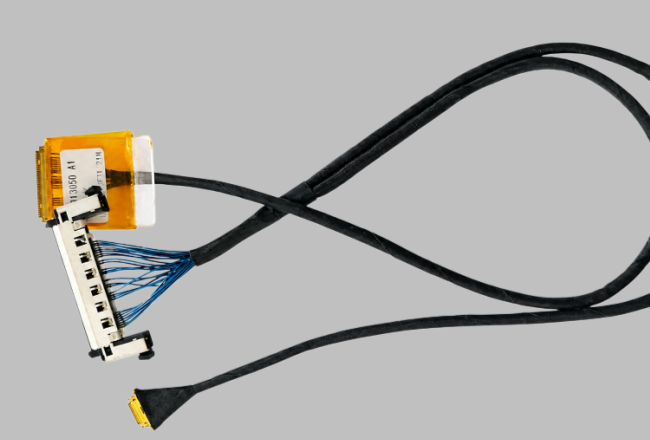
The enhancement of equipment stability by extremely fine coaxial cables is first reflected in the high-speed signal integrity. The transmission quality of high-speed signals is affected by factors such as impedance, attenuation, crosstalk, and external electromagnetic environment. The extremely fine coaxial structure utilizes the shielding layer to protect the internal signal, which can reduce the possibility of external interference entering the signal channel, and also helps to minimize the electromagnetic radiation generated by high-speed signals to the surrounding lines. Secondly, extremely fine coaxial cables have high wiring flexibility. In space-intensive products such as notebooks, display modules, industrial cameras, and AI vision equipment, they can be used to design more refined wiring based on the internal structure, reducing assembly issues caused by excessively thick cables, insufficient bending space, or crowded wiring. Moreover, the accompanying miniature connectors adopt a high-density structure and mechanical lock design, which can reduce the risk of connection loosening during equipment vibration, transportation, or long-term use. Therefore, true equipment stability is not solely achieved by relying on a single component, but rather comes from the combined effect of multiple aspects including extremely fine coaxial cable material, shielding structure, connector termination quality, mechanical fixation, and high-speed electrical performance. For engineers, this is also a key technical factor to evaluate when choosing extremely fine coaxial cable bundles.
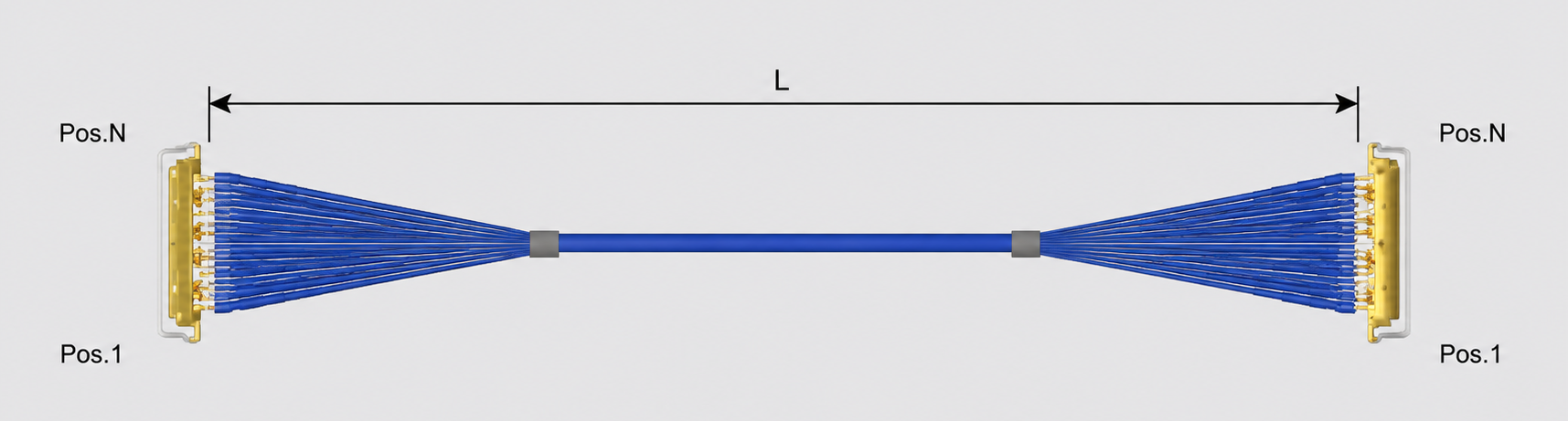
The selection and compatibility of I-PEX 82979-100B-01-D, it is recommended that engineers first confirm the original device's required 12 Pin connection method, 0.4mm Pitch, AWG40 ultra-thin coaxial cable, 300mm length, and 1-1 wire sequence. At the same time, check the interface structure, size, and fitting relationship of the cable end connector 20634-112T-02. In high-speed applications, it is also necessary to further pay attention to the characteristic impedance, transmission loss, crosstalk, return loss, and termination consistency of the ultra-thin coaxial cable, rather than relying solely on appearance size to judge whether it can be replaced. For procurement personnel, in addition to price, it is recommended to focus on whether the supplier can consistently produce 40AWG ultra-thin coaxial cable bundles in bulk, whether it has mature precision stripping, shielding layer processing, termination, conduction testing, short-circuit testing, and appearance detection capabilities, as well as whether the consistency between samples and mass-produced products can be maintained. Our company can provide: I-PEX 82979-100B-01-D compatible cable solution, which can match and develop for the connector, Pin number, 0.4mm Pitch, cable specification, length, wire sequence, and assembly requirements of the customer's original cable, providing an ultra-thin coaxial cable solution for research and development verification, localization replacement, second supplier introduction, and bulk procurement.
“Without the consent or authorization of this site, no one shall reproduce, reprint, distribute, cite, change, broadcast or publish the content in whole or in part in any form, nor shall there be any other violation of the copyright of this site.