


Categorization:Harness Component
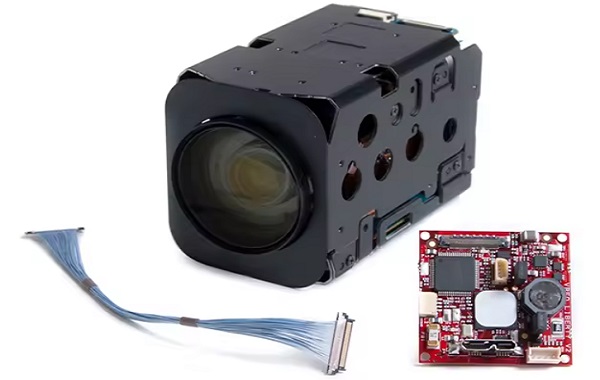
One, design challenges of signal and power supply parallel design
The core task of extremely fine coaxial cable bundles is to maintain the integrity of high-speed signals, such as those used in high-speed interfaces like eDP, MIPI, USB3.x, HDMI, and so on. When power lines are added to the same cable bundle, engineers need to pay close attention to issues such as electromagnetic interference, voltage and current capacity, and shielding grounding methods. Power lines are prone to interference during power supply, and improper shielding can reduce the quality of differential signals; at the same time, the extremely fine coaxial cable itself has thin conductors and limited carrying capacity, so it is necessary to reasonably select the power line diameter according to the current size; in narrow spaces, appropriate shielding and grounding methods must be adopted to avoid coupling between signals and power.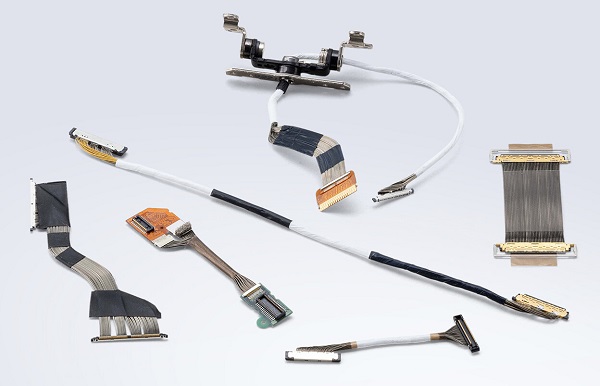
Two, key considerations for mixed harness selection
In practical applications, to achieve the coexistence of high-speed signals and power supply, the "hybrid cable assembly" structure is usually adopted, which combines extremely fine coaxial cables, power lines, and control lines in a single cable. When selecting, it is necessary to clarify the power requirements of the interface, for example, MIPI has a smaller current, while USB3.1's power supply may reach 900mA. A common structure is to use extremely fine coaxial cables for the signal part, and multi-strand twisted structures for power lines to reduce impedance and heat generation. If the application scenario requires high flexibility, considerations must also be given to the cable diameter, bending radius, and durability. In addition, high-density hybrid cable assemblies put forward higher requirements for shielding and processing technology, and crimping, welding, and terminal selection will directly affect the final performance.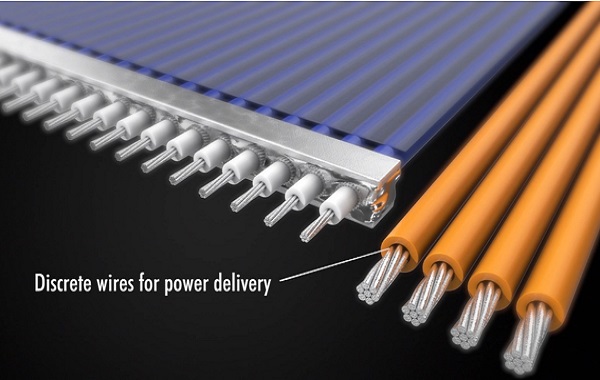
Three, typical application scenarios
In industrial camera and sensor applications, engineers often integrate high-speed image signals and device power supply into the same cable to reduce wiring and improve system integration. In notebook and tablet display modules, eDP signal lines are often encapsulated with backlit power lines, saving space while ensuring stable transmission. In portable medical devices, the integrated cable design of signal + power supply can combine lightweight and reliable performance in limited space, enhancing the overall user experience.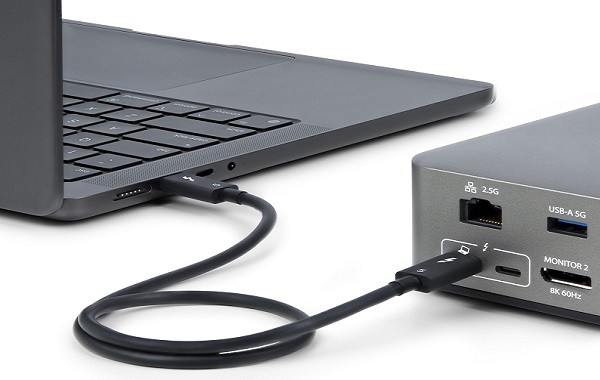
I am[Suzhou Huichengyuan Electronic Technology], Long-term focused on the design and customization of high-speed cable harnesses and ultra-fine coaxial cable harnesses, committed to providing stable and reliable high-speed interconnect solutions. If you have any related needs or want to learn more, please contact Manager Zhang:18913228573 (WeChat number)。
“Without the consent or authorization of this site, no one shall reproduce, reprint, distribute, cite, change, broadcast or publish the content in whole or in part in any form, nor shall there be any other violation of the copyright of this site.