


Categorization:Harness Component
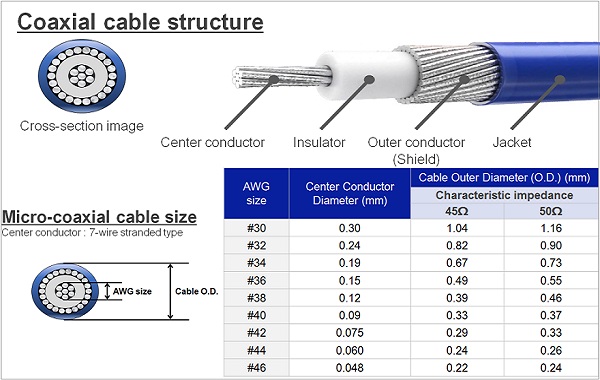
Signal frequency and wire diameter correspondence
The line diameter of extremely thin coaxial cables should be selected based on the frequency and rate of the applied signal. In high-speed scenarios (≥1GHz or rate ≥2Gbps), too thick a line diameter will increase parasitic capacitance, while too thin a diameter will result in conductor loss. Generally, an outer diameter of 0.25~0.35mm is recommended, with impedance controlled within 50Ω single-ended or 100Ω differential range. In medium-to-high-speed scenarios (several hundred MHz to 1GHz, rate 1~2Gbps), such as MIPI D-PHY or LVDS interfaces, the line diameter can be appropriately selected as 0.3~0.5mm to balance flexibility and low loss. For low-speed scenarios (<500MHz, rate <1Gbps), a 0.4~0.6mm outer diameter can be used to reduce DC resistance and improve stability.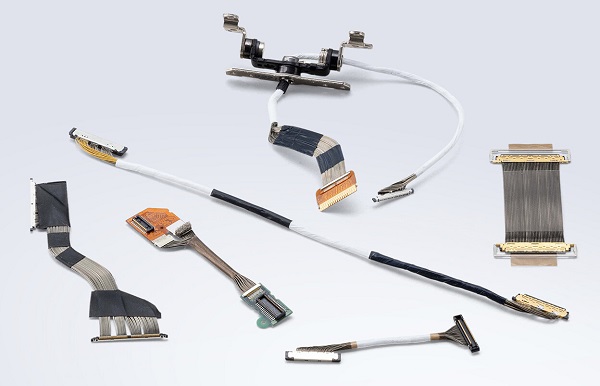
The key considerations behind wire diameter selection
When determining the diameter of extremely fine coaxial cable束,multiple factors need to be considered. Firstly, signal integrity is the core indicator, and the cable diameter directly affects the characteristic impedance, which in turn affects the eye diagram opening and jitter performance. Secondly, under high frequencies, the loss of the dielectric and conductor is significant, and a too small diameter of the cable will increase signal attenuation. Furthermore, miniaturized equipment has strict requirements for flexibility and wiring space, and a small diameter of the cable is helpful to adapt to narrow spaces. At the same time, process tolerances are also critical; the finer the cable diameter, the higher the processing difficulty and consistency requirements, which must be fully considered in the design.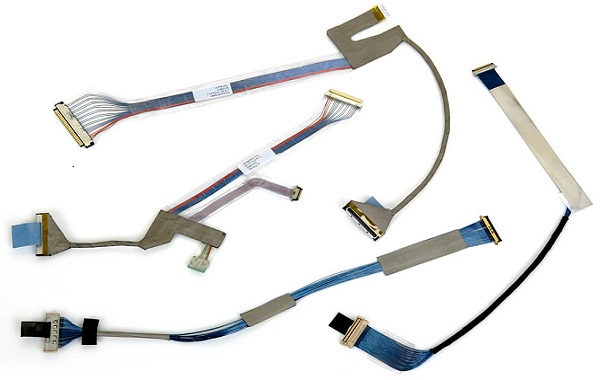
Typical Applications and Practice Strategies
In practical applications, the selection of the wire diameter for extremely fine coaxial cable bundles needs to be combined with specific interfaces and signal rates. Camera modules (MIPI CSI) typically use cable bundles with an outer diameter of 0.3~0.4mm to balance speed and flexibility; display interfaces (eDP, HDMI, USB3.x) are suitable for an outer diameter of 0.25~0.35mm under 1~5Gbps; for master control and high-speed storage (UFS, PCIe) with higher speeds, strict requirements are placed on wire diameter accuracy and impedance control, usually with an outer diameter of about 0.25mm. By reasonably matching the wire diameter, designers can balance signal integrity, flexibility, and manufacturing feasibility at different speeds and frequencies.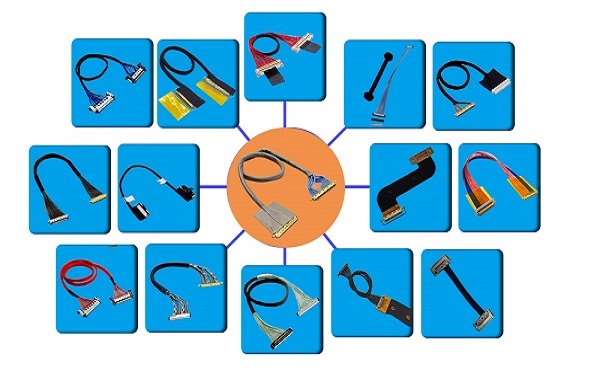
I am[Suzhou Huichengyuan Electronic Technology],Long-term focus on the design and customization of high-speed cable harnesses and extremely thin coaxial cables, committed to providing customers with stable and reliable high-speed interconnection solutions. If you have relevant needs or want to learn more, please contact Manager Zhang:18913228573 (WeChat number)。
“Without the consent or authorization of this site, no one shall reproduce, reprint, distribute, cite, change, broadcast or publish the content in whole or in part in any form, nor shall there be any other violation of the copyright of this site.