


Categorization:Harness Component
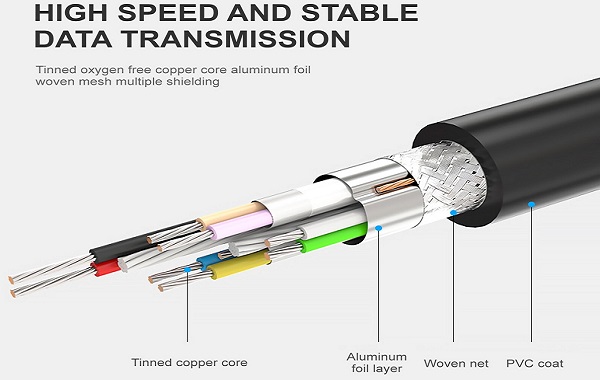
Advantages and Application Trends of Ultra-Fine Coaxial Beam
The main reasons for choosing ultra-fine coaxial cable束 lie in its ability to maintain good electrical performance and shielding structure in a limited space. Compared to traditional differential pairs, Micro Coax combines characteristics such as small size, strong anti-interference ability, and stable performance in high-speed scenarios, and is therefore widely used in fields such as high-speed image transmission, radio frequency communication, and display modules. It is precisely based on these advantages that many engineers hope to further apply it to USB3.1, thereby achieving higher wiring freedom and structural compactness.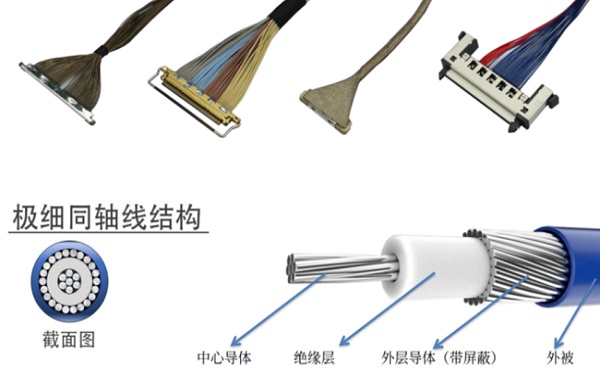
Second, the potential risks that are easily overlooked in the selection of USB 3.1
Under the high-speed environment of USB3.1, the extremely thin coaxial cable is not "the thinner, the better." If only the cable diameter is considered while ignoring signal integrity indicators such as impedance consistency, insertion loss, and return loss, the eye diagram may close within a short distance. Moreover, arbitrarily combining two coaxial cables into a differential pair, ignoring the wire gauge of the power line, and neglecting the termination and shielding transition process will directly affect the link quality. In addition, the mechanical fatigue of the cable assembly, the length limitation of the available length, and the higher manufacturing cost, all these factors will collectively determine the ultimate performance of USB3.1, rather than the single condition of "the cable itself is sufficiently thin."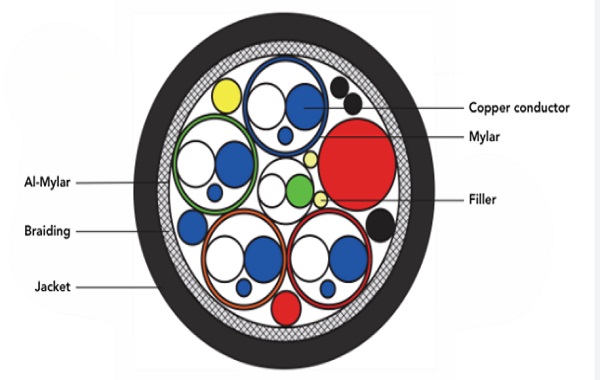
Ensure the design and verification strategy for stable USB3.1 transmission
To stably support USB3.1 with extremely thin coaxial cable束, both system design and process implementation need to be approached from both sides. Choose professional cables and connectors that are compatible with high-speed transmission, control the impedance matching and length consistency of the differential pairs, and at the same time, ensure the cross-sectional area of the power line to avoid instability of the system due to heat generation or voltage drop. In the cable layout, it is also necessary to comply with the minimum bending radius to ensure long-term mechanical reliability. At the prototype stage, it is more important to complete eye diagram, bit error rate, S parameters, and signal integrity simulation to ensure that the link has sufficient margin, making the overall system truly meet the high-speed requirements of USB3.1.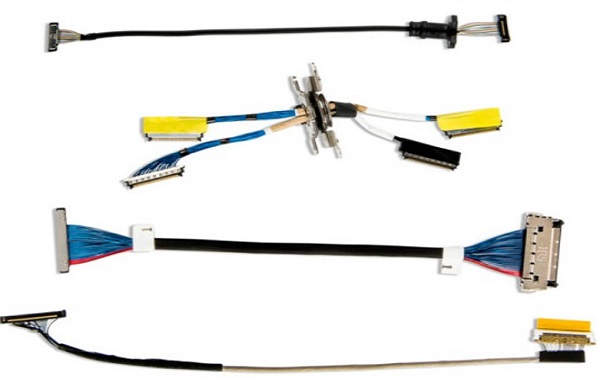
I amSuzhou Huichengyuan Electronic Technology, Long-term focused on the design and customization of high-speed cable harnesses and extremely thin coaxial cables, committed to providing stable and reliable high-speed interconnect solutions. If you have any related needs or want to learn more, please contact Manager Zhang.18913228573 (WeChat number)。
“Without the consent or authorization of this site, no one shall reproduce, reprint, distribute, cite, change, broadcast or publish the content in whole or in part in any form, nor shall there be any other violation of the copyright of this site.