


Categorization:Product Information
With the continuous upgrade of electronic devices, camera modules, display devices, laptops, and industrial electronic products have higher requirements for internal data transmission rates. When products upgrade from lower speeds to higher speeds, engineers often focus on whether the chip, interface, and PCB design need adjustments, but easily ignore whether the original wiring harness can meet the new transmission requirements. In fact, the wiring harness is also an important part of the high-speed signal transmission chain. Even if the original wiring harness can connect normally, it does not mean that it still has enough signal transmission capability at higher speeds. Therefore, it is not necessary to replace all wiring harnesses directly during product upgrades, but it is necessary to re-evaluate the electrical performance and interface adaptation ability of the original wiring harness.
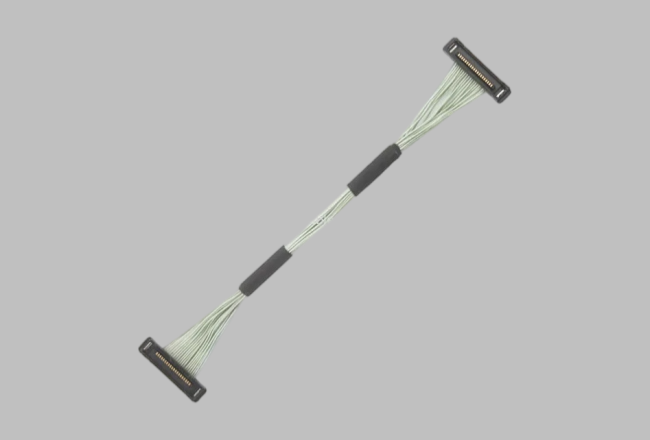
When the data transmission rate increases, the performance requirements for signal edges, working frequency range, and transmission channel will change. The cables that can meet the requirements of low-speed applications may experience increased insertion loss, impedance discontinuity, signal reflection, and crosstalk at higher speeds. These factors may cause insufficient eye diagram margin, increased bit error rate, and even communication instability. Therefore, when upgrading cables, it is necessary to focus on evaluating characteristics such as characteristic impedance, insertion loss, return loss, and crosstalk, while also making judgments based on actual transmission protocols and working frequencies. It is especially important to note that it is not enough to judge whether a cable is suitable based on the nominal transmission rate alone; the performance of the entire signal channel should be considered.
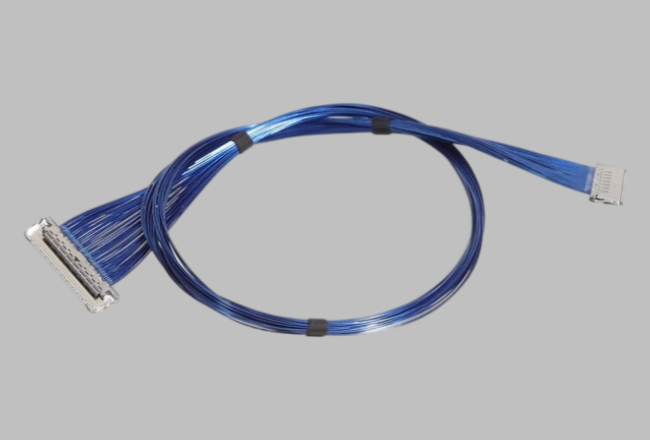
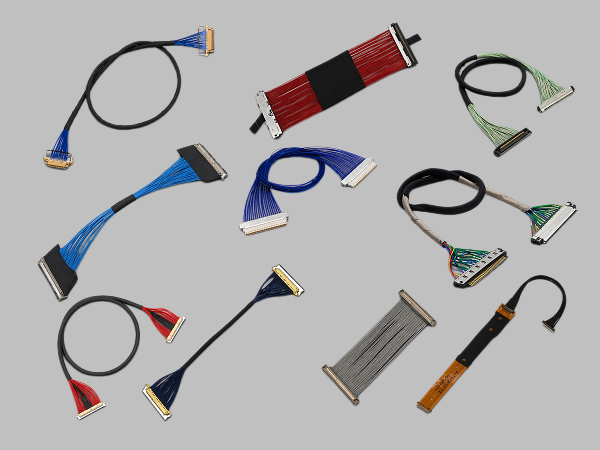
In cameras, display modules, and other miniaturized electronic devices, extremely thin coaxial cables are commonly used for transmitting internal high-speed signals. The structure composed of the central conductor, insulation layer, and outer shield layer can achieve controlled impedance transmission under a smaller outer diameter and provide certain electromagnetic shielding capabilities. When the product is upgraded to a higher speed, it is necessary to reconfirm the original cable's AWG specification, impedance specifications, cable length, shielding structure, and connector compatibility. If the existing components still meet the new electrical performance requirements after evaluation, it may not be necessary to replace them; if the loss, crosstalk, or other performance indicators can no longer meet the requirements, then considering replacing the cable structure, adjusting the connector scheme, or redeveloping the cable components may be necessary.
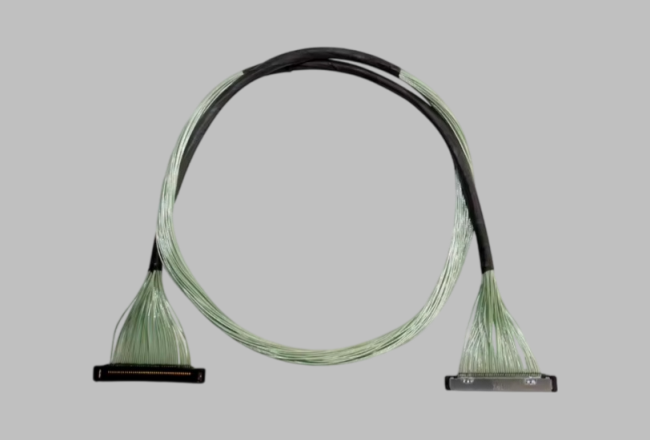
High-speed connection scheme upgrades often involve the joint adjustment of cables, connectors, and termination processes. Different connectors have corresponding requirements for applicable wire specifications, cable outer diameter, pin count, and spacing. If only the cable is replaced without considering the impedance matching of the connector and the termination structure, it may反而 introduce new signal problems. In addition, the connection of the central conductor of extremely thin coaxial cables, the treatment of the shielding layer, welding accuracy, and cable arrangement will also affect the transmission performance of the final component. Therefore, during the upgrade process, an overall evaluation should be made in combination with the product structure, connector model, cable length, and actual routing, and impedance, insertion loss, return loss, and high-speed signal integrity tests should be conducted according to the project requirements.
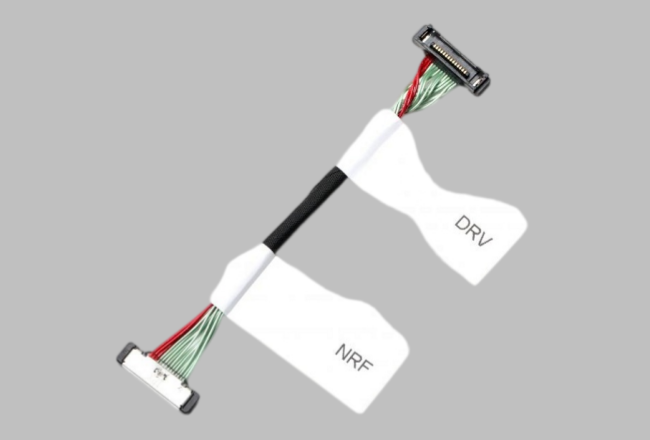
The product upgrade does not necessarily mean that all internal harnesses must be replaced; the key is to determine whether the existing components can still meet the new transmission requirements. We focus on the production, customization, and development of配套 connection solutions for extremely thin coaxial cable components. We can assist with AWG wire gauge selection, connector matching, cable length adjustment, wire sequence confirmation, and development of compatibility alternative solutions based on the original harness model, connector specifications, product drawings, or physical samples provided by the customer. For projects that require upgrading, optimizing, or redesigning existing harnesses, we can also carry out component selection, sample production, and development of processing solutions in conjunction with new transmission speed and product structure requirements. This helps customers achieve high-speed internal connections that are more suitable for new product needs while retaining reasonable structural design.
“Without the consent or authorization of this site, no one shall reproduce, reprint, distribute, cite, change, broadcast or publish the content in whole or in part in any form, nor shall there be any other violation of the copyright of this site.