


Categorization:Product Information
With the continuous development of electronic devices towards thinness, miniaturization, and high integration, the outer diameter of internal cables has become smaller and smaller. Especially in camera modules, laptops, tablets, and display devices, extremely fine coaxial cables have become an important high-speed internal connection solution. However, many people tend to fall into a misconception when selecting: they think that the thinner the cable, the more suitable it is for high-speed signal transmission. In fact, there is no simple positive correlation between cable diameter and high-speed transmission capability. A too small cable diameter may increase the conductor resistance, which in turn affects signal loss; whether the cable can meet the requirements of high-speed transmission also depends on conductor structure, insulation material, shielding method, characteristic impedance, and overall processing quality.
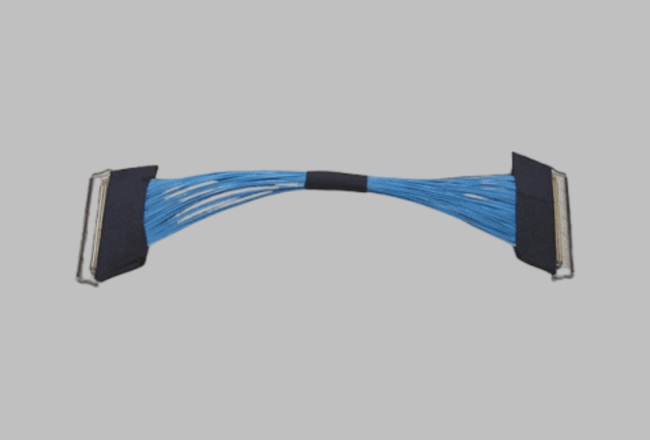
In the selection of ultra-fine coaxial cable bundles, the AWG (American Wire Gauge) is an important parameter. The larger the AWG value, the smaller the conductor diameter is usually represented. For example, AWG36, AWG40, and AWG42, although all belong to relatively fine wire gauges, their conductor sizes and electrical characteristics are not the same. Thinner conductors are beneficial for reducing cable outer diameter and improving wiring flexibility, but they may also bring higher conductor resistance and transmission loss. Relatively thicker conductors typically have lower resistance but may occupy more internal space. Therefore, when selecting, one should not solely pursue a smaller wire diameter but should choose an appropriate AWG wire gauge based on transmission speed, cable length, connector compatibility specifications, and product internal space, achieving a balance between size, flexibility, and electrical performance.
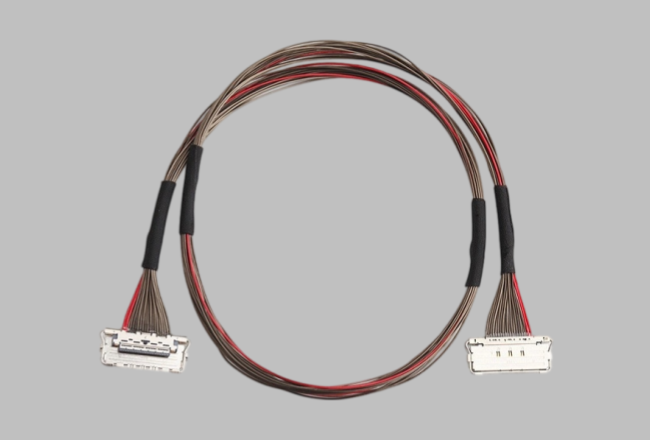
For extremely thin coaxial cable bundles that transmit high-speed internal signals, in addition to conductor size, characteristics such as characteristic impedance, insertion loss, return loss, and shielding performance should be paid close attention to. The extremely thin coaxial cable usually consists of a central conductor, an insulating layer, an outer conductor shielding layer, and an outer sheath. The internal geometric dimensions and insulating materials will collectively affect impedance and transmission characteristics. If there is impedance discontinuity, signal reflection may occur; if the insertion loss is too high, the signal quality at the receiving end may be reduced. In addition, the shielding layer structure and grounding connections will also affect electromagnetic interference and channel crosstalk. Therefore, even if two cables have the same outer diameter, it does not necessarily mean they have the same high-speed transmission performance.
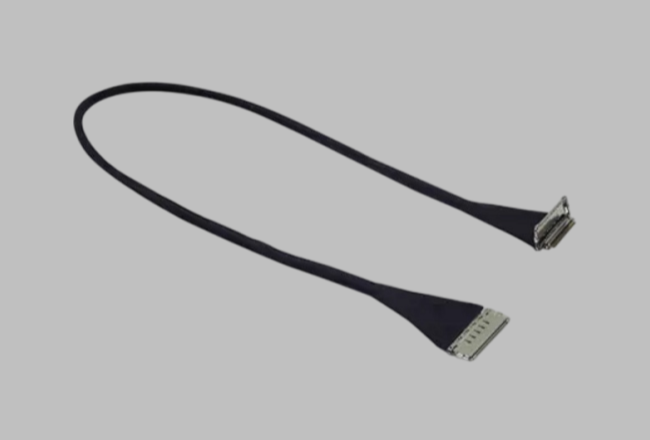
High-speed signal transmission not only depends on the cable itself but is also closely related to the connector, termination technology, and actual routing path. In most cases, an increase in cable length leads to more cumulative transmission loss; if there is impedance mismatch between the connector and the cable, it may also affect signal integrity. For extremely thin coaxial cables, the termination of the central conductor, the treatment of the insulation layer, the connection of the shielding layer, and the precision of cable arrangement may all affect the performance of the final component. Therefore, during the design and manufacturing process, it is necessary to confirm the connector model, pin count, spacing, wire sequence, cable exit direction, and cable length simultaneously, and to carry out electrical performance verification according to the actual application requirements, rather than judging whether it meets the needs of high-speed transmission solely based on wire diameter or appearance.
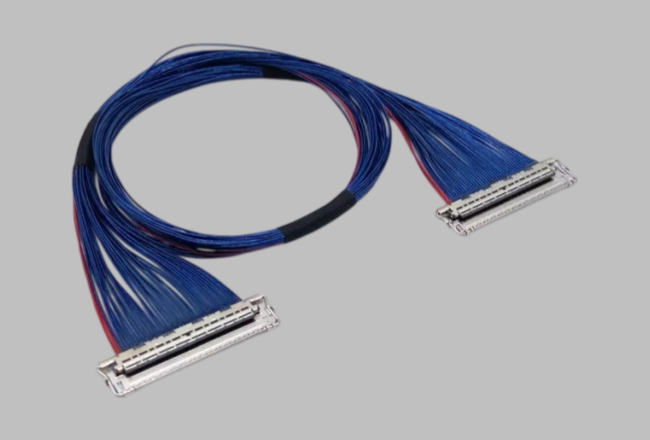
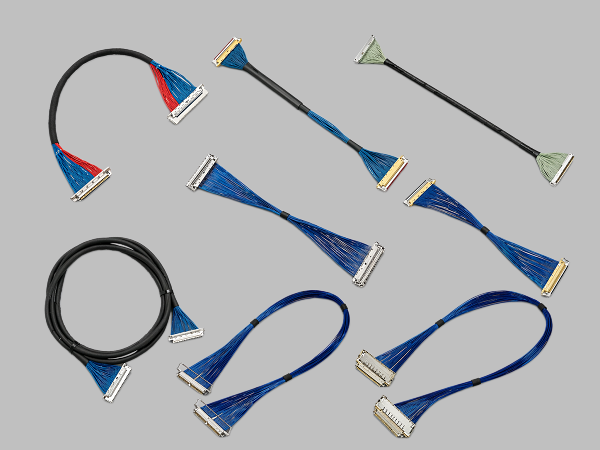
Different electronic devices have different requirements for internal high-speed connections. Camera modules, display devices, and high-speed data transmission modules all have their own characteristics in terms of interface type, transmission speed, cable length, and installation space. We focus on the production, customization, and development of配套 connection schemes for ultra-fine coaxial cable assemblies. We can assist in AWG wire gauge selection, cable structure matching, connector compatibility, wire sequence confirmation, and development of alternative compatibility solutions based on the connector model, original factory cable part number, product drawings, or physical samples provided by customers. For projects with limited space or high requirements for high-speed transmission, we can also carry out sample production and solution verification in combination with actual application needs. This ensures that cable assemblies meet size requirements while also considering signal transmission performance and assembly reliability.
“Without the consent or authorization of this site, no one shall reproduce, reprint, distribute, cite, change, broadcast or publish the content in whole or in part in any form, nor shall there be any other violation of the copyright of this site.