


Categorization:Product Information
As electronic products continue to develop towards miniaturization, lightweighting, and high performance, the internal connection design of the equipment is facing new challenges. On one hand, modules such as cameras, displays, and sensors need to transmit an increasing amount of high-speed data signals; on the other hand, the available space for wiring within the product is becoming more and more limited. How to achieve stable and reliable high-speed signal connections within limited space has become a problem that needs to be considered in the development process of many electronic products.
In fact, besides the common FPC soft flexible cables and traditional conductors, there is another connection method worth paying attention to—the extremely fine coaxial cable harness (Micro Coaxial Cable Harness). It is mainly used for high-speed signal transmission inside electronic devices, achieving high-density and compact electrical connections through the fine coaxial structure and matching miniature connectors. The extremely fine coaxial cable harness mentioned here is not the traditional coaxial cable used for antennas or radio frequency interfaces, but a precision cable harness component for high-speed signal connections inside miniature electronic devices.
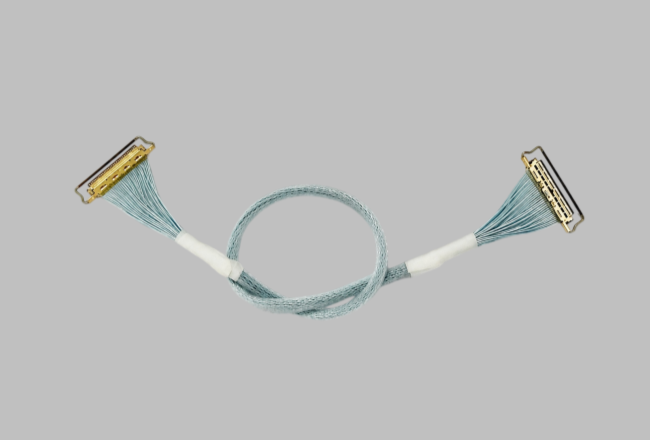
Why are more and more devices beginning to focus on ultra-fine coaxial cable assemblies?
The advantages of extremely fine coaxial cable bundles lie not only in the cable's sufficient thinness but also in its ability to combine space utilization, signal transmission, and electromagnetic shielding. The internal structure usually consists of a central conductor, insulating medium, external shielding layer, and insulating sheath, which can achieve corresponding impedance control and signal shielding according to application requirements.
For compact internal structures of electronic devices, this fiber can provide a relatively flexible wiring method while meeting the needs of multi-channel high-speed signal transmission. For example, it can be used for high-speed interface connections such as MIPI CSI-2 between camera modules and mainboards; in laptops, tablets, and foldable screen devices, it can be used for high-speed signal connections related to display; and in machine vision, medical imaging, and smart wearable devices, it can also give full play to the advantages of miniaturization and flexible connections.
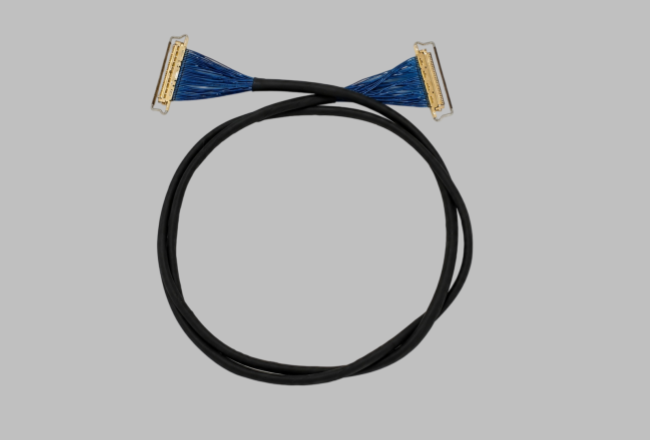
What are the differences between ultra-fine coaxial cable bundles and ordinary connection lines?
Normal wires mainly bear the basic electrical connections, while extremely fine coaxial cables pay more attention to the electrical performance during the process of high-speed signal transmission. Compared with some common ribbon cables, extremely fine coaxial cables have an independent shielding structure, which, under reasonable design and matching, helps to reduce external electromagnetic interference and crosstalk between adjacent signals.
In addition, extremely fine coaxial cable bundles are often used with high-density miniature connectors, and different pin counts, connector spacing, installation height, and cable lengths can be selected according to the device structure. For products that require wiring through shafts, narrow spaces, or complex structures, their flexible characteristics can also provide more design options for the internal structure. Of course, the specific transmission performance still depends on cable specifications, connector matching, termination technology, and overall signal integrity design; it cannot be simply assumed that the thinner the wire diameter, the better the transmission performance.
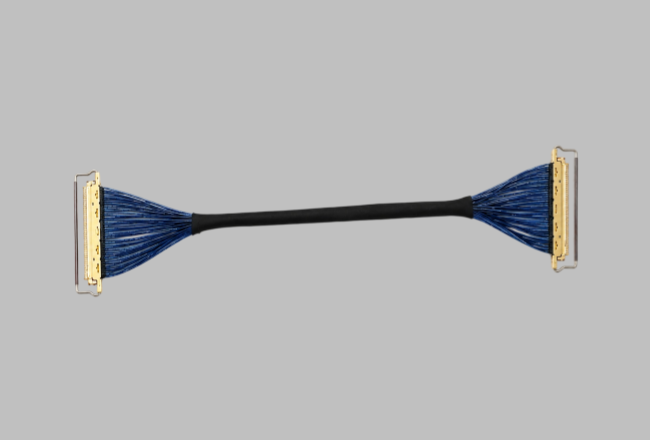
Three, what details should be paid attention to when selecting ultra-fine coaxial cable束?
In actual projects, the selection of ultra-fine coaxial cable bundles cannot be based solely on appearance and dimensions; it also requires a comprehensive evaluation in conjunction with the actual usage requirements of the equipment. Firstly, it is necessary to clarify the transmission protocol, signal rate, transmission distance, and impedance requirements; secondly, it is necessary to confirm the connector model, pin count, pitch spacing, cable AWG specification, wire sequence definition, and component length.
In addition, factors such as the bending radius of the harness, installation direction, operating temperature, shielding structure, and insertion reliability need to be considered. For high-speed signal applications, attention should also be paid to indicators such as insertion loss, return loss, crosstalk, and impedance continuity. Especially when replacing the original harness, it is not enough to judge that the two can be directly interchangeable just by the similarity of the connector's appearance. It is also necessary to check the interface structure, electrical performance, and actual assembly conditions.
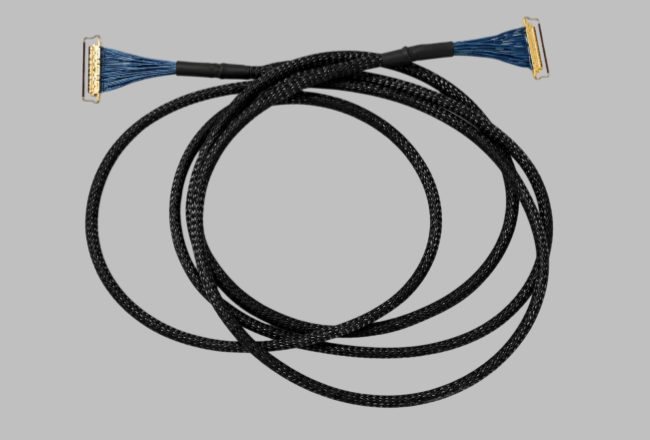
Four, from wire harness production to compatibility and replacement, professional solutions are equally important.
For electronic equipment manufacturers, finding the right ultra-thin coaxial cable assemblies is not just about solving the procurement issue of a single connecting wire, but also concerns product design, production assembly, and the subsequent supply chain stability.
We have been focusing on the production and manufacturing of high-speed ultra-fine coaxial cable assembly components and the development of matching connector solutions for a long time. We can carry out product analysis, specification matching, compatibility and substitution design, and customized processing according to the original factory cable model, product information, connector specifications, or physical samples provided by customers. For micro high-speed connectors and matching cables of brands such as I-PEX, we can also provide corresponding domestic compatibility and substitution solutions, sample production, and engineering technical support in combination with specific models and application requirements. This helps customers to increase supply chain options while meeting their product connection needs.
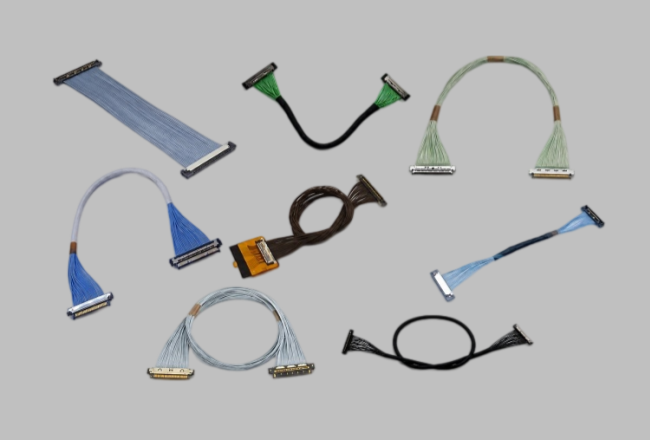
If your product is undergoing high-speed interface development, replacing existing cables, or selecting for a new project, you can also submit your specific requirements for our evaluation. We hope to facilitate the selection, replacement, and application development of extremely thin coaxial cables through our actual product manufacturing capabilities and engineering support experience.
“Without the consent or authorization of this site, no one shall reproduce, reprint, distribute, cite, change, broadcast or publish the content in whole or in part in any form, nor shall there be any other violation of the copyright of this site.