


Categorization:Harness Component
For engineers and purchasers, the "fineness of the finest ultra-fine coaxial cable" cannot be determined by just one AWG number; it requires a comprehensive consideration of the coaxial structure, insulating material, shielding layer, outer diameter, impedance, and the processing capability of the connector pins. Taking the I-PEX CABLINE®-UA II series as an example, this series uses a 0.3mm Contact Pitch and supports AWG42, AWG44, and AWG46 Micro-Coaxial Cables, which belong to ultra-fine coaxial connection solutions for high-density, miniaturized equipment. The official also showcased a 26Pin cable assembly made with a coaxial cable having an outer diameter of about 0.29mm, which can pass through a shaft or hose with an inner diameter of Φ2.65mm. It can be seen from this that in practical engineering applications, ultra-fine coaxial cables have already achieved very small outer diameters, but the ultimate fineness they can achieve still needs to be comprehensively determined based on the target impedance, signal rate, mechanical strength, bending requirements, and connector pin termination technology.
From the perspective of engineering design, making the wire finer is just the first step. What is more important is to maintain stable electrical and mechanical properties under a limited outer diameter. As the wire diameter is further reduced, the conductor cross-sectional area, shielding structure, mechanical strength, and machining tolerance will become more sensitive. High-speed signal applications also require attention to impedance consistency, insertion loss, return loss, and crosstalk, among other indicators. Therefore, when selecting extremely thin coaxial cables, it cannot be simply understood as "the smaller the AWG, the better." Instead, it should be selected according to the internal space of the equipment and the requirements of high-speed interfaces. The reference transmission speed of CABLINE®-UA II is 5Gbps/lane NRZ, and the official listed reference applications include USB 3.1 Gen1, V-By-One HS 1.4, HDMI 1.3, eDP, and MIPI related standards. Therefore, what engineers truly need to verify is whether a balance can be achieved between "extremely thin size and signal integrity."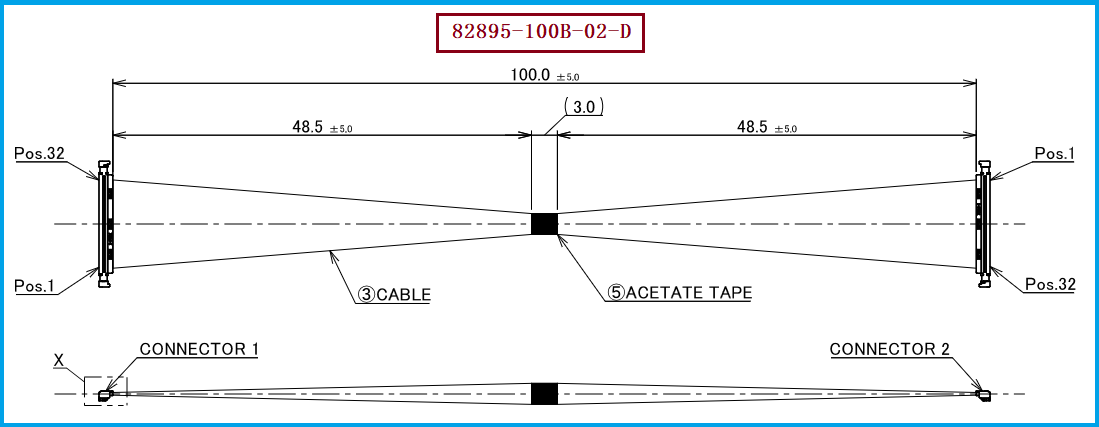
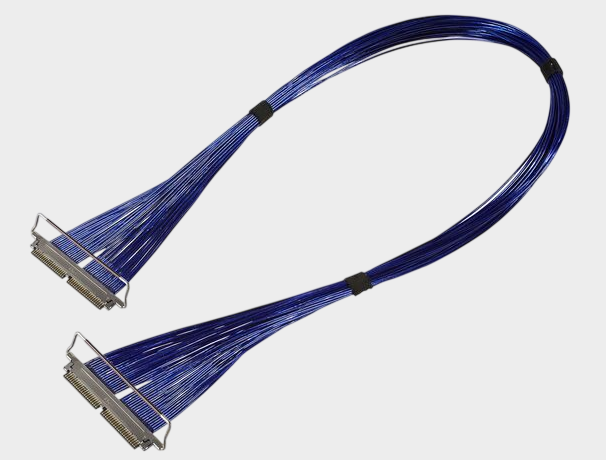
This product corresponds to the model I-PEX 82895-100B-02-D, which belongs to the CABLINE®-UA II 32Pin Micro-Coaxial Harness. The official sample specifications are 44AWG, 100mm, and 1-N. This harness uses 32 ultra-fine coaxial wires, both ends are matched with CABLINE®-UA II structures, and the connector model used at the wire end is 20497-032T-30. From the perspective of engineering drawings, the product not only needs to meet the requirements of 100mm length and 32P quantity, but also ensure that the wire sequence, termination, fixing, and overall assembly structure match the original design. Therefore, if the customer is replacing the original I-PEX harness, they cannot simply check "32Pin+100mm" when purchasing, but should further confirm the AWG, impedance, wire position definition, connector model, and termination relationship at both ends. The official I-PEX product page clearly lists 82895-100B-02-D as a 32P, 44AWG, 100mm, 1-N evaluation harness.
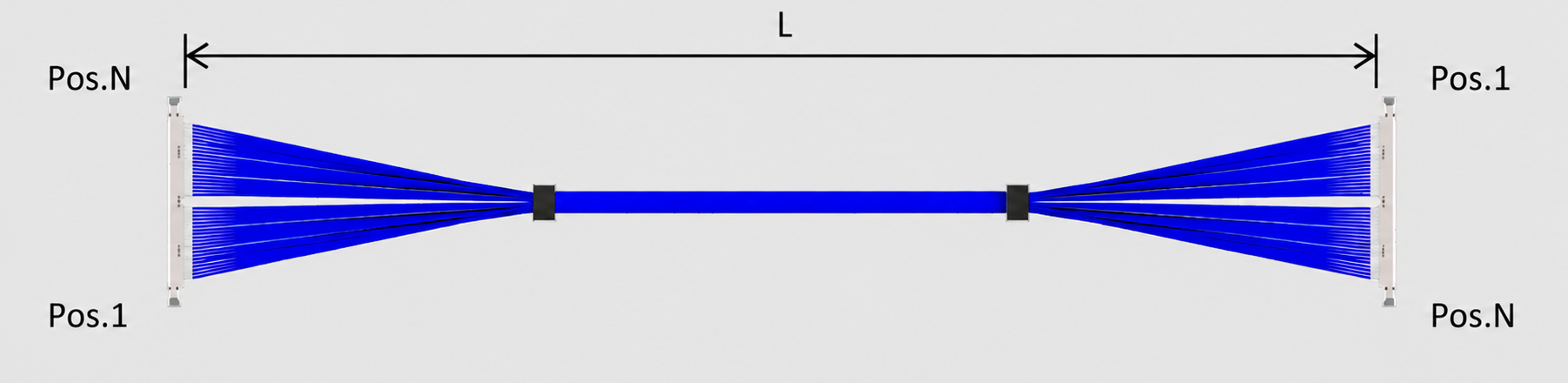
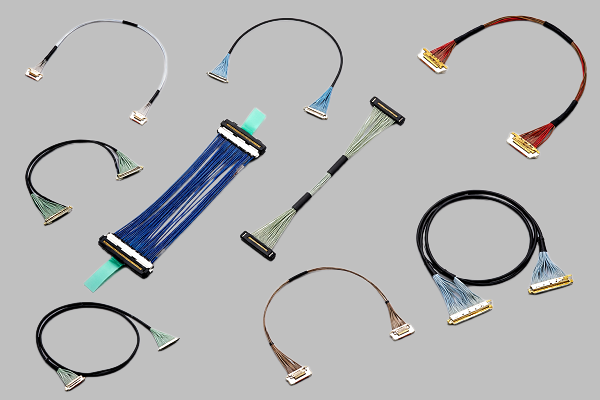
For customers who need domestication, supply chain backup, or cost optimization, it is recommended that engineers first establish a complete specification according to the original harness's Pin number, Pitch, connector structure, wire gauge, impedance, length, and wire position definition, and then proceed with alternative verification; purchasing personnel should focus on confirming whether the alternative supplier can provide long-term stable supply of the same connector and harness, and pay attention to sample consistency and mass production capacity. For this product, we can develop an extremely thin coaxial cable according to the target specifications of CABLINE®-UA II 32P, 44AWG, 100mm, 1-N, and match it with the 20497-032T-30 wire material end connector structure. Our company can provide I-PEX 82895-100B-02-D compatible alternative harness solutions, which can be used for sample making and specification matching according to the actual equipment space, length, wire sequence, and signal transmission requirements of customers, and is suitable for original harness replacement, domestication introduction, and project alternative supplier development.
“Without the consent or authorization of this site, no one shall reproduce, reprint, distribute, cite, change, broadcast or publish the content in whole or in part in any form, nor shall there be any other violation of the copyright of this site.