


Categorization:Harness Component
In industrial cameras, AI vision, robot vision, camera modules, and high-speed embedded devices, internal connections of the equipment often need to simultaneously complete high-speed data transmission and power supply. For example, high-speed data is transmitted using two sets of differential signals, and power and ground lines are configured to complete module power supply. Compared with ordinary ribbon cables, extremely thin coaxial cables can achieve high-density wiring in a limited space and transmit high-speed signals through an independent coaxial structure, making them particularly suitable for internal connections of devices with compact space and high signal rates. Taking I-PEX 82688-100B-01-D as an example, this product belongs to CABLINE®-VS 30P HARNESS, using 30 AWG#40, 50Ω Micro-Coaxial Cable, with a cable length of 200.0±5.0mm, and defined by 1-1 wire position. It should be especially noted that "dual differential + power" does not mean simply combining any two wires together, but rather requires the reasonable allocation of high-speed differential pairs, power, ground, and other control signals to the corresponding pin positions according to specific interface definitions.
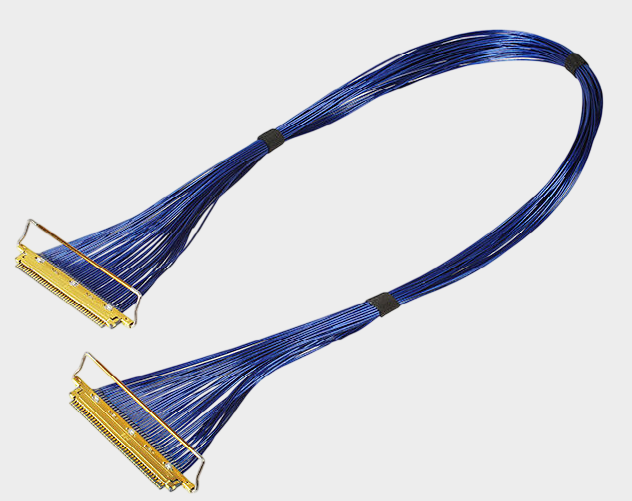
From the perspective of engineering design, the first step in a differential pair + power supply combination is to determine the signal architecture based on the actual interface. For example, a high-speed camera module may contain two groups of high-speed differential Lanes, and it also requires power and Ground connections. Engineers can configure the corresponding ultra-thin coaxial cables as high-speed differential channels based on specific protocols and Pin definitions, and then use the remaining suitable wire positions to carry power or auxiliary signals. For high-speed differential signals, the key points are to ensure the impedance consistency of the differential pairs, length matching, and reasonable wire sequence design. As for the power lines, the wire diameter and allowable current need to be confirmed according to the actual working current. The I-PEX 82688-100B-01-D uses AWG#40, 50Ω ultra-thin coaxial cables, and the wire material connector model is 20454-230T, which is compatible with AWG#40 wire specifications. Therefore, when developing a dual differential + power supply combination scheme based on this structure, one cannot only look at the "30Pin" quantity but also need to further confirm which Pins carry high-speed differential signals, which Pins carry power and Ground, and whether the final Pin Assignment corresponds completely to the interfaces at both ends of the device.
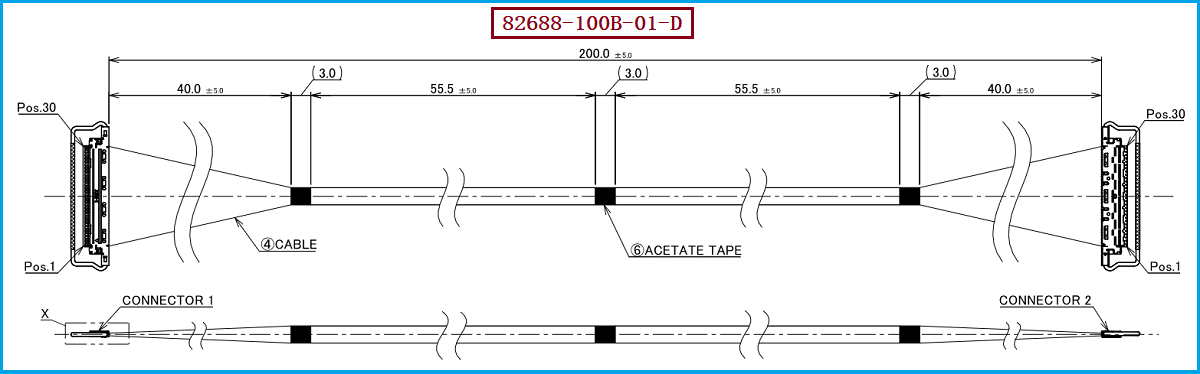
For purchasers and engineers, the most common issue with the dual differential + power combination scheme is that they only confirm the wire specifications but ignore the matching between the connectors, wire sequence, and termination structure. The I-PEX 82688-100B-01-D uses a wire end connector of 20454-230T, with the matching CABLINE-VS Plug P/N being 20453-230T-03, and the corresponding mating connector is 20455-030E-66. The entire product uses a CABLINE®-VS structure with 30Pin and 0.5mm pitch. Therefore, when procuring alternative wire harnesses, "20454-230T + AWG#40 + 30Pin + 1-1 wire sequence + 200±5mm + 50Ω" should be considered as a complete engineering matching condition, rather than merely requiring the supplier to provide a 30Pin ultra-thin coaxial cable. For the power channel, it should also be recalculated based on the actual current, temperature rise, and system power supply requirements, and cannot be assumed that all power application conditions are met just because AWG#40 can be used for high-speed signals.
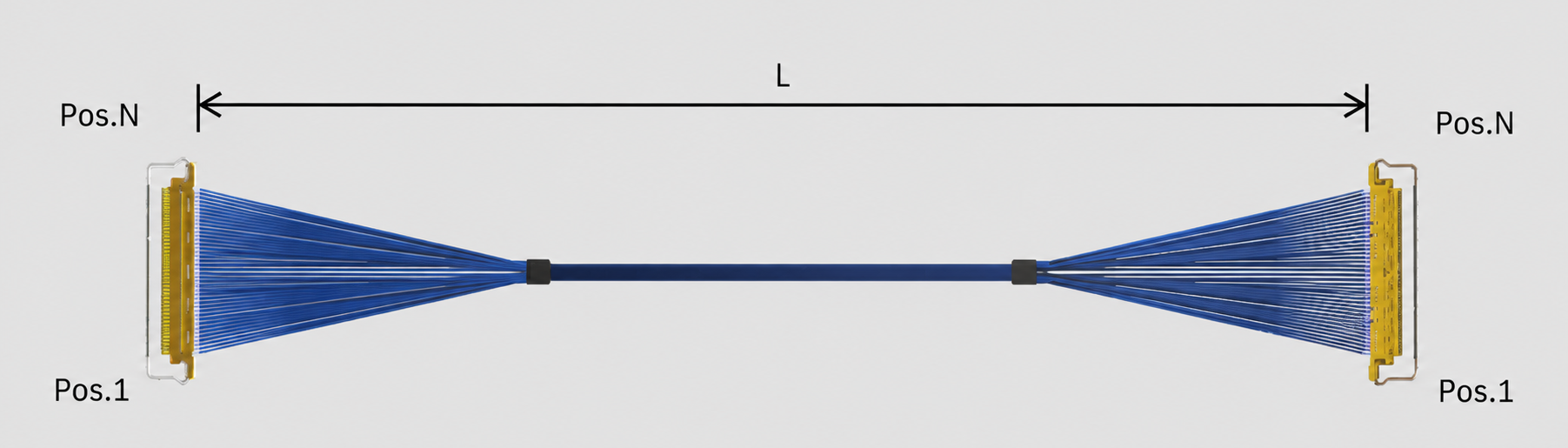
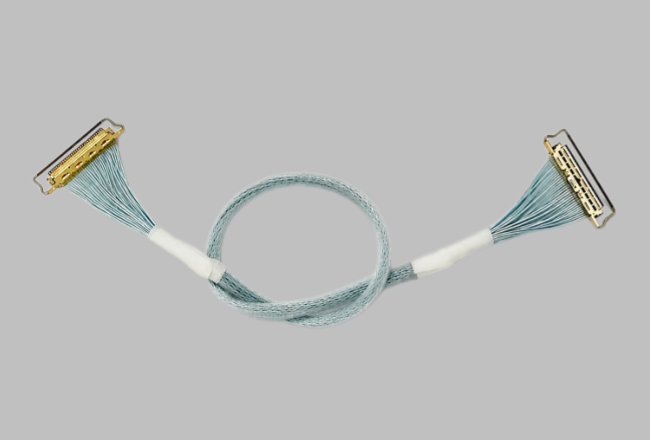
If the original design of the customer uses I-PEX 82688-100B-01-D, it is recommended that engineers first confirm the PCB end mating connector, 30Pin quantity, 0.5mm Pitch, wire position definition, and internal installation space of the device when considering domestic alternatives. Then confirm the AWG#40 and 50Ω specifications of the ultra-thin coaxial cable, and at the same time, determine the Pin allocation for dual differential, Power, GND, and other auxiliary signals based on the actual circuit definition. Pay particular attention to the fact that the 1-1 wire sequence and the 1-N wire sequence cannot be judged as interchangeable solely based on the number of Pins and appearance. For purchasers, it is recommended to require suppliers to provide a complete BOM, connector model, cable specification, length tolerance, Pin assignment, and electrical test requirements, and to verify actual mating and high-speed signal through samples. Our company can provide I-PEX 82688-100B-01-D compatible alternative cable assembly solutions, which can be matched and developed according to the customer's dual differential + power combination requirements, for the 20454-230T connector, AWG#40 ultra-thin coaxial cable, 30Pin wire sequence, cable length, and termination technology, providing compatible alternative cable assembly solutions for high-speed camera, AI vision, industrial equipment, and other high-density internal connection applications.
“Without the consent or authorization of this site, no one shall reproduce, reprint, distribute, cite, change, broadcast or publish the content in whole or in part in any form, nor shall there be any other violation of the copyright of this site.