


Categorization:Harness Component
Jetson vision system is accelerated, the camera connection cable has become an important link in the signal chain
As the NVIDIA Jetson platform is widely used in robots, machine vision, intelligent terminals, drones, and edge AI devices, camera modules need to develop towards higher resolutions, higher frame rates, and multi-camera capabilities. In the camera selection guidelines, NVIDIA explicitly points out that the choice of camera interfaces should take into account transmission length, data rate, and working environment. MIPI CSI-2 is also an important camera interface solution in the Jetson ecosystem. To engineers, the connection cable between the camera and the main control board is not just a "wiring," but a part of a high-speed signal chain; especially when multiple high-speed differential signals are transmitted simultaneously in a limited space, the cable's impedance, crosstalk, EMI, and connection reliability will directly affect system stability. Compared to ordinary FFC, extremely thin coaxial cables can place each high-speed signal in an independent coaxial transmission structure, which is more suitable for camera modules with higher requirements for high-speed signal integrity and space wiring.
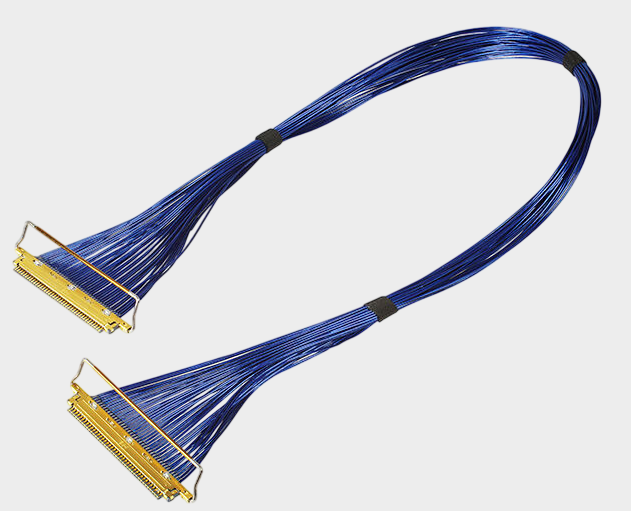
Why do ultra-thin coaxial cables have an advantage in high-speed Camera connections?
From the perspective of engineering design, the advantages of FFC ribbon cables lie in their simple structure, lower cost, and ease of assembly. However, when camera modules enter the stages of high bandwidth, miniaturization, and high density, engineers need to further pay attention to the impedance continuity, return loss, crosstalk, and external electromagnetic interference during the high-speed signal transmission process. Ultra-fine coaxial cables adopt a center conductor, insulating layer, shielding layer, and external protective structure to form an independent transmission channel. Under reasonable wire material, termination, and impedance design, they are conducive to establishing a more controllable high-speed signal transmission path. The I-PEX CABLINE®-CA itself is a 0.4mm Pitch ultra-fine coaxial cable connector platform developed for high-speed, miniaturized connections, with an official transmission rate of 32 Gbps/Lane PAM4 (reference value), and it also adopts mechanical latches, shielding, and multi-point grounding design. Therefore, for applications such as the Jetson camera, which are compact in space, have high signal rates, and have high requirements for stability, ultra-fine coaxial cables are not just a simple substitute for FFC; they provide another more suitable connection approach from the perspective of high-speed signal integrity and system structural design.
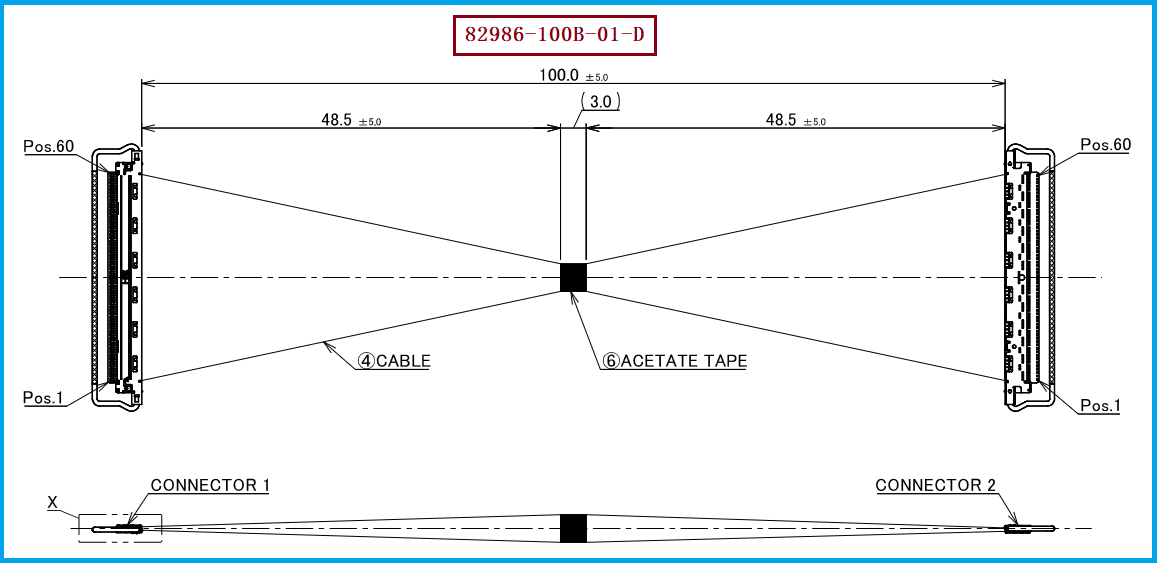
I-PEX 82986-100B-01-D: high-density ultra-fine coaxial cable assembly with 60PIN and 0.4mm pitch
This product focuses on the I-PEX 82986-100B-01-D, which belongs to the CABLINE®-CA series 60Pin ultra-thin coaxial cable solution. The cable end uses the I-PEX 20634-160T-02 connector, which is 60PIN with a 0.4mm pitch. The official information of CABLINE®-CA indicates that this series offers various specifications such as 10, 12, 20, 30, 40, 50, and 60Pin, using a horizontal insertion structure with a mating height of approximately 1.0±0.1mm, and supporting Micro-Coaxial Cable within the AWG36~AWG44 range, with AWG40 being one of the applicable specifications. For engineers, 60Pin+0.4mm Pitch means that high-density signal connections can be achieved within a limited PCB area; for purchasers, it can establish alternative BOM and supply chain evaluation standards around key parameters such as material number, connector, Pin number, Pitch, cable specification, length, and Pin Assignment. It should be especially noted that the 32 Gbps/Lane provided by I-PEX is the reference transmission capability of the CABLINE-CA platform, and for the actual project of 82986-100B-01-D, it should still be verified in combination with signal rate, cable length, Pin Assignment, PCB routing, and the whole machine SI test.
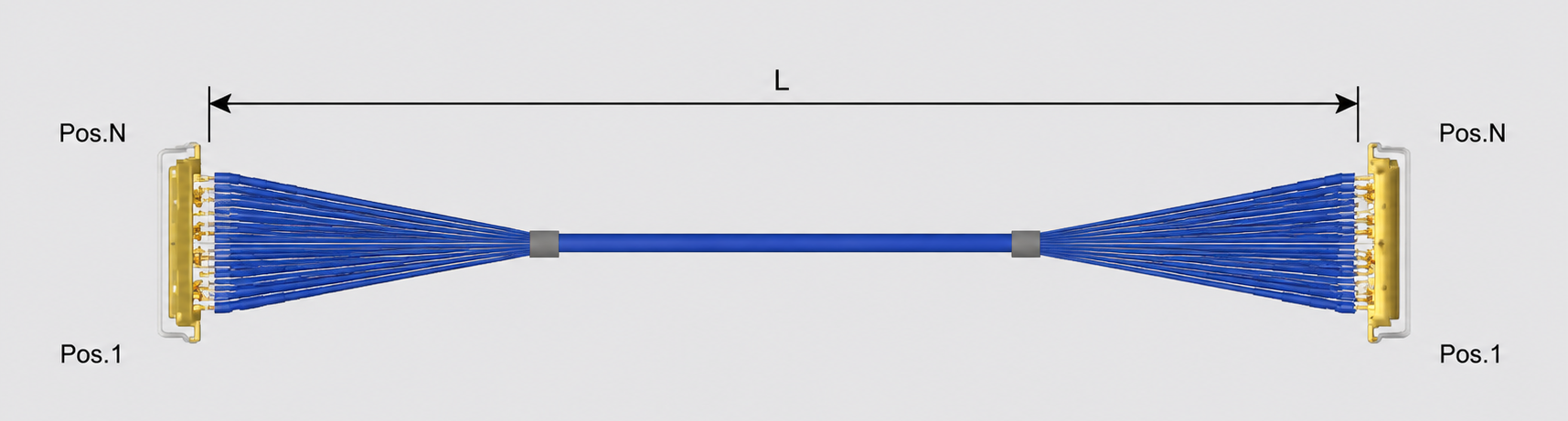
Selection, compatibility, and alternative solutions reference and suggestions
If the project is using I-PEX 82986-100B-01-D and is looking for a domestic ultra-thin coaxial cable bundle alternative, it is recommended not to judge solely based on "60Pin connector being the same," but rather to confirm from several dimensions such as connector matching, 60Pin/0.4mm Pitch, cable specifications, length, Pin Assignment, impedance, and high-speed signal integrity. The 82986-100B-01-D corresponds to the 60Pin solution, with the cable end connector model being 20634-160T-02. Therefore, the first thing to ensure for the alternative cable bundle is the mechanical matching and terminal position consistency with the original equipment end connector, followed by cable and impedance design based on the actual data rate of the Jetson camera and application environment. At the same time, verification should be carried out through projects such as insertion/removal, conduction, insulation, voltage resistance, and high-speed SI. The official CABLINE-CA materials from I-PEX also show that this series of 60Pin solutions uses a 0.4mm Pitch and has a mechanical lock structure, which helps reduce the connection risk caused by incomplete insertion or disengagement of the connector. Our company can provide: I-PEX 82986-100B-01-D compatible alternative cable bundle solutions, which can develop and produce ultra-thin coaxial cable bundles according to customers' existing connectors, Pin count, cable specifications, length, wire sequence, and overall machine structure requirements, providing domestic cable selection support for Jetson cameras, AI vision modules, and other high-speed equipment.
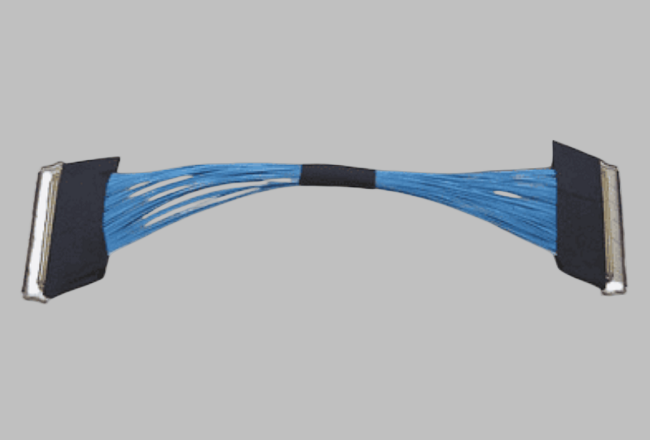
From "connectable" to "stable transmission," ultra-fine coaxial cables have become an important solution for high-speed visual connections.
For the NVIDIA Jetson camera system, it cannot be simply understood that "extremely thin coaxial cables are always superior to FFC." The true engineering judgment should be based on transmission speed, cable length, spatial constraints, EMI environment, impedance control, and reliability requirements. NVIDIA also considers these factors as important considerations for camera interface selection. In high-density, high-speed, and miniaturized Camera modules, extremely thin coaxial cables provide a more targeted solution path for high-speed signal transmission with their independent shielding transmission structure, flexible wiring capabilities, and high-density connector schemes. Taking I-PEX 82986-100B-01-D as an example, it uses a connection scheme of 20634-160T-02, 60PIN, and 0.4mm pitch, which is suitable for internal connections of devices with high requirements for space, signal integrity, and connection reliability. I am【3W Electronic Components Network】, provide structural optimization and signal consistency evaluation services and product solutions for high-speed ultra-fine coaxial cable束 as per demand. For more information, please contact us:Manager Zhang 18913228573 (WeChat same number)For engineers and procurement personnel who are advancing the domestic substitution of I-PEX线束, developing Jetson vision devices, or mass-producing high-speed camera module sets, it can be evaluated as an important direction for domestic substitution and supply chain optimization to use extremely thin coaxial cable assemblies.
“Without the consent or authorization of this site, no one shall reproduce, reprint, distribute, cite, change, broadcast or publish the content in whole or in part in any form, nor shall there be any other violation of the copyright of this site.