


Categorization:Harness Component
For engineers and procurement personnel, "extremely thin coaxial cable" does not simply mean a small outer diameter of the cable; it is more important to achieve high-speed signal transmission, impedance control, shielding against interference, and mechanical reliable connection within limited space. Taking the I-PEX 82146-100B-02-D extremely thin coaxial cable assembly introduced this time as an example, it adopts the Micro-Coaxial extremely thin coaxial cable scheme and is matched with a 60Pin 20634-160T-02 connector, with a cable length of 200MM. The term "extremely thin" usually requires an overall understanding of the AWG wire gauge, the structure of a single coaxial unit, and the overall size after bundling. The larger the AWG number, the thinner the conductor, for example, AWG40, AWG42, and AWG44 all belong to common extremely thin wire specifications inside electronic devices. For high-speed, miniaturized equipment, the wire cannot be infinitely thickened, otherwise, it will increase the wiring space and bending radius; however, if one only pursues thinness, it will bring higher requirements for conductor resistance, mechanical strength, signal loss, and manufacturing process. Therefore, the true extremely thin coaxial cable is a product that achieves engineering balance between "thinness" and "performance".
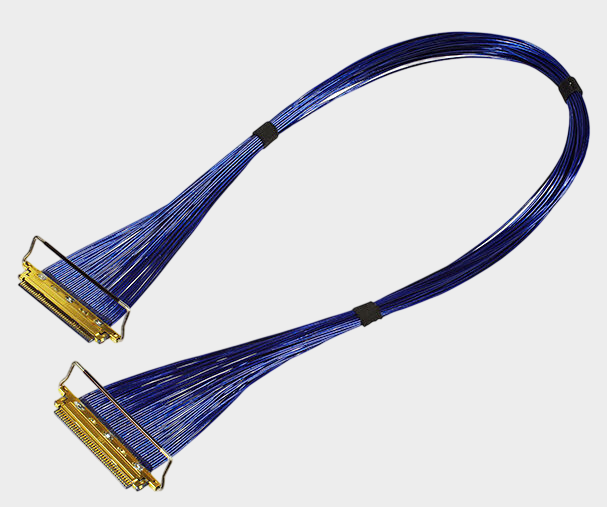
The core value of ultra-fine coaxial cables is not merely to "make wires thinner," but to control the transmission path of high-speed signals through the coaxial structure. Inside the cable, the structures such as the signal conductor, insulation layer, and shielding layer work together to form a relatively stable transmission environment, enabling high-speed differential signals to achieve better signal integrity within a limited space. The matching I-PEX CABLINE®-CA series connection solutions adopt a high-density design with a 0.4mm pitch and have shielding and multi-point grounding structures, aiming at internal connections of high-speed and miniaturized equipment. Therefore, for laptops, high-definition display devices, industrial cameras, machine vision, AI vision equipment, and other compact electronic products, the significance of ultra-fine coaxial cables lies in providing a reliable transmission channel for high-speed data, images, and display signals while occupying as little internal space as possible. Engineers need to pay attention not only to the "diameter of the wire" but also to consider factors such as impedance, attenuation, crosstalk, bending, connector matching, and the overall signal integrity of the entire cable assembly.
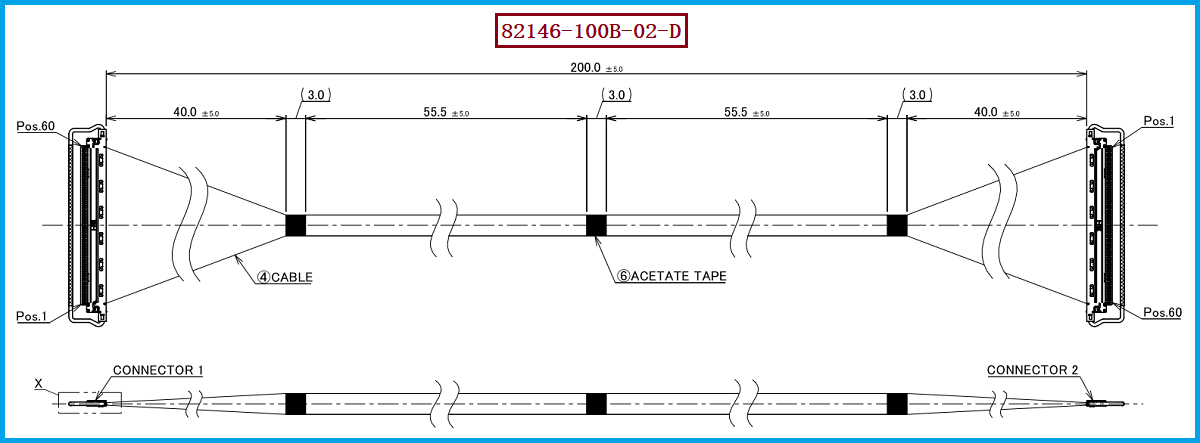
From a specific product perspective, the I-PEX 82146-100B-02-D is the corresponding ultra-thin coaxial cable assembly model for this scheme, with a cable length of 200MM. The cable end uses the I-PEX 20634-160T-02 connector, which belongs to the 60Pin connection scheme under the CABLINE®-CA system. CABLINE®-CA itself adopts a 0.4mm ultra-fine pitch and horizontal insertion structure, and improves the reliability of the connection and the adaptability of high-speed signal transmission through designs such as mechanical lock, shielding, and multi-point grounding. For engineers, such products are particularly suitable for devices with limited internal space and dense signal channels, achieving compact connections between PCBs and displays, cameras, or other high-speed modules; for purchasers, 82146-100B-02-D + 20634-160T-02 + 200MM can be used as an important specification benchmark when looking for compatible alternative cable assemblies, and should be checked from multiple dimensions such as connector model, Pin count, cable type, length, termination process, and electrical performance, rather than just judging whether it can be replaced based on "similar appearance".
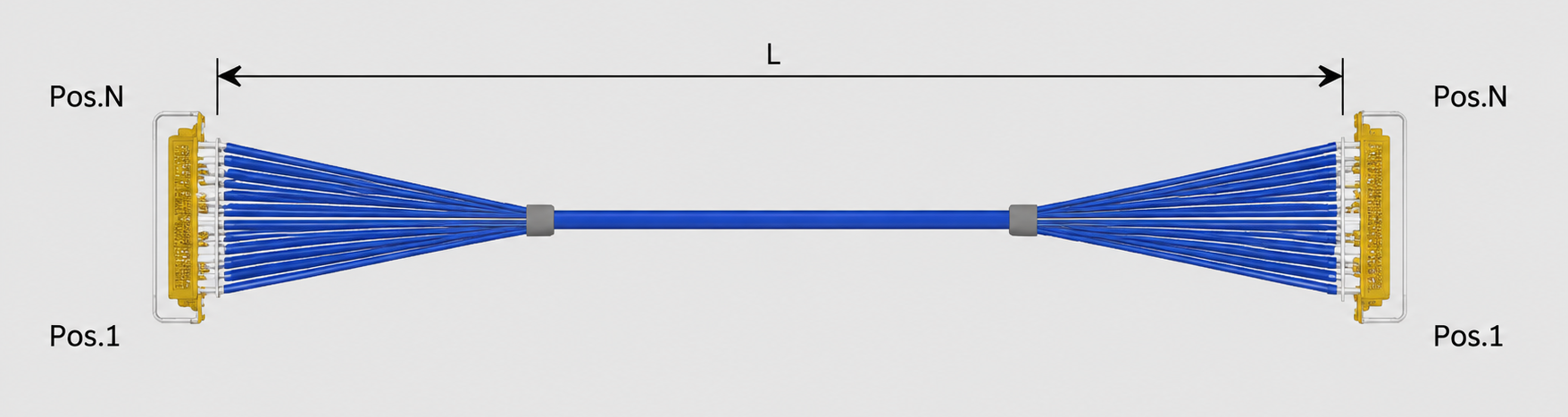
In actual selection or domestic substitution projects, engineers are advised to first confirm the matching relationship between the PCB connector on the device side and 20634-160T-02, and then confirm the 60Pin channel quantity, 200MM length, wire specification, and wire sequence definition. At the same time, verify the impedance, insertion loss, crosstalk, and shielding continuity in combination with the actual high-speed signal type. For purchasing personnel, if there are situations such as long lead times, high procurement costs, or unstable supply channels in the original supply chain, the I-PEX 82146-100B-02-D can be used as the target specification for compatibility and substitution development, and the connector size, terminal contact reliability, wire structure, termination quality, and overall high-speed signal performance should be verified. Our company can provide I-PEX 82146-100B-02-D compatible and substitute cable solutions, and can match and develop cable length, wire sequence, termination form, and production process according to the actual equipment structure and technical requirements of customers. We can provide samples for engineers to verify and offer bulk domestic supply options for purchasing personnel.
“Without the consent or authorization of this site, no one shall reproduce, reprint, distribute, cite, change, broadcast or publish the content in whole or in part in any form, nor shall there be any other violation of the copyright of this site.