


Categorization:Harness Component
With the continuous development of laptops, industrial cameras, AI vision equipment, robots, servers, and high-resolution display devices towards thinness, high speed, and high density, the internal connection cables of the equipment are facing comprehensive challenges of "smaller space, higher transmission speed, and stricter signal requirements." Super-thin coaxial cables are a type of high-speed signal cable that is widely used under such application needs. Compared with ordinary single-core conductors, super-thin coaxial cables adopt a special coaxial structure, which keeps the signal conductor and the peripheral shielding structure in a relatively stable spatial relationship, and is more conducive to controlling the electromagnetic field distribution, impedance characteristics, and external interference during the high-speed signal transmission process. For engineers, the advantages of super-thin coaxial cables are not only reflected in "thin wire diameter," but more importantly, they can meet the needs of high-speed transmission, signal integrity, shielding, and flexible wiring within the limited space of the equipment; for procurement personnel, it is necessary to pay attention to complete parameters such as cable structure, AWG specification, impedance, length, connector, and processing technology, and cannot simply select types according to the procurement method of ordinary electronic wires.
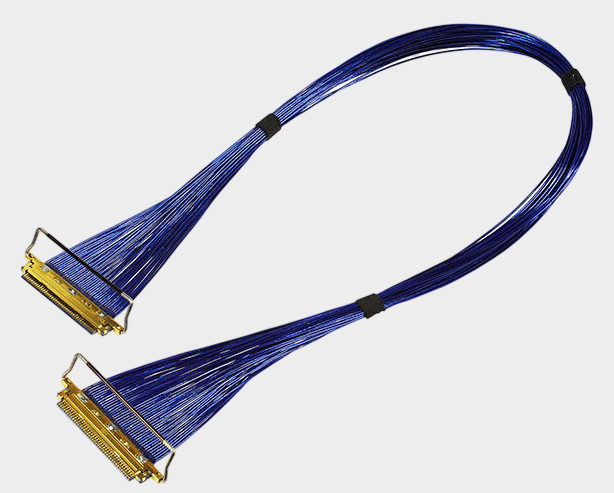
The ultra-fine coaxial cable is typically composed of a central conductor, an insulating layer, a shielding layer, and an outer protective layer, with each layer material performing different functions. The central conductor is responsible for high-speed signal transmission and needs to balance conductivity and mechanical flexibility under extremely small wire diameters; the insulating layer not only provides electrical isolation but also affects the distance between the conductor and the shielding layer as well as the overall characteristic impedance; the outer shielding layer can form a relatively enclosed electromagnetic shielding environment, which helps reduce external noise entering the signal chain and the radiation of high-speed signals to the surrounding space; the outermost protective material is responsible for enhancing the mechanical reliability of the wire during bending, assembly, and use. Therefore, the ultra-fine coaxial cable is not simply a finer version of a regular wire, but achieves a balance between high-speed signal transmission and miniaturized wiring through precise matching of conductor size, insulating material, shielding structure, and overall outer diameter. Especially for high-frequency and high-speed signals, the geometric structure and material characteristics of the wire material will directly affect impedance, loss, crosstalk, and signal integrity, which is also an important reason why engineers choose ultra-fine coaxial cables.
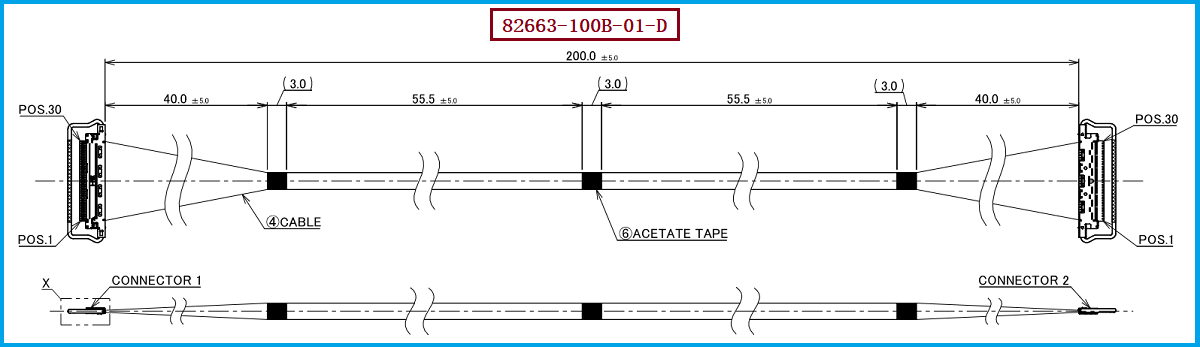
This product featured in this introduction is I-PEX 82663-100B-01-D, which belongs to the CABLINE-CA series 30Pin ultra-thin coaxial cable solution. It adopts Micro-Coaxial ultra-thin coaxial material, with a specification of AWG40, characteristic impedance of 50Ω, cable length of 200mm, and wire positioning defined as 1-1. The 1-1 wire positioning definition means that the corresponding pin positions on both ends of the cable are connected in a 1-to-1 manner, such as pin 1 to pin 1, pin 2 to pin 2, and so on. This is of great significance for engineers in PCB interface design, signal definition, and alternative verification. The cable comes with a wire end connector model of 20634-130T-02, which is part of the CABLINE-CA 30Pin connector component. I-PEX CABLINE-CA uses a 0.4mm contact spacing and horizontal insertion structure, and is paired with mechanical latches, shielding, and multi-point grounding design, targeting high-density, high-speed signal connection applications. For engineers, when developing similar alternative cables, they should confirm key parameters such as 30Pin, AWG40, 50Ω, 200mm, 1-1 wire positioning definition, and connector model; for purchasers, they should confirm whether the alternative product truly meets the mechanical, electrical, and assembly requirements of the original product, not just that the connector can achieve insertion and removal.
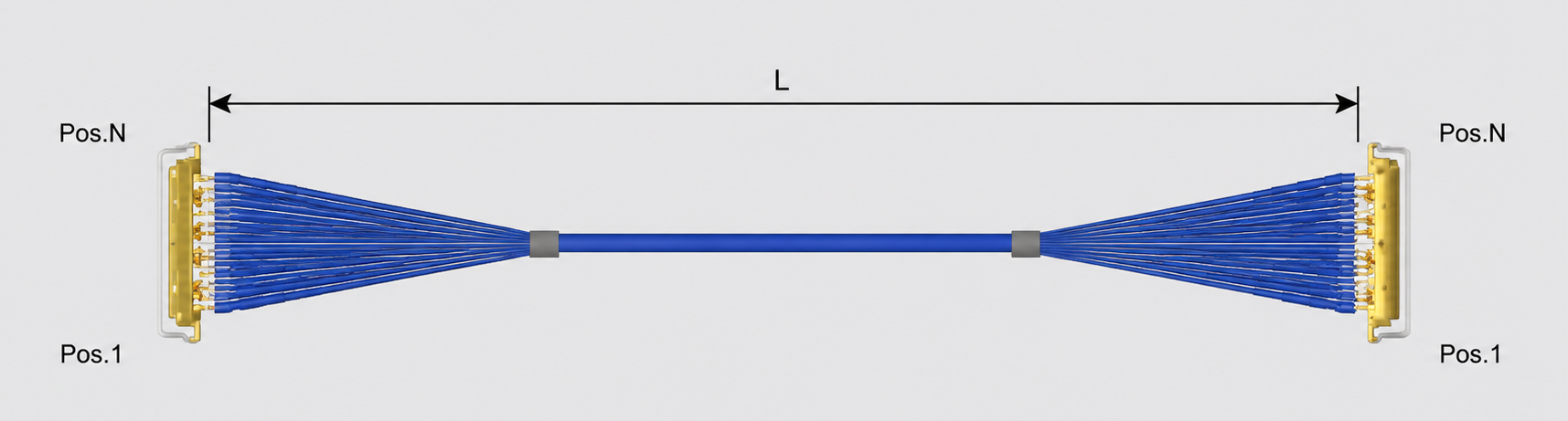
For the compatibility and alternative of I-PEX 82663-100B-01-D, it is recommended that the engineering department first confirm the core specifications of the original cable, including the number of 30Pin, Micro-Coaxial cable type, AWG40 wire diameter, 50Ω impedance, 200mm length, and 1-1 wire position definition. At the same time, confirm the connector component 20634-130T-02 used at the cable end and the actual equipment end coordination. In terms of mechanics, it is necessary to further check the connector shape, wire exit position, cable end size, fixing area, bending direction, and overall installation space of the whole machine; in electrical terms, impedance, insertion loss, return loss, crosstalk, and EMI should be verified according to the actual working frequency, transmission rate, and signal type of the equipment. For purchasing personnel, if there is pressure on delivery time, cost, or supply stability in the original supply chain, a second supplier can be introduced on the basis of the original specifications, and the alternative supply system can be gradually established through sample testing, installation verification, and batch consistency verification. Our company can provide: I-PEX 82663-100B-01-D compatible alternative cable solution, which can match and develop ultra-fine coaxial cables, connectors, Pin count, length, wire position, and end processing structure according to the original part number, sample, drawing, or equipment installation requirements provided by customers, and provide ultra-fine coaxial cable compatible alternative solutions for engineering verification and mass production applications.
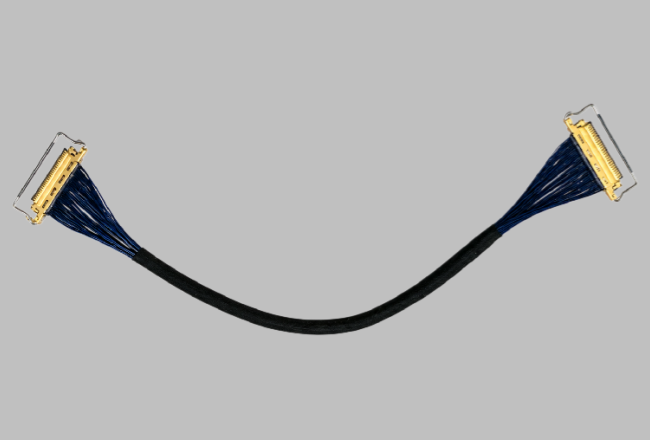
“Without the consent or authorization of this site, no one shall reproduce, reprint, distribute, cite, change, broadcast or publish the content in whole or in part in any form, nor shall there be any other violation of the copyright of this site.