


Categorization:Harness Component
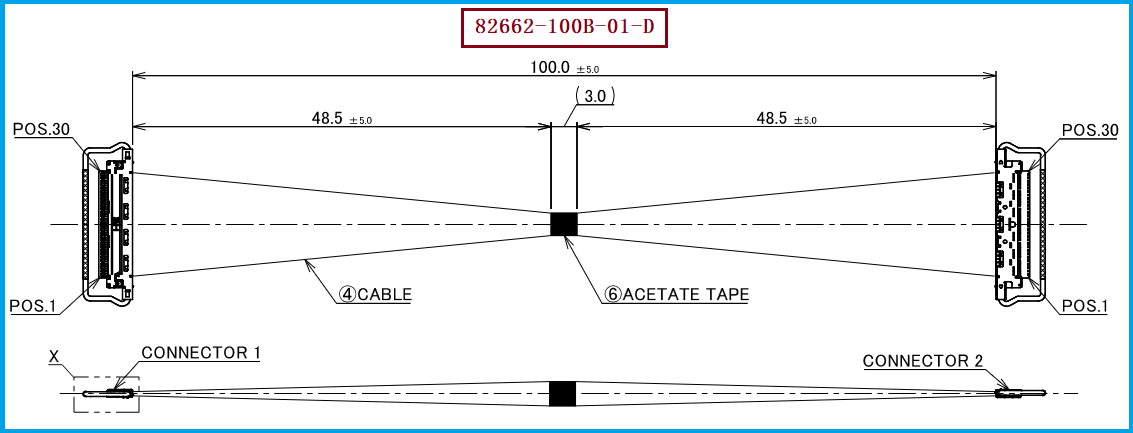
Inside high-speed electronic devices, the harness is not just responsible for "connecting two connectors," but more importantly, it achieves stable and low-interference high-speed signal transmission within limited space. Taking the I-PEX 82662-100B-01-D as an example, it is a 30Pin Micro-Coaxial ultra-thin coaxial harness from the CABLINE®-CA series, with a length of 100MM. The connector model used at the end of the wire material is 20634-130T-02. Its working process can be simply understood as: the sending end device sends high-speed electrical signals into the center conductor of the ultra-thin coaxial cable, and the signal propagates along the conductor to the other end. The surrounding insulating medium and shielding structure together form a controlled electromagnetic transmission environment, enabling high-speed signals to maintain relatively stable transmission characteristics within the small size of the cable; upon reaching the other end, it is then connected to PCB or other circuits through the connector for reliable connection. That is to say, the true core value of the ultra-thin coaxial harness is not "conductivity," but the control of the signal transmission path under high-speed, high-density, and small space conditions. For engineers, it is not only necessary to pay attention to whether the harness is conductive, but also to impedance, signal integrity, crosstalk, shielding continuity, and connector matching; for purchasers, it should be taken as a complete product identification condition to consider the original factory part number, wire diameter, Pin number, length, and connector model.
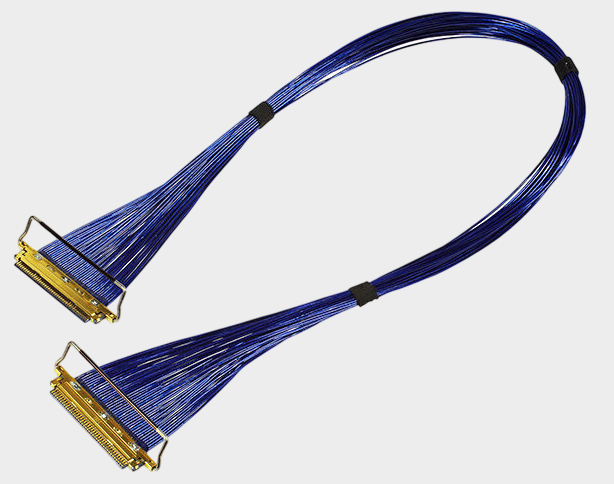
Extremely fine coaxial cables are typically composed of a central conductor, an insulating dielectric layer, a shielding layer, and an external protective structure. High-speed signals are first transmitted through the central conductor, while the insulating dielectric layer is not just simple "packaging material"; its dielectric properties, thickness, and uniformity directly affect the signal propagation speed and characteristic impedance; the outer shielding layer plays a crucial role in electromagnetic field constraint and interference suppression, which can reduce the impact of the external electromagnetic environment on the internal signals and simultaneously reduce the possibility of high-speed signals radiating to surrounding lines. When multiple extremely fine coaxial cables are arranged in a high-density bundle, each signal channel still maintains a relatively independent transmission structure, which is also an important reason why the Micro-Coaxial scheme is suitable for high-speed, multi-channel electronic devices. The I-PEX CABLINE®-CA uses a 0.4mm Pitch structure and combines shielding and multi-point grounding design, catering to high-speed, miniaturized internal connection requirements; its platform supports various Micro-Coaxial cable specifications, including AWG40. For the product 82662-100B-01-D, it uses AWG40 Micro-Coaxial Cable and is marked with a 50Ω characteristic impedance, so during the replacement development process, it is not enough to pursue "cable appearance and thickness consistency"; comprehensive matching should also be carried out from aspects such as conductor size, insulating material, shielding structure, and impedance control.
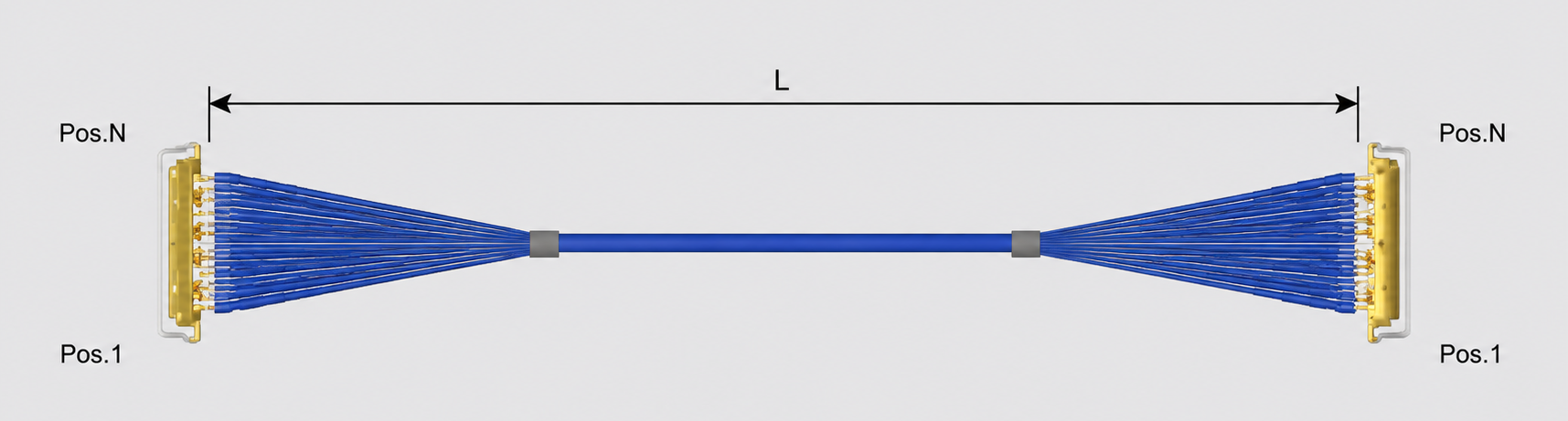
With the increasing data rates of high-speed interfaces such as USB4, DisplayPort, eDP, MIPI, and others, the internal signal transmission requirements for cables are becoming more stringent. As the signal frequency increases, issues such as impedance discontinuity, connector transition areas, cable structure changes, crosstalk, and EMI can all lead to a decrease in signal quality, thus high-speed cable design needs to maintain signal stability throughout the transmission path as much as possible. Extremely thin coaxial cables constrain the signal path through the coaxial structure, forming a relatively stable transmission environment between the central conductor and the shielding structure; while the shielding structure and grounding design of the connector further help control electromagnetic interference in the connector area. CABLINE®-CA uses a 0.4mm ultra-fine pitch, horizontal insertion, mechanical locking, and shielding with multi-point grounding design. Its product platform is for high-density high-speed connection applications and supports the highest 32Gbps/Lane PAM4 high-speed data transmission. For engineers, the value of this solution lies in the ability to complete multi-channel high-speed signal connections within limited PCB and internal device space; for purchasers, it means that alternative products must focus on the complete "cable+connector+termination process" system and cannot simply compare prices based on ordinary wires or ordinary ribbon cables.
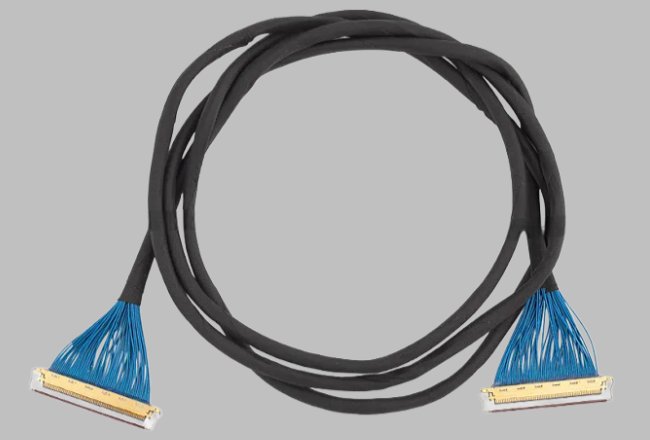
For compatibility and alternative of I-PEX 82662-100B-01-D, it is recommended that engineers and purchasing personnel use the following as basic identification information: 30Pin, AWG40, 50Ω, 100MM, 1-1 wire sequence, and connector model 20634-130T-02. At the same time, further confirmation is required for both connector components, wire structure, termination method, fixed area, and actual assembly size. Especially for high-speed signal applications, it is necessary to verify characteristics such as characteristic impedance, insertion loss, return loss, crosstalk, conductivity, insulation, and EMI according to the actual working frequency and interface standards of the device. Original factory products can be used as specifications and structure references, but to truly achieve domestic compatibility and alternative, it is necessary to achieve "capable of connection, capable of assembly, capable of stable transmission, capable of passing tests, and capable of mass production." Our company can provide: I-PEX 82662-100B-01-D compatible and alternative cable assembly solutions. For this model's 30Pin, 100MM length, and 20634-130T-02 connector configuration, we can carry out sample making, verification, and mass production of extremely fine coaxial cable assemblies according to the customer's original factory samples, engineering drawings, or specific technical requirements, and provide professional Micro-Coaxial cable assembly solutions for customers who need domestic alternative, second supplier introduction, or supply chain optimization.
“Without the consent or authorization of this site, no one shall reproduce, reprint, distribute, cite, change, broadcast or publish the content in whole or in part in any form, nor shall there be any other violation of the copyright of this site.