


Categorization:Harness Component
How much data can a super-thin coaxial cable bundle transmit in one second? The key is not just to look at the "wire," but also to consider the entire high-speed connection solution.
In high-speed electronic devices, engineers often ask: how much data can a very thin coaxial cable bundle transmit in one second? In fact, a very thin coaxial cable bundle itself is not a device that is simply defined by "how many GB per second," and its actual high-speed transmission capability is closely related to the cable structure, characteristic impedance, connector, termination process, transmission distance, and the overall signal integrity design of the entire link. Taking the I-PEX CABLINE®-CA series connection solution as an example, its connector uses a 0.4mm Pitch ultra-fine pitch design, and is aimed at high-speed differential signal transmission applications. The official product information shows that it can support high-speed transmission capabilities of up to 32 Gbps/Lane PAM4. Therefore, if calculated on a per-Lane basis, the theoretical signal rate can reach 32 Gbit per second, which is approximately 4GB/s in bit conversion; however, this does not mean that a 30Pin very thin coaxial cable bundle can actually achieve 32Gbps, nor can it be simply understood as "transmitting 32GB of data per second." The actual data throughput of the device still needs to be judged comprehensively by combining the number of Lanes, encoding methods, protocol overhead, and the capabilities of the host and terminal chips. For engineers, what should be truly focused on is whether the entire high-speed link can stably meet the requirements of the target interface's eye diagram, loss, crosstalk, and impedance.
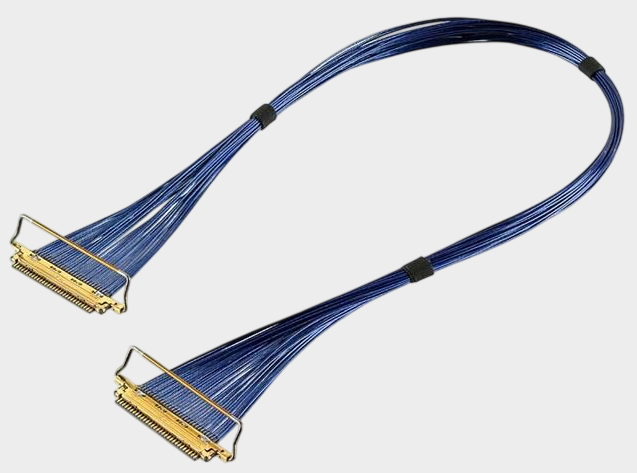
I-PEX 81423-100B-02-D: high-speed ultra-thin coaxial cable assembly solution with 30PIN, 0.4MM pitch
This article focuses on the product model I-PEX 81423-100B-02-D, which corresponds to the CABLINE®-CA series 30Pin ultra-thin coaxial cable assembly solution. This product uses a 30Pin, 0.4mm pitch cable end connector structure, and the cable end connector model used is 20634-130T-02. From the perspective of product selection, 0.4mm pitch means that a more compact multi-Pin arrangement can be achieved within limited PCB space, which is beneficial for high-density internal connections and thin and light design of equipment; 30Pin can meet the wiring requirements of multi-channel high-speed signals and related control signals. For laptops, high-resolution display devices, industrial cameras, machine vision, AI vision equipment, and other electronic products that require high-speed internal connections, this type of ultra-thin coaxial cable assembly can balance high-speed signal transmission and flexible wiring requirements within limited space. For purchasers, when selecting substitute materials, they should focus on checking I-PEX 81423-100B-02-D, connector model 20634-130T-02, 30PIN, 0.4MM Pitch, cable length, Pin Assignment, and cable specifications, to avoid purchasing based solely on appearance or Pin count, which may lead to mismatch in actual assembly and signal performance.
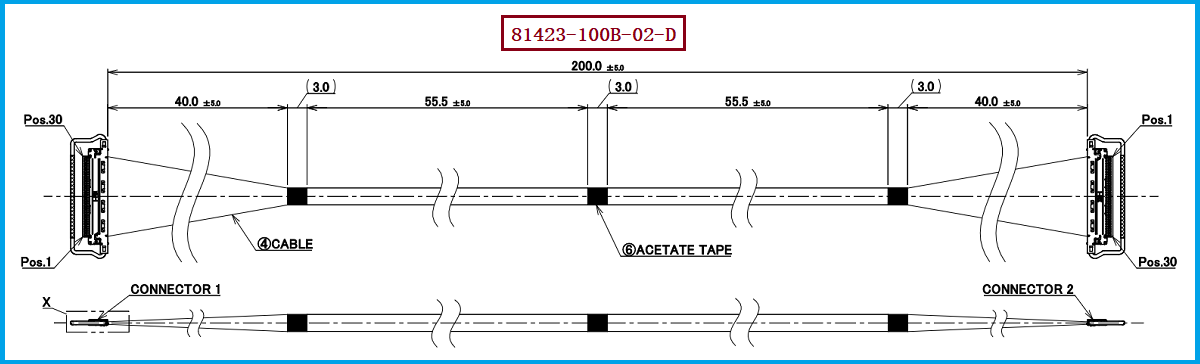
With the continuous development of high-speed interfaces such as USB4, Thunderbolt, DisplayPort, eDP, MIPI, and others towards higher data rates, internal device connections can no longer meet only the basic requirement of "being able to conduct," but must further control the loss, reflection, crosstalk, and electromagnetic interference of high-speed signals during transmission. The extremely thin coaxial cable forms a relatively stable transmission environment through its structure of central conductor, insulating layer, and shielding layer, while the shielding and grounding design of the high-speed connector helps maintain a more stable transmission state of high-speed differential signals. Taking the CABLINE®-CA product platform as an example, its connectors adopt mechanical latches, shielding structures, and multi-point grounding design, and have a 0.4mm ultra-fine spacing and an approximate 1.0mm insertion height, making them very suitable for internal connections of high-speed electronic devices with limited space. Therefore, "how much G can be transmitted in one second" is only one of the results of high-speed cable selection, and the true determinant of whether a product can work stably is the overall signal integrity design of the entire chain. For engineers, when developing high-speed cables, they should pay attention to wire specifications, impedance consistency, termination quality, connector matching, and actual application environment at the same time, rather than pursuing higher nominal rates alone.
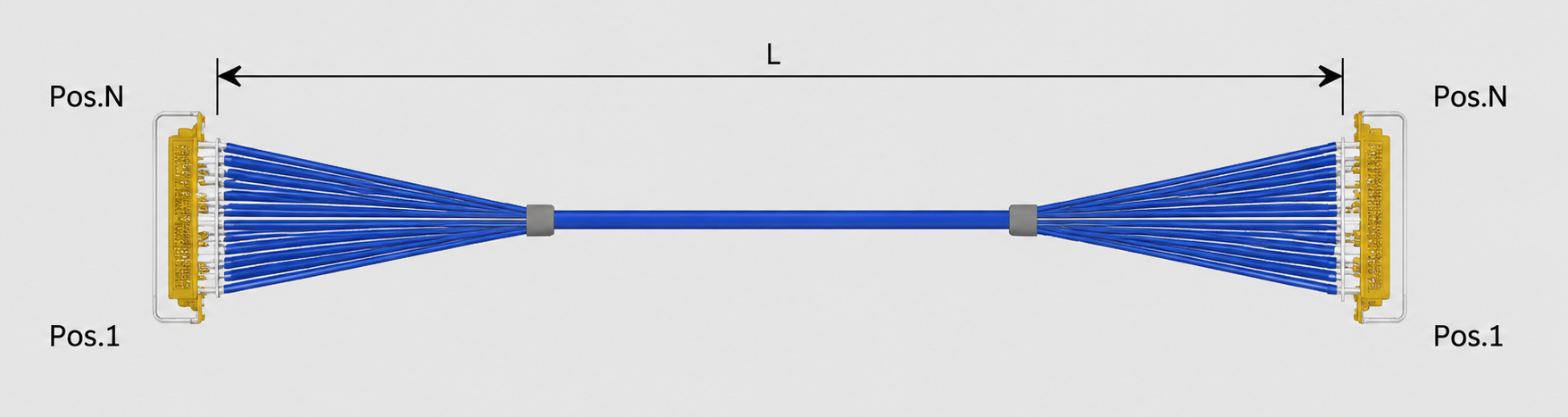
For devices using the CABLINE®-CA 30Pin connection scheme, when considering domestic substitution for the original design referencing I-PEX 81423-100B-02-D, it is recommended to first confirm the consistency of the PCB side connector, wire side connector, and mechanical dimensions. Then further confirm the wire specification, cable length, Pin definition, 1-N/1-1 connection method, and high-speed signal performance requirements. The wire side connector model corresponding to this product is 20634-130T-02, with a 30PIN, 0.4MM pitch connector. These parameters are key matching conditions in the substitution design. Our company specializes in the production and manufacturing of extremely thin coaxial cables and can develop and produce cable schemes based on customer equipment structure, wire specification, length, Pin assignment, and high-speed signal transmission requirements. Our company can provide I-PEX 81423-100B-02-D compatible substitution cable schemes and offer corresponding ultra-thin coaxial cable products for research and development prototyping, small batch verification, and bulk procurement. For purchasing personnel, if the goal is to reduce supply chain costs, improve delivery flexibility, or find domestic substitution suppliers, it is recommended to verify high-speed signal integrity, insertion and removal reliability, and assembly consistency through sample testing after confirming the matching of connectors and mechanical dimensions.
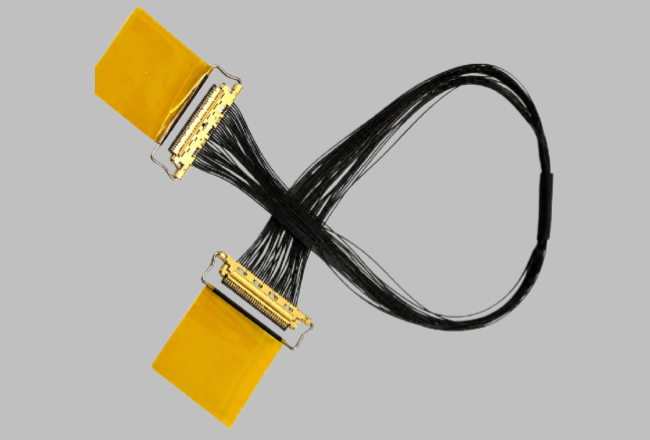
The core of the ultra-fine coaxial cable bundle is not "running fast," but "running fast stably."
How much data can a very fine coaxial cable bundle transmit in one second? From the perspective of high-speed connection technology, the CABLINE®-CA platform can support high-speed transmission applications up to 32 Gbps/Lane PAM4 level. However, the actual transmission capability of a specific cable bundle still depends on the wire material, connector, length, structure, interface protocol, and overall system design. For the I-PEX 81423-100B-02-D introduced in this article, its cable end uses the 20634-130T-02 connector, with a 30PIN, 0.4MM pitch, suitable for internal connections of electronic devices that require space, high-speed signals, and connection reliability. I am【3W Electronic Components Network】,Deeply engaged in the production and development of high-speed transmission ultra-fine coaxial cable assemblies and precision connectors, we can provide stable and reliable alternative solutions. For more details, please contact:Manager Zhang
18913228573 (WeChat number same)For engineers, choosing the right cables and connectors, and controlling the signal integrity of high-speed links, is more important than simply pursuing a higher "Gbps" number; for procurement personnel, selecting suppliers with mature manufacturing capabilities for ultra-fine coaxial cable bundles and compatible alternatives can help enhance the supply assurance capabilities during the project introduction and mass production stages.
“Without the consent or authorization of this site, no one shall reproduce, reprint, distribute, cite, change, broadcast or publish the content in whole or in part in any form, nor shall there be any other violation of the copyright of this site.