


Categorization:Harness Component
With the continuous development of AI computing devices, high-performance displays, industrial vision, laptops, servers, and high-speed data terminals towards high-speed and miniaturization, internal connections of the devices not only need to meet more signal channels but also need to consider signal integrity, EMI suppression, spatial layout, and long-term reliability. The I-PEX 82680-100B-02-D belongs to the CABLINE®-UM series ultra-thin coaxial cable application solutions, which is matched with the 20878-070T-01 connector at the cable end. The connector uses a high-density structure with 70PIN and 0.4mm spacing, enabling multi-channel high-speed signal connections in limited PCB and internal device spaces. For engineers, the value of such 70PIN, 0.4mm ultra-fine spacing solutions is not only that there are more "connection points" but more importantly, it can comprehensively consider high-speed signal transmission, shielding, mechanical connection, and the internal space design of the whole machine; for purchasers, when replacing similar cables, it is necessary to focus on confirming whether the connector model, PIN number, spacing, wire diameter, length, Pin Assignment, and shielding and processing technology match the original design.
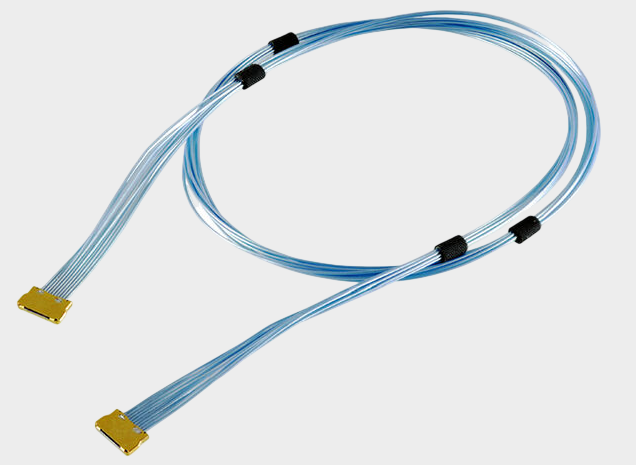
In high-speed signal environments, the EMI performance of extremely thin coaxial cable assemblies cannot be simply solved by adding a layer of metal shielding material. Instead, it is determined by the coaxial structure, integrity of the shielding layer, termination technology, connector shielding structure, grounding continuity, and cable assembly routing. Extremely thin coaxial cables usually adopt structures such as central conductor, insulation layer, shielding layer, and outer sheath, where high-frequency signals are confined to a relatively stable transmission environment. This can reduce the coupling of external electromagnetic noise to the signal and also help suppress the radiation of high-speed signals. For the CABLINE®-UM配套 solution, its connector products emphasize ZenShield® full shielding and multi-point grounding design. Therefore, during the actual cable assembly manufacturing process, in addition to ensuring the processing quality of the shielding layer of each extremely thin coaxial cable, attention must also be paid to the continuity of the connection between the shielding layer and the metal structure at the connector terminal. If the shielding layer is damaged, insufficiently covered, or improperly grounded during the stripping, crimping, welding, and assembly processes, even if the wire itself has a good shielding structure, it may cause the overall EMI performance to degrade. Therefore, for high-PIN number extremely thin coaxial cable assemblies like I-PEX 82680-100B-02-D, EMI control should run through the entire manufacturing process of "wire material - termination - connector - assembly - whole machine wiring".
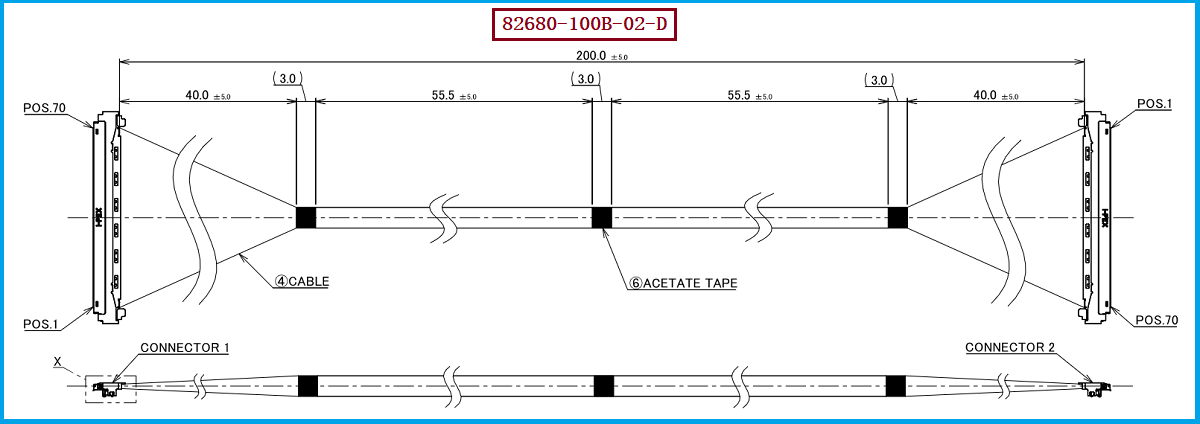
The 20878-070T-01 adopts a 70PIN, 0.4mm pitch structure, which means the physical distance between adjacent signal channels is very small, thus requiring higher precision in wire harness manufacturing processes, including the order of wiring, wire sequence consistency, termination positions, conductor treatment, and shielding layer processing. Especially in high-speed signal applications, one should not only focus on "whether it is conductive" but also pay attention to impedance consistency, crosstalk between signals, return path, and shielding continuity. At the same time, the extremely thin coaxial cable itself has a small line diameter, and if the stripping force is too great, the bend radius control is unreasonable, or the termination area is subjected to excessive tension during the manufacturing process, it may cause damage to the conductor, insulation layer, or shielding structure. Therefore, engineers should match from multiple dimensions such as the original connector specifications, 70PIN arrangement, 0.4mm spacing, cable specifications, wire length, Pin Assignment, and application signal rates when designing and verifying the compatible alternative solutions for the I-PEX 82680-100B-02-D, rather than simply judging whether it can be replaced based on the appearance size. Particularly in applications involving USB4, high-speed display, industrial vision, and high-speed computing, it is more important to incorporate high-speed signal integrity and EMI performance into the criteria for wire harness selection and verification.
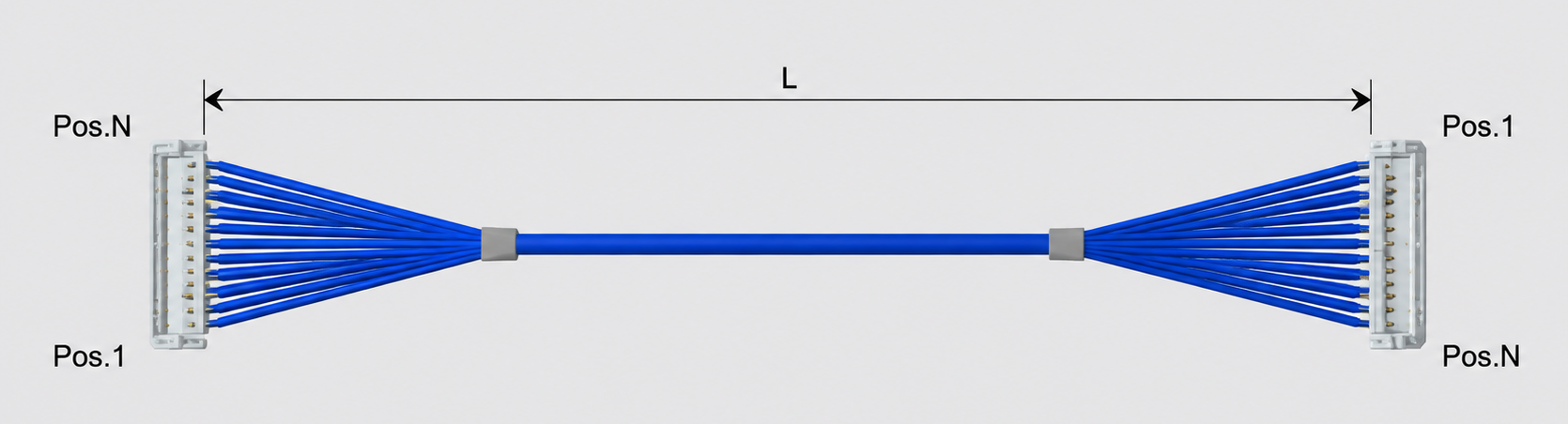
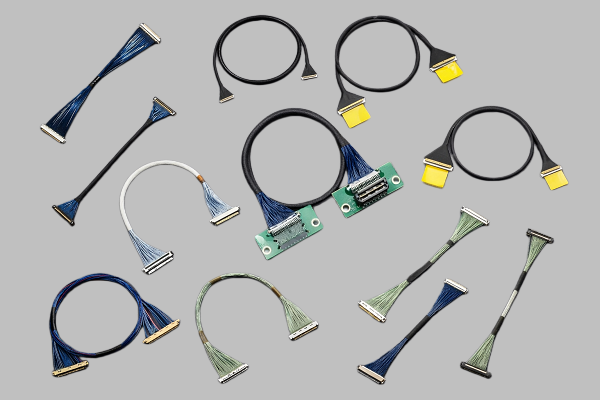
For customers seeking compatible alternatives for the I-PEX 82680-100B-02-D, engineers are advised to first confirm the connector interface type and matching structure of the original cable assembly. The target solution for this product uses a cable end connector of 20878-070T-01, with key connection parameters of 70PIN and 0.4mm pitch. Subsequently, the actual equipment requirements should be confirmed in terms of ultra-fine coaxial cable specifications, cable length, Pin Assignment, wire exit direction, end structure, and high-speed signal requirements. In terms of EMI, it is important to verify the integrity of the coaxial shielding layer, the shielding continuity in the termination area, and the compatibility with the connector shielding structure. In terms of reliability, attention should be paid to cable bending, tensile strength, connector locking, and the presence of stress concentration at the ends during long-term use. Our company can provide a compatible alternative cable assembly solution for I-PEX 82680-100B-02-D, and can match the specifications of ultra-fine coaxial cable assemblies, design cable lengths, define PINs, perform termination processing, and mass produce according to the actual equipment structure and technical requirements of the customer. We can provide targeted compatible alternative support for customers in need of domestication, supply chain optimization, or the introduction of a second supplier. The final alternative solution is still recommended to be tested and verified for mechanical, electrical, high-speed signal, and EMI performance based on specific equipment and signal applications to ensure that they meet project requirements.
“Without the consent or authorization of this site, no one shall reproduce, reprint, distribute, cite, change, broadcast or publish the content in whole or in part in any form, nor shall there be any other violation of the copyright of this site.