


Categorization:Harness Component
With the development of 4K high-resolution displays, industrial vision, AI vision devices, laptops, and high-speed camera modules, the amount of image data is continuously increasing. Internal interconnection of devices not only needs to "transmit quickly" but also needs to ensure signal integrity, impedance stability, and electromagnetic interference resistance during long-term transmission. For engineers, the extremely thin coaxial cables used for 4K image transmission cannot simply focus on "the thinner the better," but should pay more attention to indicators such as transmission speed, characteristic impedance, insertion loss, return loss, crosstalk, shielding performance, and connector matching. The I-PEX CABLINE®-UM series adopts a 0.4mm contact spacing, ZenShield® full EMI shielding, and mechanical lock structure, and is aimed at high-speed signal transmission applications. It can support high-speed interfaces such as MIPI, making it suitable for internal connection scenarios of devices that have requirements for space, speed, and EMC performance. For engineers, when choosing extremely thin coaxial cables, they should evaluate the cable + connector + PCB interface + signal protocol as a complete high-speed link, rather than judge the wire material parameters separately.
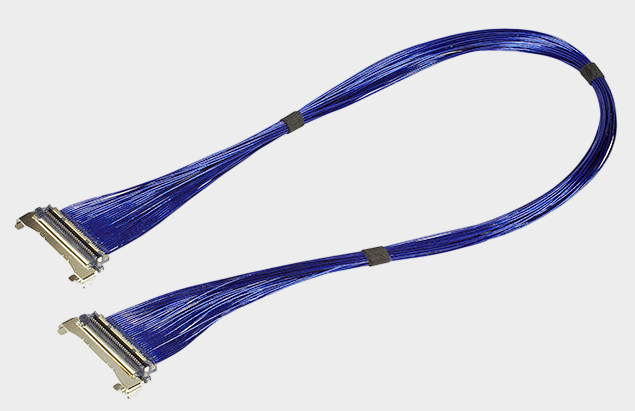
In actual 4K image transmission systems, the primary concerns are high-speed transmission capability and signal integrity. The conductor size of extremely thin coaxial cables, the structure of the insulation layer, the structure of the shielding layer, and manufacturing consistency all affect the high-frequency signal transmission performance; among them, characteristic impedance control is particularly important, as it needs to form a good impedance match with the chip, connector, and PCB routing, otherwise, reflections are likely to occur, leading to eye diagram degradation. Next is low loss and low crosstalk. With the increase in image data rate, insertion loss, return loss, and crosstalk between adjacent channels in the cable assembly directly affect system stability. Then comes EMI/EMC performance. The extremely thin coaxial structure itself has an independent shielding characteristic, and when combined with the full shielding structure of the connector, it can reduce electromagnetic interference generated by high-speed signals on surrounding circuits, while enhancing the ability to resist interference in external noise environments. In addition, 4K devices usually require high long-term reliability, so attention also needs to be paid to connector latches, contact stability of terminals, cable length, bending radius, and assembly consistency. That is to say, the so-called "suitable for 4K" extremely thin coaxial cable is not simply determined by the highest Gbps digital value, but requires a comprehensive evaluation of high-speed performance, impedance, loss, crosstalk, shielding, connection reliability, and manufacturing consistency.
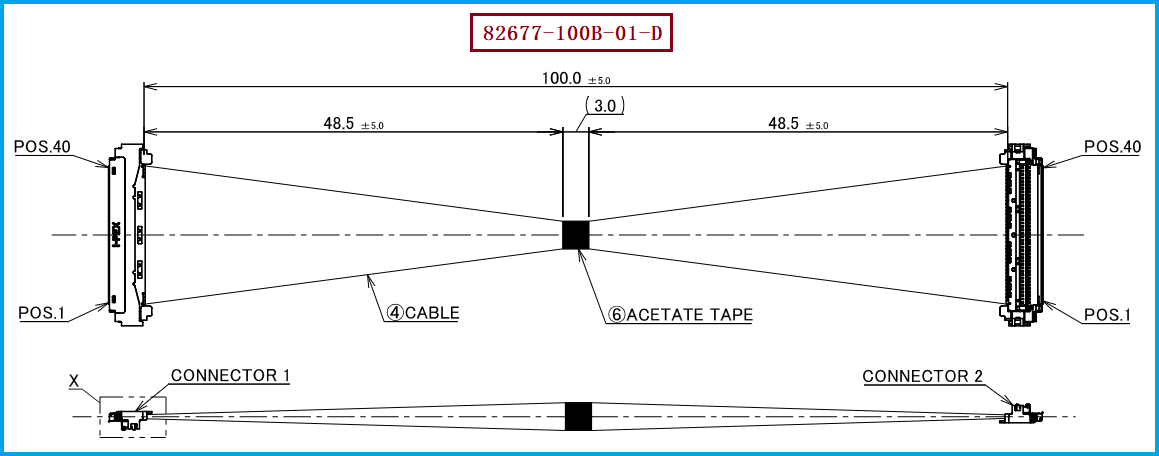
The product part number/model corresponding to this article is I-PEX 82677-100B-01-D, which belongs to the CABLINE®-UM series evaluation sample cable with 40Pin, 40AWG, 100mm, and 1-1 Pin Assignment specifications. The cable length is 100MM, and the connector model used at the cable end is 20878-040T-01. From the product system perspective, CABLINE®-UM adopts a 0.4mm Contact Pitch, Vertical (Right Angle) structure, with a height of about 2.2±0.15mm, and supports 30Pin, 40Pin, 50Pin, and 60Pin specifications; its connector uses ZenShield® full shielding and mechanical locking design, suitable for high-speed display, MIPI, and other high-speed data transmission applications. For purchasers, the part number, 40Pin specification, 40AWG wire diameter, 100MM length, and 20878-040T-01 connector model of I-PEX 82677-100B-01-D are important identification information for quotation, sample confirmation, BOM replacement, and supplier technical comparison. For engineers, it is recommended to further verify by combining the actual MIPI link speed, channel count, impedance requirements, PCB layout, and overall EMC requirements, rather than judging whether it can be directly replaced solely based on the connector Pin count.
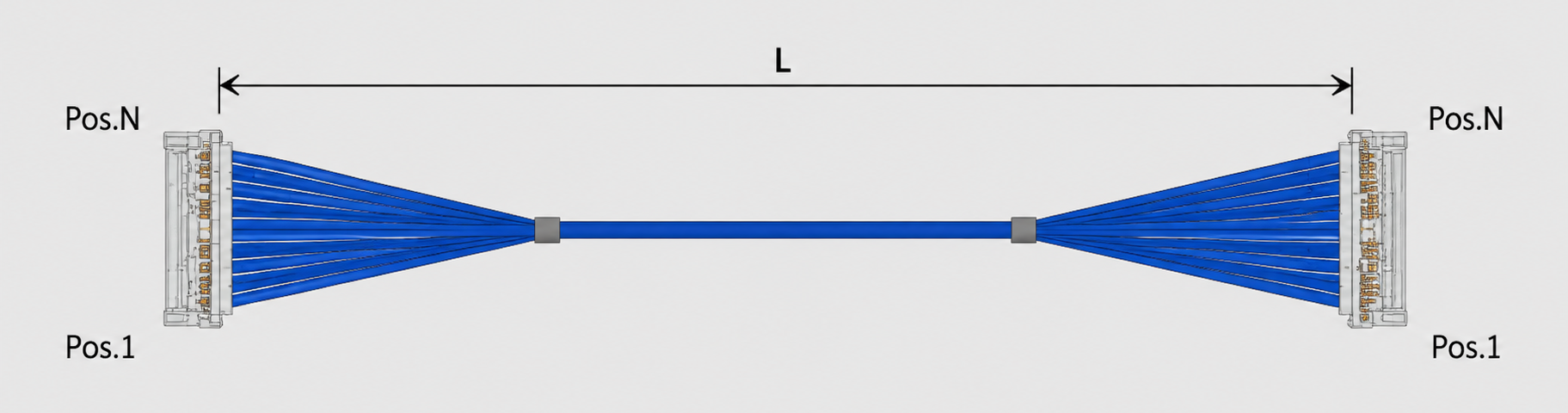
For projects that require domestic substitution or the introduction of a second supplier, it is recommended to first confirm the original harness connector series, pin count, pin assignment, wire diameter, harness length, output direction, and high-speed electrical performance requirements before proceeding with compatibility scheme matching. Especially in the 4K image transmission scenario, if MIPI or other high-speed interfaces are used, it is essential to focus on confirming the characteristic impedance, transmission loss, crosstalk, and shielding performance of ultra-fine coaxial cables, and to verify eye diagrams, bit error rates, and high-speed signal integrity through actual systems. In terms of mechanics, it is also necessary to check the mating dimensions of the connectors, lock structure, PCB pads, and harness output space to avoid situations where "electrical parameters are met but assembly is not possible." For the I-PEX 82677-100B-01-D mentioned in this article, our company specializes in the production and manufacturing of ultra-fine coaxial cable assemblies and can carry out harness processing and scheme matching according to the customer's equipment structure, pin count, wire diameter, length, and connector requirements. Our company can provide I-PEX 82677-100B-01-D compatible substitute harness solutions to help engineers and procurement personnel reduce their dependence on a single supply channel and provide support for product domestic substitution, sample verification, and bulk purchasing. For specific projects, it is recommended to complete both mechanical fitting and high-speed electrical performance verification in the sample stage to ensure that the substitute harness can meet the 4K image transmission requirements of the original system.
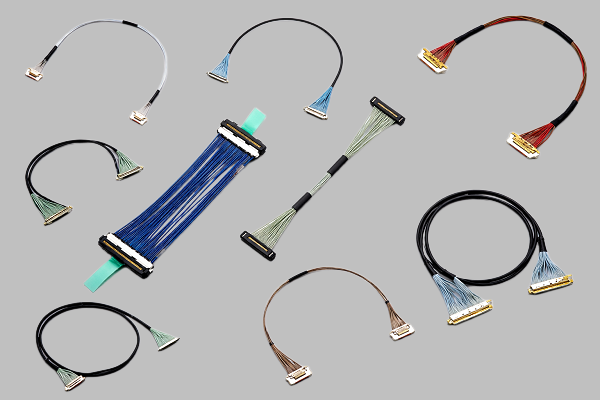
“Without the consent or authorization of this site, no one shall reproduce, reprint, distribute, cite, change, broadcast or publish the content in whole or in part in any form, nor shall there be any other violation of the copyright of this site.