


Categorization:Harness Component
In the context of the continuous development of industrial cameras, machine vision, intelligent detection, and automation equipment towards higher resolution, higher frame rates, and high-speed data processing, the signal transmission task undertaken by the internal wiring harnesses of the equipment has become increasingly important. Especially in application scenarios represented by TI (Texas Instruments) related high-speed visual processing, image acquisition, and industrial vision solutions, the high-speed image data collected by the camera at the front end needs to be transmitted to the back-end processing circuit through a stable, low-loss, and low-interference internal connection chain. Therefore, the harness not only needs to meet the basic electrical connection requirements but also needs to consider signal integrity, EMI control, space occupation, and long-term reliability. For equipment engineers, traditional larger cables are often limited by wiring space, bending radius, and interface density in the high-density industrial vision equipment, while ultra-thin coaxial harnesses can achieve multi-channel high-speed signal connections in a smaller space, providing a more flexible wiring foundation for the miniaturization design of industrial cameras and vision processing equipment.
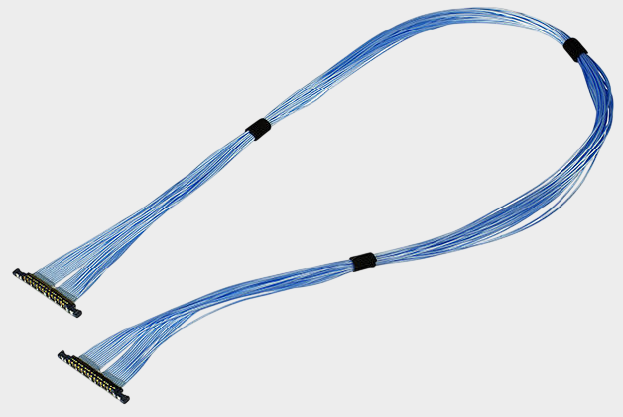
The product model introduced this time is I-PEX 81674-100B-02-D, which belongs to the CABLINE®-CA II series ultra-thin coaxial cable assembly reference scheme. The connector model used at the cable end is 20680-060T-01, and the wire position definition adopts the 1-N method, that is, one end is concentratedly connected and the other end is connected according to the corresponding signal line position. From the perspective of engineering application, this structure can reduce the complex connection relationship inside the device, allowing multi-channel signals to be transmitted through a set of compact ultra-thin coaxial cable assembly. For TI industrial vision related equipment, when there is a need for high-density signal interconnection among modules such as cameras, image sensors, high-speed processors, and acquisition card boards, ultra-thin coaxial cable assembly can help engineers further optimize the internal space, and at the same time, it can provide better electromagnetic isolation for high-speed signals through the coaxial structure. Especially in the process of high-resolution, high-frame rate image data transmission, the impedance consistency, shielding structure, termination technology, and manufacturing consistency of the cable assembly will affect the final signal quality. Therefore, choosing a professional ultra-thin coaxial cable assembly that matches the connector is of great significance for the high-speed signal debugging at the product development stage and for mass production.
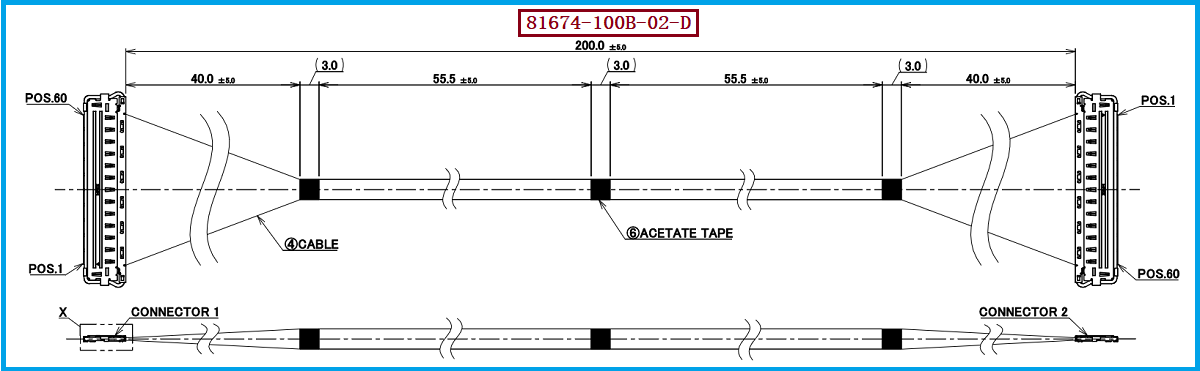
In TI industrial vision applications, industrial cameras often need to complete a variety of functions such as image acquisition, data processing, communication, and power supply within limited equipment space. There may also be processors, power modules, clock circuits, and other high-speed interfaces near high-speed signal chains, so electromagnetic interference and crosstalk control become important considerations in engineering design. The extremely thin coaxial cable is composed of a central conductor, insulating layer, and shielding layer to form a relatively complete signal transmission structure, which is more conducive to signal isolation and impedance control in high-speed signal connection scenarios compared to ordinary discrete lines; at the same time, its slender outer diameter can reduce the space occupied by the cable harness inside the equipment, allowing engineers to have more flexibility in wiring between PCBs, camera modules, and processing boards. For procurement personnel, the cable harness is not just a simple "connector + wire" combination; the true impact on batch usage effectiveness is connector matching, wire specifications, termination accuracy, wire sequence consistency, length tolerance, and batch stability. Therefore, during the introduction of TI industrial vision-related products, attention should be paid to both sample verification and production consistency to ensure that the extremely thin coaxial cable harness maintains a stable connection in high-speed data transmission, equipment vibration, and long-term operating environments.
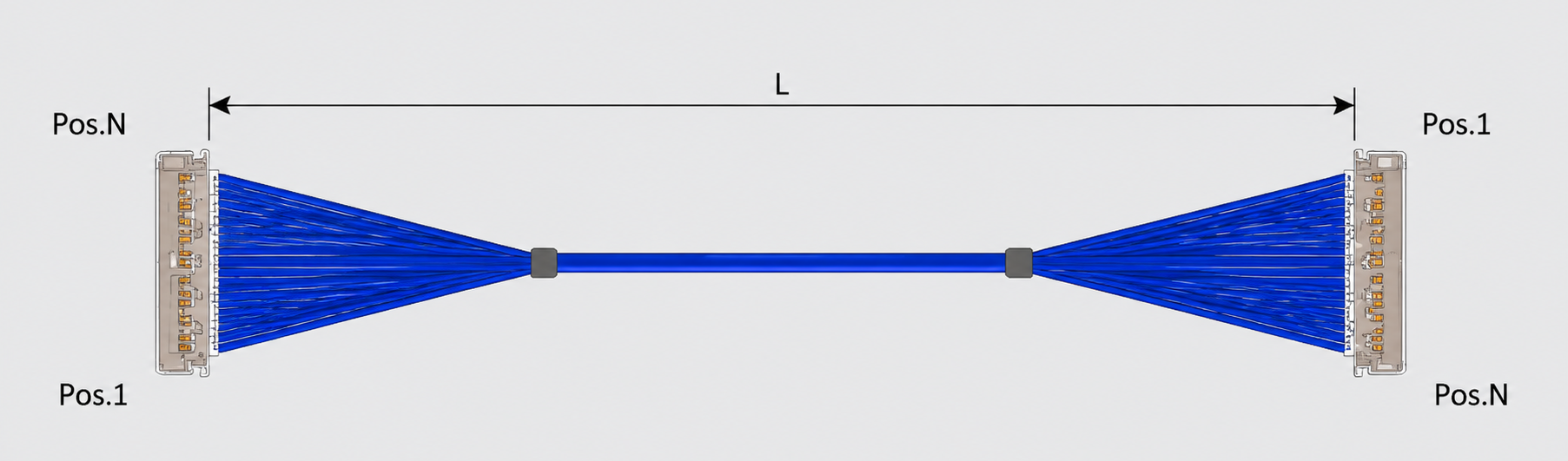
For engineers and procurement personnel, if the existing design uses I-PEX 81674-100B-02-D as a reference model, it is recommended to first confirm the connector series, pin count, wire position definition, wire specification, cable length, and termination method when carrying out localization, supply chain optimization, or second supplier introduction. Then, conduct sample testing in combination with actual high-speed signal requirements. Special attention should be paid to the fact that the wire end connector model of this solution is 20680-060T-01, and the wire position definition is 1-N. Therefore, the alternative cable cannot be matched solely based on appearance dimensions, but should focus on the matching dimensions of the connector, terminal position, wire sequence, impedance control, shielding continuity, and high-speed signal transmission performance. At the same time, in the application of TI industrial vision equipment, it is also recommended to conduct actual whole machine verification of eye diagrams, bit error rates, signal integrity, and EMI to confirm that the alternative solution can meet the requirements of the original design. Our company can provide I-PEX 81674-100B-02-D compatible ultra-thin coaxial cable solution, which can be customized according to customer equipment structure, cable length, wire sequence, and connector requirements. It can also be matched with engineering sample verification and bulk production needs to provide ultra-thin coaxial cable配套 services for industrial cameras, machine vision equipment, and high-speed image processing equipment.
“Without the consent or authorization of this site, no one shall reproduce, reprint, distribute, cite, change, broadcast or publish the content in whole or in part in any form, nor shall there be any other violation of the copyright of this site.