


Categorization:Harness Component
With the widespread application of the NVIDIA Jetson platform in robot vision, intelligent cameras, industrial vision, drones, and edge AI devices, there is not only a need to transmit high-speed image data between the camera module and the main control board, but also to consider the internal space of the device, EMI control, mechanical reliability, and long-term operation stability. What is referred to as "Why NVIDIA recommends ultra-fine coaxial cables instead of FFC ribbon cables" can be more accurately understood from the perspective of engineering design as: why engineers often prefer to use ultra-fine coaxial cables as high-speed camera connection solutions in Jetson-related high-speed vision devices. Compared with traditional FFC ribbon cables, each high-speed signal channel of the ultra-fine coaxial cable has an independent coaxial shielding structure, which can better control cross-talk between signals and external electromagnetic interference. In high-speed MIPI and other camera data transmission environments, it has obvious value in maintaining signal integrity. Especially as the camera resolution, frame rate, and data throughput continue to improve, relying solely on ordinary ribbon cables to achieve stable high-speed transmission will face challenges in impedance control, cross-talk, EMI, and wiring space, so ultra-fine coaxial cables have gradually become an important choice for internal connections in high-performance vision devices.
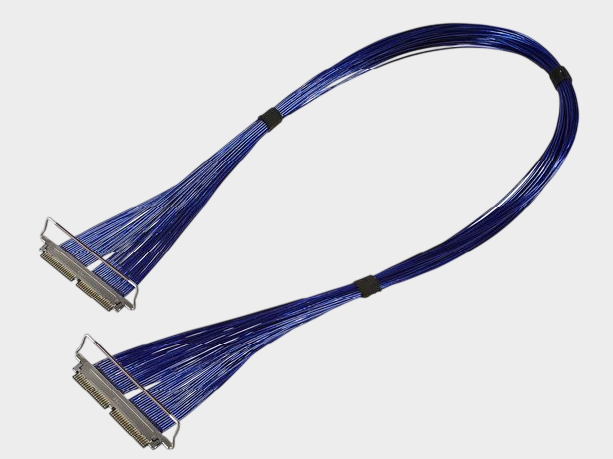
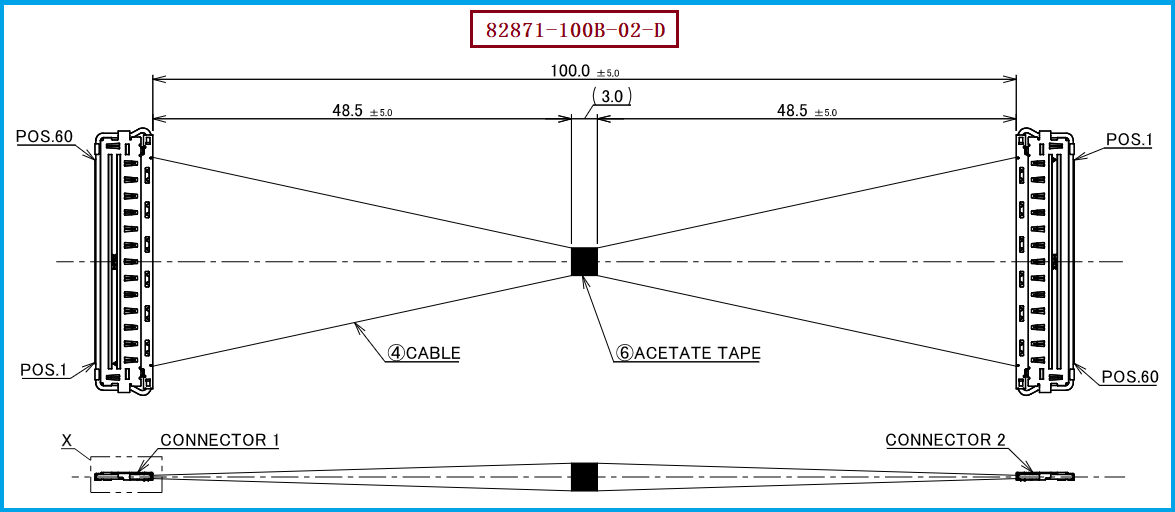
The product model introduced this time is I-PEX 82871-100B-02-D, which belongs to the CABLINE®-CA II series ultra-thin coaxial cable assembly solution. The corresponding cable end connector model is 20680-060T-01, and the cable length is 100MM. From the perspective of product selection by engineers, the 100MM length is suitable for short-distance high-speed signal connections within camera modules, AI vision mainboards, and compact devices, which can reduce the problems of bending, routing, and space occupation brought by excessively long cables while meeting the connection distance requirements. The CABLINE®-CA II connector adopts a 0.4mm ultra-fine pitch design and is combined with shielding and mechanical locking structures, making it suitable for high-density, miniaturized electronic devices with high-speed signal connections. For purchasing personnel, the three pieces of information, I-PEX 82871-100B-02-D, 20680-060T-01, and 100MM, are also key parameters that need to be confirmed during sample confirmation, alternative selection, BOM verification, and supply chain quotation.
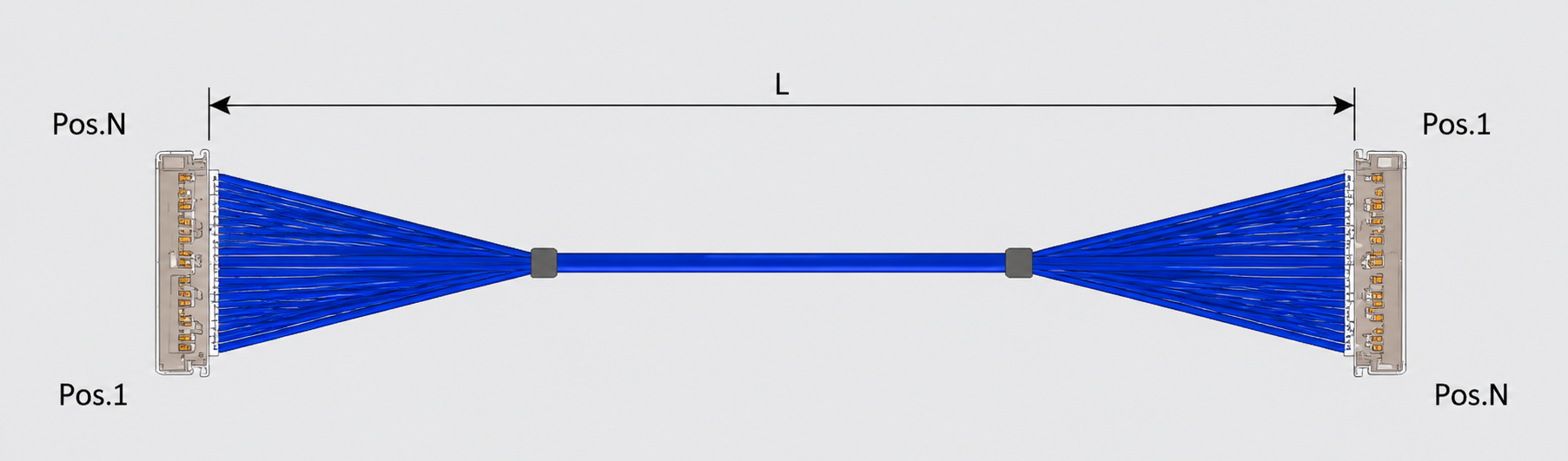
The advantage of FFC lies in its simple structure, relatively easy cost control, and good flexibility. However, when the application enters a high-speed, high-density, and strong EMI environment, engineers usually need to pay more attention to impedance consistency, adjacent signal crosstalk, external noise coupling, and the shielding continuity of the connection area. The ultra-fine coaxial cable, through the "conductor + insulation layer + shielding layer" structure, provides a more independent transmission environment for high-speed signals, and can be comprehensively controlled through wire material structure, impedance, shielding, and termination technology. For Jetson vision devices, cameras usually need to complete high-speed data transmission within a limited space, and there may also be processors, power supplies, wireless communication modules, and other high-speed digital circuits inside the device. Therefore, the connection harness is not only about "transmitting the signal from point A to point B" but also directly related to the signal integrity and EMC design of the system. Our company can provide I-PEX 82871-100B-02-D compatible alternative harness solutions, which can produce ultra-fine coaxial cable harnesses according to the customer's connector specifications, wire material, length, Pin number, routing direction, and equipment installation space, providing domesticated, compatible harness solutions for Jetson vision devices, AI camera modules, and high-speed electronic equipment.
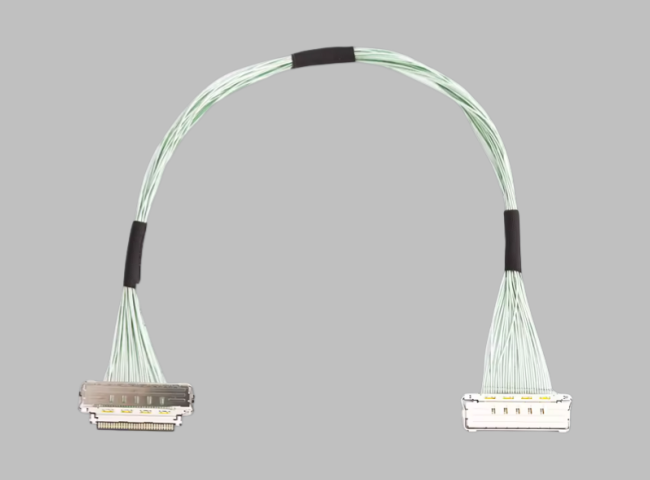
For engineers, when selecting I-PEX 82871-100B-02-D or its compatible alternatives, it is not enough to simply check if the connector can be plugged in. They need to comprehensively confirm the connector model, pin count, wire structure, characteristic impedance, wire length, shielding structure, termination method, and actual high-speed signal requirements. This scheme clearly specifies the wire-end connector as 20680-060T-01, with a standard reference length of 100MM. Therefore, when conducting domestic substitution or secondary development, it is recommended to first match the original cable harness interface structure and electrical requirements, and then confirm the length and wiring direction based on the actual installation space of the equipment. If it is used for Jetson cameras, machine vision, or other high-speed camera applications, it is also recommended to focus on verifying high-speed signal integrity, error rate, crosstalk, EMI, and actual equipment operation stability during the sample stage. For procurement personnel, it is recommended to focus on verifying whether the alternative product can maintain compatibility with the original connector interface, consistent cable harness dimensions, stable delivery dates, and batch manufacturing consistency, thereby reducing subsequent import risks.
“Without the consent or authorization of this site, no one shall reproduce, reprint, distribute, cite, change, broadcast or publish the content in whole or in part in any form, nor shall there be any other violation of the copyright of this site.