


Categorization:Harness Component
In notebook computers, tablets, high-resolution display devices, and other thin and light electronic products, internal high-speed signal connections require both high transmission performance and are limited by space, connector size, and routing bend space. For such applications, the I-PEX CABLINE®-CA II series employs 0.4mm Pitch ultra-fine pitch connectors, and is paired with Micro-Coaxial ultra-fine coaxial cables, providing a compact solution for high-density, high-speed signal connections. The I-PEX 82673-100B-01-D introduced this time belongs to the CABLINE®-CA II 40Pin ultra-fine coaxial cable assembly solution, using 40AWG ultra-fine coaxial cables, 300mm in length, and a 1-1 two-end connection structure. The connector model matched with the cable end is 20680-040T-01, which is compatible with AWG#40 wire. For engineers, this "40Pin+40AWG+300mm" combination can achieve multi-channel signal connections within limited device space; for purchasers, having clear complete part numbers, connector models, wire AWG, and length is beneficial for subsequent BOM verification, supplier evaluation, and sample recognition.
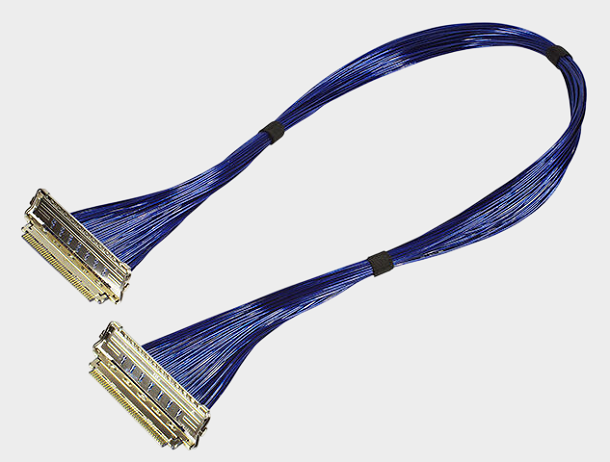
The ultra-thin coaxial cable does not simply support USB 3.1 Gen 2 transmission with a simple "yes" or "no" judgment. The theoretical signal rate of USB 3.1 Gen 2 reaches 10Gbps, which has higher requirements for the cable's characteristic impedance, insertion loss, return loss, crosstalk, shielding performance, and connector termination quality. The ultra-thin coaxial cable, due to its coaxial transmission form composed of a central conductor, insulation layer, shielding layer, and external structure, inherently has a good foundation for high-speed signal transmission. Therefore, after reasonable impedance design, control of the cable structure, connector matching, and complete SI testing, it can be used for 10Gbps-level high-speed signal applications. However, from the perspective of engineering verification, it cannot be directly claimed that a specific cable material number meets the USB 3.1 Gen 2 10Gbps requirements just because of the name "ultra-thin coaxial cable." For I-PEX 82673-100B-01-D such 40AWG ultra-thin coaxial cable assemblies, if the project goal is USB 3.1 Gen 2, it should be combined with the actual 300mm cable length, connector, PCB routing, and system transceiver for Insertion Loss, Return Loss, Crosstalk, Eye Diagram, and other high-speed signal integrity tests. The final judgment on whether it meets the 10Gbps transmission requirements should be based on the whole system verification results. In other words, the ultra-thin coaxial cable provides a feasible high-speed transmission foundation for USB 3.1 Gen 2, but the final performance depends on the overall design of "cable + connector + termination + PCB + system."
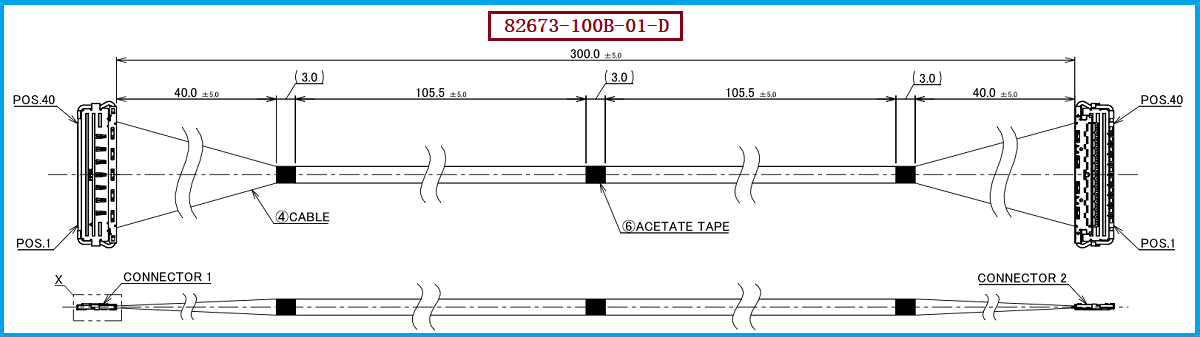
For engineering projects requiring replacement of the original I-PEX cables, true compatibility is not simply achieved by having "the same number of pins and the same cable length." Instead, it requires attention to the connector, cable specifications, wire sequence, termination method, and mechanical dimensions. In this proposal, the cable end connector uses 20680-040T-01, which corresponds to the 40Pin CABLINE®-CA II Plug Housing, and is matched with AWG#40 ultra-thin coaxial cable; the target replacement product should prioritize maintaining consistency with the core conditions of I-PEX 82673-100B-01-D, 40Pin, 40AWG, 300mm, and 1-1 termination. For engineers, it is necessary to further confirm the connector fit, cable direction, wire sequence, and high-speed signal performance before introducing the alternative solution; for procurement personnel, it is recommended to use "complete cable part number + connector model + AWG + length + pin number" as the basic conditions for inquiry and supplier technical confirmation, rather than just purchasing based on "40Pin ultra-thin coaxial cable." Our company can provide: I-PEX 82673-100B-01-D compatible replacement cable solution, which can be developed for domestic replacement around the original product's 40Pin structure, 40AWG ultra-thin coaxial cable, 300mm length, and 1-1 termination form, and can match specific cable scheme according to the actual space layout, wire sequence, and length requirements of the customer's equipment.
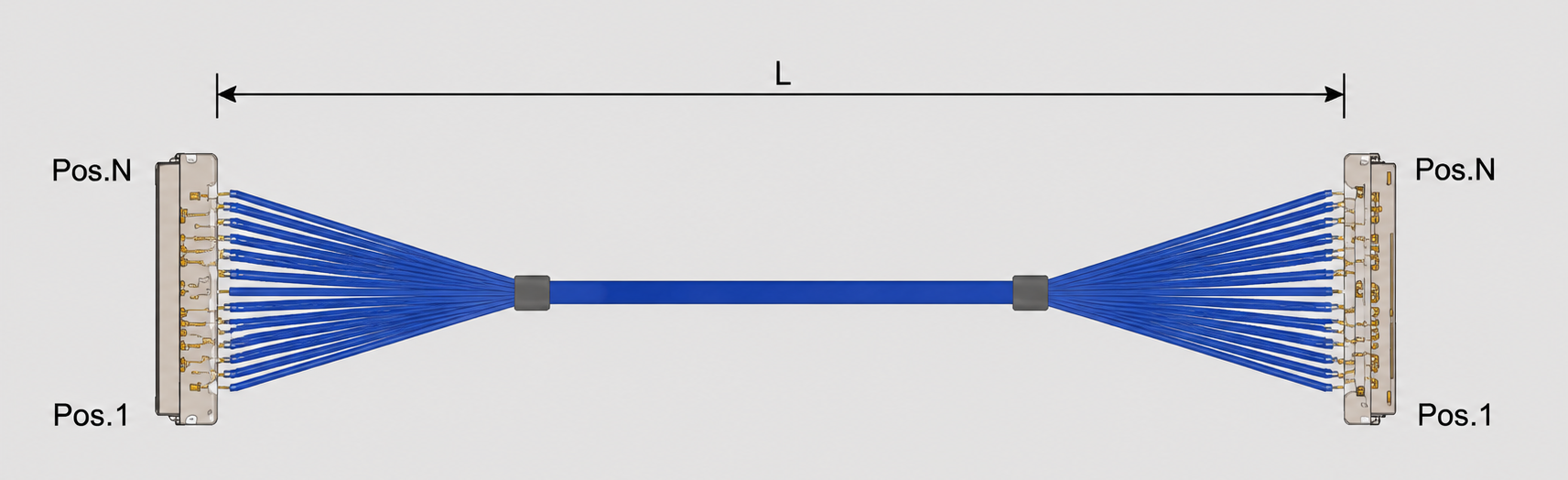
If the engineering project is looking for a compatible or domestic alternative to I-PEX 82673-100B-01-D, it is recommended to first confirm the CABLINE®-CA II 40Pin interface used on the original equipment end and the mating relationship at both ends of the cable harness. Then, check the key parameters such as the connector at the 20680-040T-01 cable end, AWG#40, 300mm, 1-1 sequence/end termination. If the project focuses on USB 3.1 Gen 2 or other 10Gbps-level high-speed signals, it is not enough to verify "it can be plugged in"; rather, actual cable harnesses should be tested for impedance, insertion loss, return loss, crosstalk, and high-speed eye diagrams. If the project is for display, eDP, or other high-speed differential signals, it is also necessary to perform SI verification in combination with the actual system. For procurement alternatives, it is recommended to prioritize suppliers providing samples corresponding to I-PEX 82673-100B-01-D, and compare the mechanical dimensions, Pin positions, sequence, connector retention force, conductivity, and high-speed performance between the original and alternative parts to reduce the risk of introduction. Our company, as a fine coaxial cable production and manufacturing enterprise, can carry out compatible alternative development based on the original samples, drawings, or technical requirements provided by customers, and provide corresponding fine coaxial cable solutions for engineering verification, sample trial production, and bulk procurement.
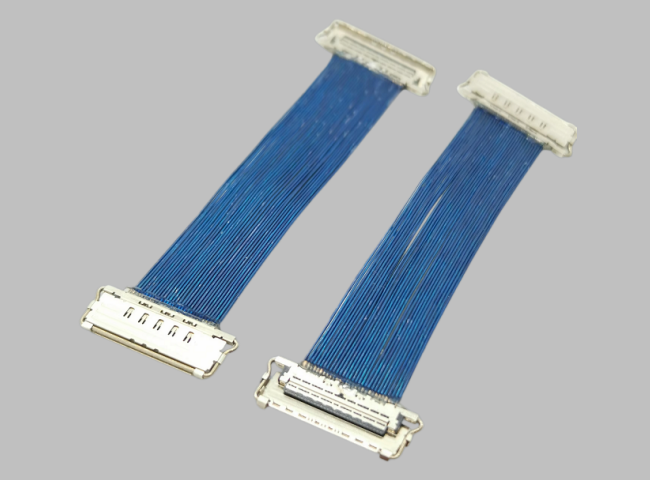
“Without the consent or authorization of this site, no one shall reproduce, reprint, distribute, cite, change, broadcast or publish the content in whole or in part in any form, nor shall there be any other violation of the copyright of this site.