


Categorization:Harness Component
With the continuous development of collaborative robots, industrial robots, robotic arms, and robotic vision systems towards miniaturization, lightweight, and high integration, the internal wiring space of the joints becomes increasingly limited. At the same time, it also needs to meet the data transmission requirements between motors, encoders, vision modules, sensors, and control units. For engineers, the internal wiring of robotic joints not only needs to consider the size of the cable bundles but also needs to comprehensively consider high-speed signal integrity, EMI suppression, bending and movement environment, as well as connection reliability. Therefore, extremely fine coaxial cable bundles have certain application potential within the internal joints of robots. Especially when high-speed differential signals need to be transmitted in narrow spaces, compared to the larger traditional multi-core cables, the extremely fine coaxial structure can achieve multi-channel high-density wiring in limited spaces. The I-PEX 82672-100B-01-D extremely fine coaxial cable bundle introduced in this article adopts a 40Pin, 0.4mm spacing terminal connection scheme and belongs to a typical extremely fine coaxial cable bundle product for high-density connection applications.
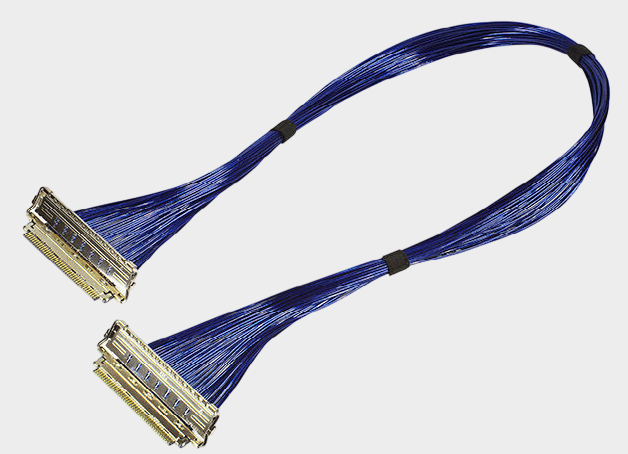
From the product specifications, I-PEX 82672-100B-01-D belongs to the CABLINE®-CA II series 40Pin ultra-thin coaxial cable assembly with dual-end connection solution, suitable for electronic device design that has high requirements for internal space and signal transmission capability. The cable assembly uses the connector model 20680-040T-01 at the wire end, with a 40PIN, 0.4MM pitch connector, which can realize multi-channel signal connection within a smaller connection area. The accompanying CABLINE®-CA II platform adopts a 0.4mm pitch, horizontal insertion and removal structure, and has ZenShield® full shielding design and mechanical lock structure, with its product platform targeting high-speed, miniaturization, and high-density connection applications. From the perspective of engineering design, this type of structure is particularly suitable for wiring positions in robot joints with "space tight, signal abundant, and requirements for EMI control." However, it is particularly emphasized that whether it is suitable for a specific robot joint must be combined with the bending radius, motion frequency, drag chain/oscillation method, cable fixation method, environmental temperature, and actual high-speed protocol for reliability verification, and cannot be directly determined for applicability based on the connector size alone.
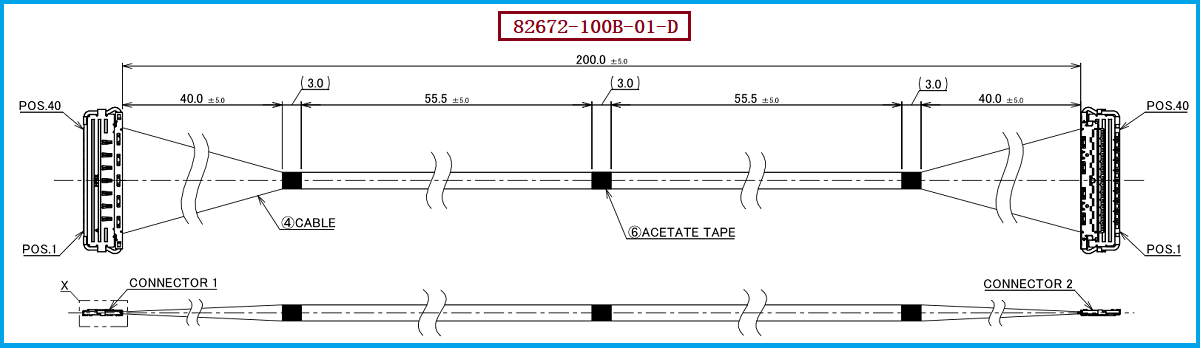
For robotic R&D engineers, the use of extremely thin coaxial cables within joints requires a core evaluation from three dimensions: "high-speed signals + mechanical motion + spatial constraints." Extremely thin coaxial cables inherently have good advantages in high-speed signal transmission and shielding structure, and have significant value in scenarios such as high-speed cameras, vision modules, display/control modules, and high-speed data links. However, robotic joints have continuous motion, repeated bending, and mechanical stress, so when selecting cables, it is necessary to focus on confirming dynamic bending life, minimum bending radius, fixed position, stress relief, and connector locking reliability. If the internal joint of the robot is relatively fixed or has low-frequency motion, extremely thin coaxial cables can more easily play their advantages of miniaturization and high-speed transmission; if it is a long-term high-frequency reciprocating motion area, it should be prioritized to conduct dynamic bending tests and life verification based on the actual motion trajectory. For purchasing personnel, they should not only compare the price of a single wire material but should also comprehensively consider connector matching, processing consistency, impedance control, shielding performance, bulk delivery capability, and long-term supply stability. Our company can provide: I-PEX 82672-100B-01-D compatible alternative cable solutions, which can develop extremely thin coaxial cable solutions according to the length, wire specifications, connector configuration, and application environment of the customer's equipment, providing domestic compatible alternative choices for robots, industrial automation equipment, and high-speed electronic equipment.
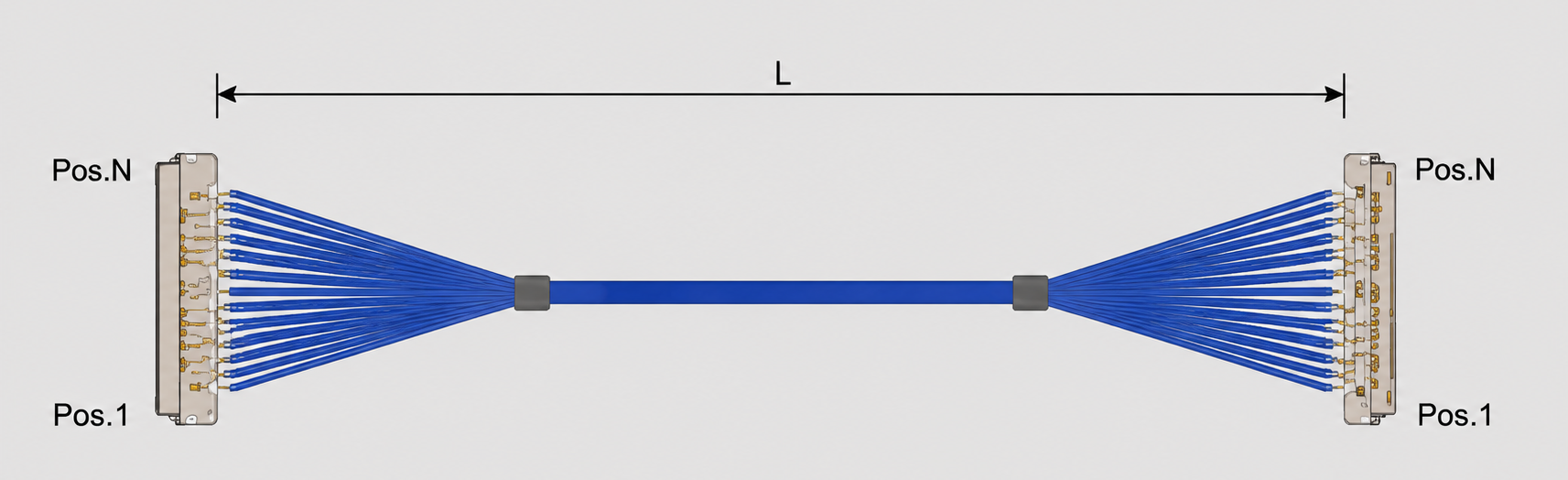
When considering compatibility and alternative for I-PEX 82672-100B-01-D, engineers recommend first confirming the original design's connector interface form and Pin definition. The wire harness end connector model for this solution is 20680-040T-01, 40PIN, with a 0.4MM pitch. Further confirmation should be given to the wire harness length, wire specification, impedance requirements, shielding method, and connection relationship at both ends. For robotic joint applications, additional information such as the joint movement range, dynamic bending frequency, operating temperature, installation space, and expected lifespan should be provided to facilitate targeted material and structure matching. If the application involves high-speed vision, internal high-speed data communication for robots, etc., signal integrity verification should be conducted in conjunction with actual interface protocols. For the procurement side, I-PEX 82672-100B-01-D can be used as the OEM reference model, and a comprehensive evaluation should be made from aspects such as connector matching, wire parameters, processing technology, reliability testing, and mass supply capability, rather than simply replacing based on appearance or Pin count.
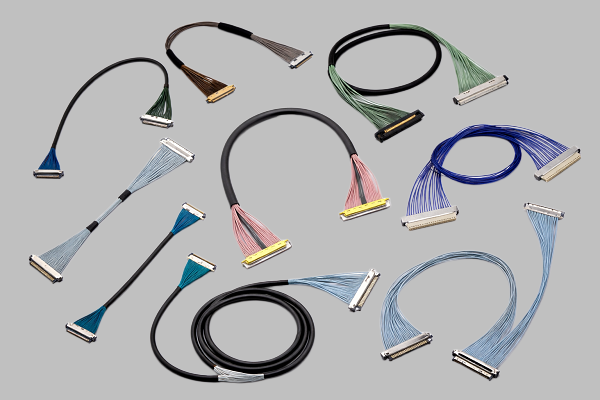
“Without the consent or authorization of this site, no one shall reproduce, reprint, distribute, cite, change, broadcast or publish the content in whole or in part in any form, nor shall there be any other violation of the copyright of this site.