High-speed coaxial cable assembly solution for ultra-fine cablesWith the continuous development of laptop computers, ultra-thin display devices, VR/AR equipment, high-speed industrial equipment, and smart terminal products towards thinness and high-speed, there is a higher requirement for high-speed signal connections within the equipment. Traditional cables are prone to be affected by spatial limitations, electromagnetic interference, and signal attenuation when transmitting high-speed differential signals, while ultra-fine coaxial cables, with their excellent shielding performance, impedance control capabilities, and high-frequency transmission stability, are gradually becoming an important solution for internal connections in high-end electronic equipment.
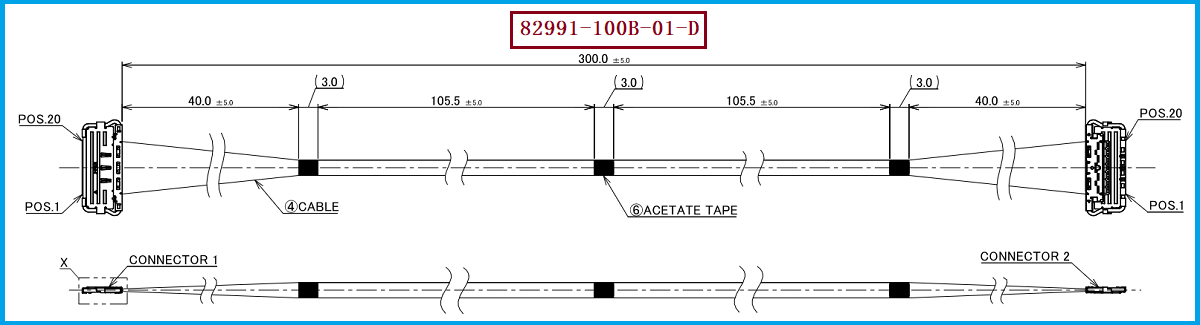
This article introduces the I-PEX 82991-100B-01-D ultra-fine coaxial cable assembly, which belongs to the I-PEX CABLINE®-CA II series 20Pin ultra-fine coaxial cable assembly solution. It adopts a 300MM length design and is matched with the I-PEX 20680-020T-01 connector model at the cable end. It is suitable for high-density, high-speed signal transmission scenarios. This solution uses a 20Pin Micro-Coaxial structure, which combines precise connectors with ultra-fine coaxial cables to achieve stable and reliable data transmission inside the equipment.
For engineers, when selecting the design for high-speed cable harnesses, it is not only necessary to pay attention to connector specifications, but also to deeply understand the relationship between the internal conductor structure of the ultra-thin coaxial cable and its electrical performance, because the conductor structure directly affects signal integrity, transmission loss, and the system's EMC performance.
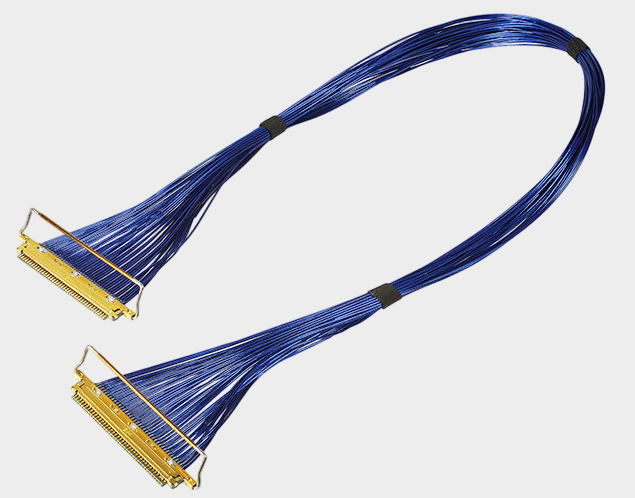
The ultra-fine coaxial conductor structure determines the performance of high-speed transmission.Extremely thin coaxial cables, although with a very small outer diameter, still adhere to the coaxial transmission principle internally, usually consisting of a central conductor, an insulating layer, a shielding layer, and an outer sheath. Among them, the central conductor is responsible for high-speed signal transmission, the insulating layer determines the signal propagation characteristics, and the shielding layer plays a vital role in suppressing external interference and reducing signal leakage.
In the application of extremely thin coaxial cable bundles, the central conductor usually adopts a multi-strand fine copper wire braided structure. Compared to a single conductor, a multi-strand braided conductor has better flexibility and bend resistance, making it more suitable for devices with limited internal space and dynamic bending requirements, such as notebooks and display modules. At the same time, the cross-sectional area of the conductor directly affects the resistance size. The thicker the conductor, the lower the resistance, the smaller the signal transmission loss, but the overall size of the cable bundle will also increase. Therefore, engineers need to balance the wire diameter, flexibility, and high-speed performance reasonably.
For example, the I-PEX 82991-100B-01-D ultra-fine coaxial cable assembly uses a Micro-Coaxial ultra-fine coaxial structure. Through refined conductor design, the cable assembly can maintain stable high-speed signal transmission capability within a limited space, while meeting the requirements of thin and light devices for wiring space.
How to understand the relationship between conductor structure and electrical properties?For high-speed signal transmission, the conductor structure of extremely thin coaxial cables not only affects the conductivity but also impacts key electrical performance parameters such as impedance, capacitance, inductance, and signal loss.
Firstly, the diameter of the conductor and the material will affect the direct current resistance. The thicker the conductor, the lower the resistance to electron flow, and the smaller the energy loss during the transmission of high-frequency signals. However, due to the need to meet the miniaturization requirements for extremely thin coaxial cables, high conductivity materials are usually used in conjunction with precise twisting technology to enhance the electrical performance while ensuring the dimensions.
Secondly, the distance between the conductor and the shield layer, as well as the dielectric constant of the insulating material, affects the characteristic impedance. High-speed interfaces such as eDP, USB4, and DisplayPort have high requirements for impedance matching. If the impedance changes too much, it will cause signal reflection, leading to data errors. Therefore, ultra-fine coaxial cables need to control the conductor size, insulating thickness, and shielding structure precisely to maintain stable transmission impedance.
In addition, the shielding layer structure also affects the electromagnetic compatibility performance. High-quality ultra-fine coaxial cables usually adopt metal braid shielding or composite shielding structures to make it difficult for external electromagnetic noise to enter, while reducing the radiation of high-speed signals outward, thereby improving the overall system stability. For procurement personnel, when selecting a supplier of ultra-fine coaxial cable assemblies, it is not only necessary to confirm whether the connector model matches, but also to pay attention to the manufacturing capabilities of the cable material, including conductor processing accuracy, impedance control capability, shielding performance, and batch consistency.
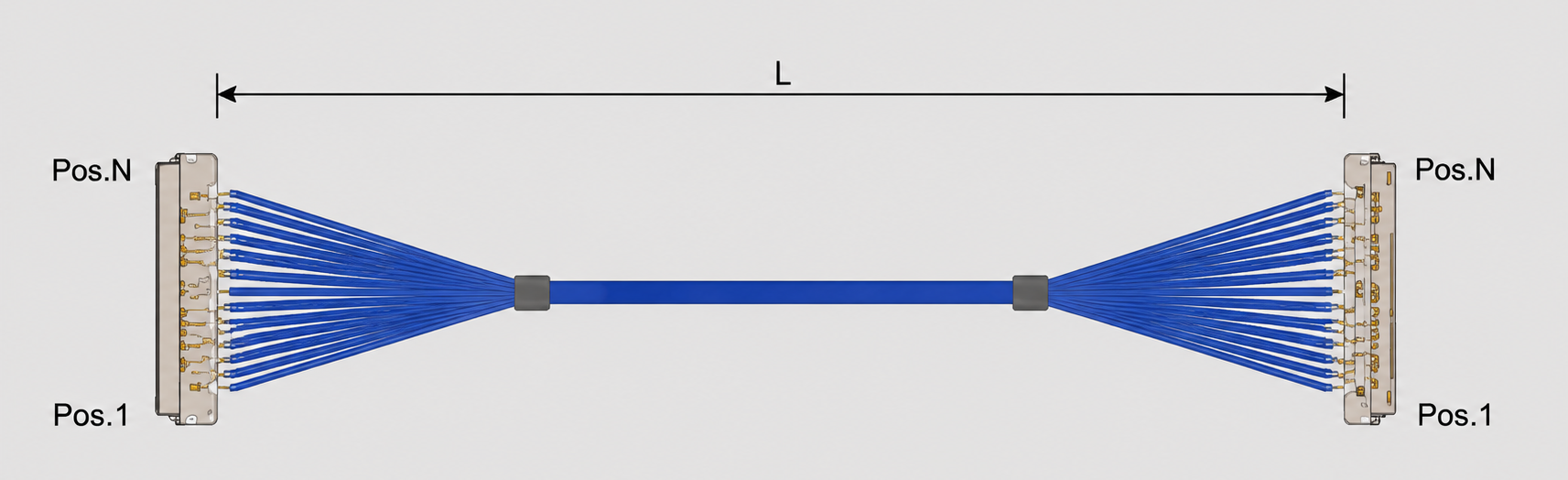
I-PEX 82991-100B-01-D compatible alternative solutions and selection recommendationsIn the actual process of project development, engineers usually need to select an appropriate ultra-thin coaxial cable assembly scheme based on equipment structure, signal rate, installation space, and cost requirements. The I-PEX 82991-100B-01-D adopts a 20Pin double-ended connection (1-1) structure, with a length of 300MM, and is matched with a cable end connector model of 20680-020T-01, suitable for internal applications of electronic devices requiring stable high-speed signal connections.
When carrying out compatibility substitution design, the following factors need to be confirmed with emphasis: whether the connector interface size is consistent, whether the pin quantity matches, whether the cable length meets the structural requirements, whether the specification of extremely fine coaxial cables meets the high-speed signal requirements, and whether the overall EMC performance meets the design standards.
In response to the market demand for alternatives to the I-PEX CABLINE®-CA II series ultra-thin coaxial cable assemblies, our company has the research and manufacturing capabilities for ultra-thin coaxial cable assemblies and can provide customized cable assembly solutions according to customer product requirements. Our company can offer: I-PEX 82991-100B-01-D compatible alternative cable assembly solutions, supporting the same connector specification matching, cable length customization, material specification optimization, and mass production manufacturing, which can help customers reduce supply chain costs and improve product development flexibility.
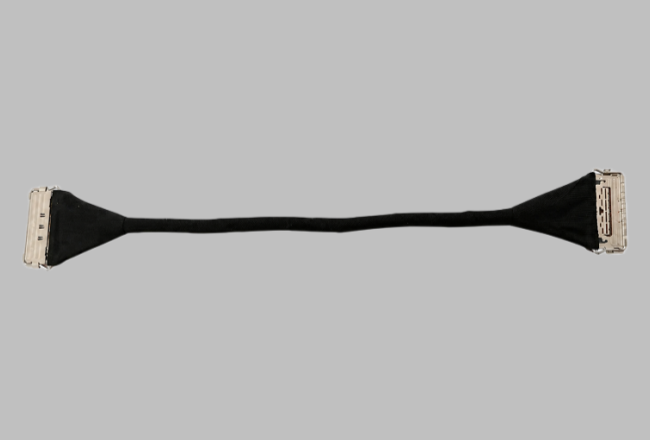
Professional ultra-fine coaxial cable assembly manufacturing capability, facilitating the upgrade of high-speed connection applicationsAs electronic devices continue to develop towards high-speed transmission, miniaturization, and high reliability, extremely thin coaxial cables have become an important component of high-speed display, high-speed data communication, and internal connections of precision electronic devices. Excellent extremely thin coaxial cables not only require reliable connector matching but also need to have comprehensive capabilities in wire conductor structure, impedance control, electromagnetic shielding, and processing technology.
I-PEX 82991-100B-01-D ultra-fine coaxial cable assembly achieves a balance between space utilization and high-speed transmission performance through a 20Pin Micro-Coaxial structure, a 300MM length design, and a combination of the 20680-020T-01 connector. Understanding the relationship between the ultra-fine coaxial cable conductor structure and its electrical performance helps engineers to make more precise cable selection and also assists purchasers in choosing more stable and reliable supply solutions. I am
【3W Electronic Components Network】Our company has a complete production system and technical team for ultra-fine coaxial cable assemblies, capable of meeting customization and replacement needs for various coaxial cable assemblies; welcome to contact:
Manager Zhang 18913228573 (WeChat same number)Our company is continuously focused on the research and development and manufacturing of ultra-fine coaxial cable assemblies, and can provide high-quality and high-reliability domestic compatible alternative solutions to meet the application needs of customers in the fields of consumer electronics, industrial equipment, high-speed display, and intelligent terminals.