


Categorization:Harness Component
In laptops, tablets, display modules, cameras, and other high-density electronic devices, the internal space is becoming increasingly limited. Engineers not only require thinner wiring harnesses but also need to consider high-speed signal transmission, shielding performance, and connection reliability. How small can the core wire diameter of an extremely thin coaxial cable be in millimeters? This question actually cannot be answered by simply looking at "how thin the core wire is." It also requires considering the conductor cross-sectional area, insulation thickness, shielding structure, characteristic impedance, and the overall cable outer diameter. Taking the I-PEX 82867-100B-02-D introduced in this article as an example, this product uses a 40AWG Micro-Coaxial extremely thin coaxial cable with a cable length of 100MM, which belongs to the CABLINE®-CA II 20Pin high-speed extremely thin coaxial cable harness solution. It needs to be particularly pointed out that 40AWG is a wire gauge specification and does not equal to "the core wire diameter is a fixed millimeter number"; the actual core wire diameter also depends on the specific conductor structure and wire material manufacturing specifications. Therefore, when engineers ask "how thin can it be," they should pay more attention to how thin the conductor and the entire coaxial cable can be under the conditions of meeting the target electrical performance and mechanical reliability, rather than simply pursuing the minimum diameter.
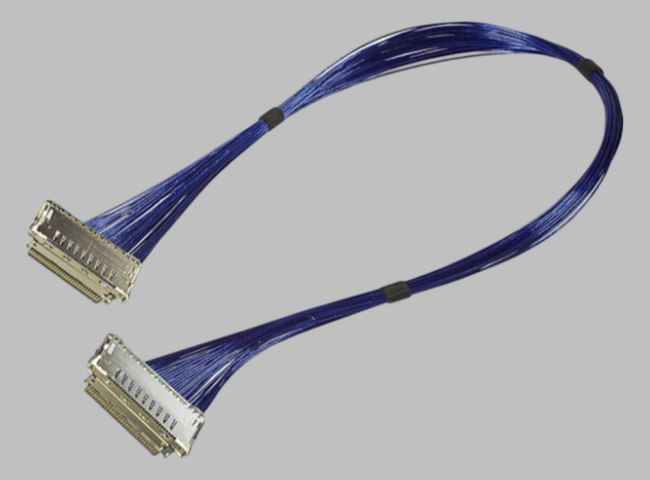
For engineering design, the finer the wire, the more space can be released inside the device, but reducing the wire diameter is not without cost. After the conductor becomes finer, mechanical strength, current carrying capacity, and manufacturing consistency will be affected, so ultra-fine coaxial cables need to find a balance between "fineness" and "performance". The I-PEX official CABLINE®-CA II series supports various Micro-Coaxial specifications, including AWG36, AWG38, AWG40, AWG42, and AWG44; the 82867-100B-02-D in this article explicitly adopts 40AWG Micro-Coaxial, 20Pin, 100MM, 1-N structure. At the same time, this connector platform adopts a 0.4mm Contact Pitch, horizontal insertion and removal structure, and ZenShield® full shielding design, and improves the high-speed connection environment through multi-point grounding. Therefore, from the perspective of engineers, the true technical value of ultra-fine coaxial cables is not simply making the core wire as small as possible, but achieving high-speed signal connection, space saving, and EMI/EMC control by collaborating with ultra-fine wire materials and high-density connectors within a limited space; from the perspective of procurement, it should not only compare the "diameter of the wire", but also confirm the wire gauge, wire material structure, connector, length, signal performance, and batch manufacturing consistency.
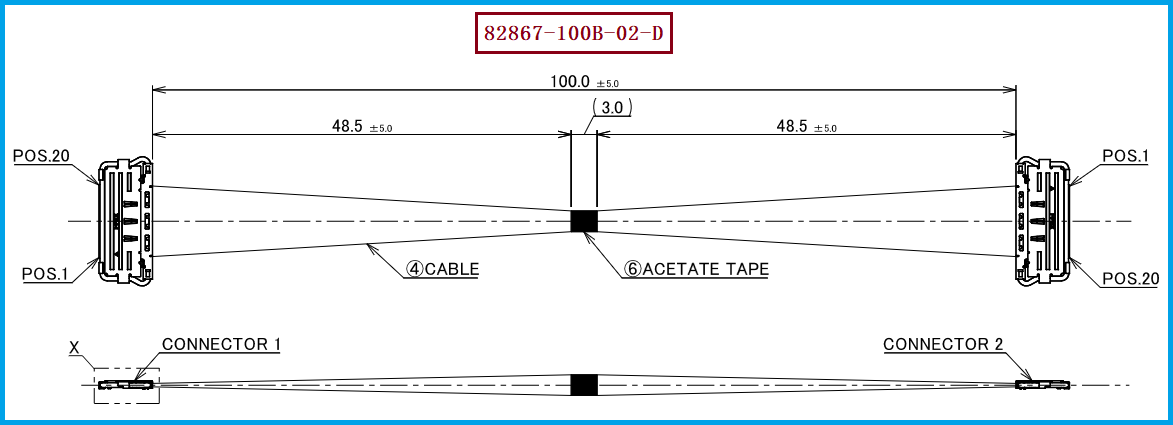
This article focuses on the key product I-PEX 82867-100B-02-D, a 20Pin Micro-Coaxial ultra-fine coaxial cable assembly using 40AWG wire, with a length of 100MM and a 1-N structure; the connector model used with the cable ends is 20680-020T-01. This connector belongs to the CABLINE®-CA II 20Pin Plug Housing system and, with its 0.4mm Pitch high-density connection structure, can meet the internal connection needs of miniaturized equipment. For engineers, if the project is currently designing ultra-fine coaxial cable assemblies, it is advisable to first determine the actual number of signal channels required, the permissible cable outer diameter, the connection space, and the target transmission performance before deciding whether to use 40AWG or a finer wire gauge, rather than blindly reducing specifications in pursuit of the "minimum wire core diameter"; for purchasing personnel, it is important to focus on confirming whether the supplier can consistently produce the corresponding ultra-fine coaxial cable material and ensure the batch consistency of 100MM length, 20Pin connectors, and cable assembly dimensions. It should be particularly noted that 40AWG represents the wire gauge and cannot be used alone to directly derive the actual wire core diameter of this product in this article; if the project requires accuracy down to the wire core diameter, conductor structure, or cable outer diameter, the specific material specification sheet and engineering drawings should be the ultimate basis.
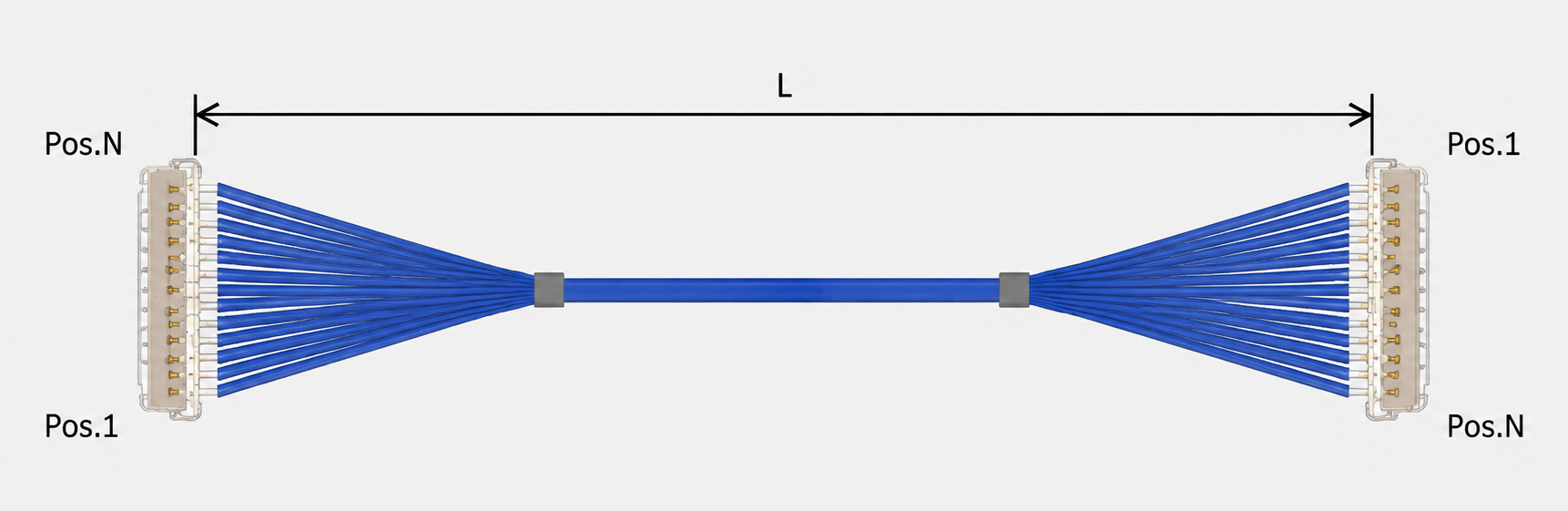
If engineers need to select extremely thin coaxial cables, it is recommended not to simply follow the principle of "the thinner, the better", but to make a comprehensive selection based on the requirements of high-speed signals, cable length, space constraints, mechanical strength, current-carrying requirements, and connector specifications. For high-speed internal connection scenarios with 20 pins and approximately 100mm, the I-PEX 82867-100B-02-D can be used as a reference, with core configurations of 20 pins, 40AWG Micro-Coaxial, 100MM, and 1-N structure. The cable end connector is 20680-020T-01. If there is a need for domestic production, second-source suppliers, or compatible alternative development, it is recommended to focus on verifying the matching dimensions of the connectors, wire sequence, cable structure, conductor specifications, shielding performance, and high-speed signal integrity, rather than using "matching core wire diameter" as the only standard for substitution. Our company can provide: I-PEX 82867-100B-02-D compatible alternative cable solutions, which can produce and manufacture corresponding ultra-thin coaxial cable assemblies according to the actual Pin number, length, wire gauge, connector, and installation structure requirements of the customer. This provides engineers with compatible alternatives and customized development support, and also provides purchasing personnel with a stable choice of ultra-thin coaxial cable supply.
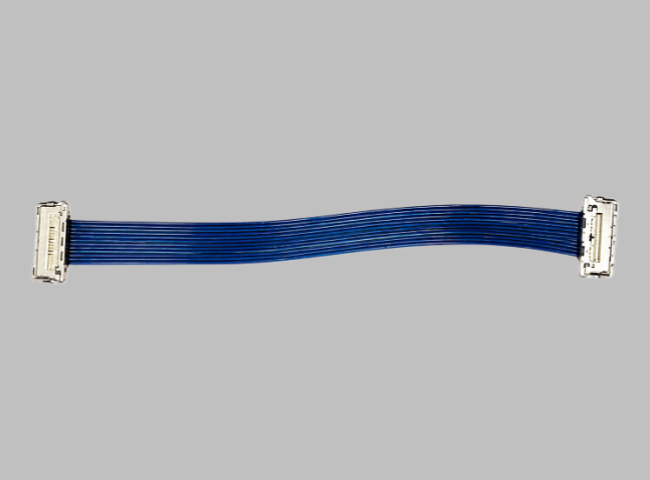
“Without the consent or authorization of this site, no one shall reproduce, reprint, distribute, cite, change, broadcast or publish the content in whole or in part in any form, nor shall there be any other violation of the copyright of this site.