


Categorization:Harness Component
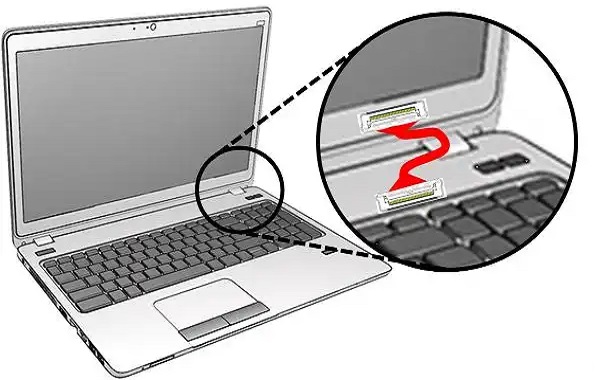
1. eDP High Bandwidth Mode and Interconnect Challenges
eDP is based on the DisplayPort architecture, achieving high-speed video data transmission through multi-channel differential signals. Its bandwidth levels have been improved from HBR (2.7Gbps/channel) to HBR2 (5.4Gbps/channel) and HBR3 (8.1Gbps/channel), and it continues to evolve towards HBR4 to meet the needs of 8K and immersive display. The increase in bandwidth significantly amplifies issues such as insertion loss, reflection, crosstalk, and EMI, causing traditional cable schemes to gradually approach their performance limits, posing higher requirements for the structural design and electrical performance of the cable束.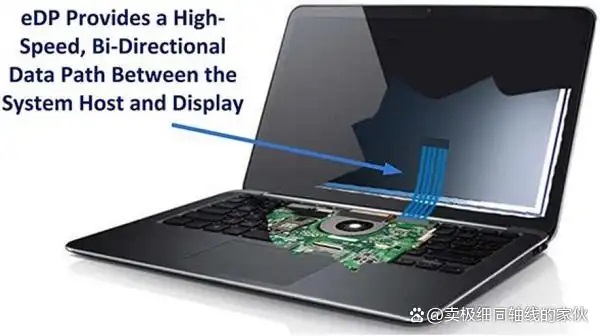
The advantages of extremely fine coaxial beam in high-speed display
The ultra-fine coaxial cable bundle utilizes a concentric conductor and an overall shielding structure, featuring stable characteristic impedance and excellent shielding performance. It can effectively reduce signal attenuation and crosstalk in high-speed modes of HBR3 and above. Its fine cable diameter and good flexibility make it suitable for complex applications such as ultra-thin whole machines, high-density wiring, and folding, pivot structures. At the same time, the coaxial shielding structure helps to reduce electromagnetic radiation and external interference, enhancing the system's electromagnetic compatibility and long-term reliability.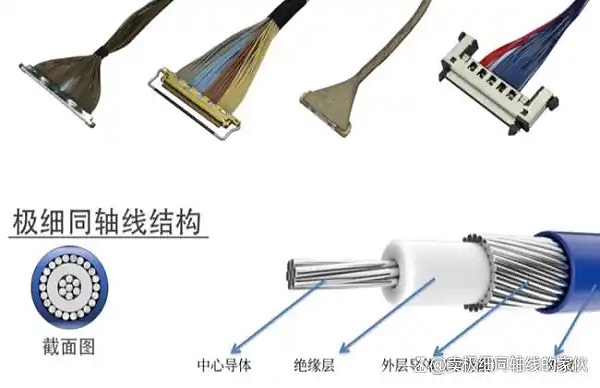
Three, key points for harness design for HBR3 and HBR4
In high-bandwidth eDP applications, the design of the cable needs to focus on impedance consistency, cable length and loss control, as well as the rationality of shielding and grounding methods, to avoid signal quality degradation due to mismatch or excessive loss. The structural design of the connector pins, plating technology, and assembly accuracy also have a direct impact on the overall transmission performance. In actual applications, through eye diagram analysis, error rate testing, and system-level verification, ensuring the stability of the cable under full-speed operating conditions is an important link in achieving reliable mass production.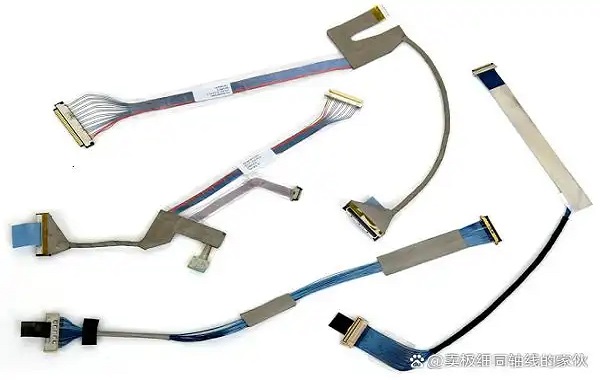
“Without the consent or authorization of this site, no one shall reproduce, reprint, distribute, cite, change, broadcast or publish the content in whole or in part in any form, nor shall there be any other violation of the copyright of this site.