


Categorization:Harness Component
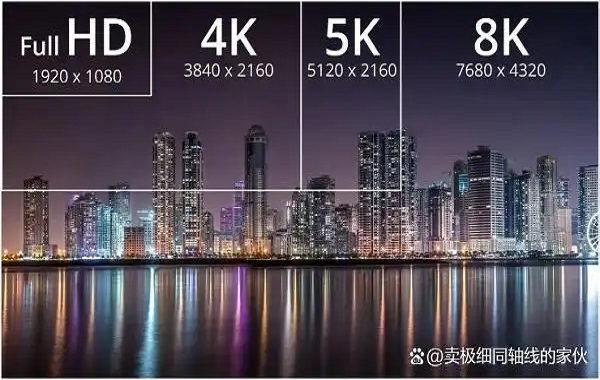
Basic requirements for 8K display on high-speed interconnect
8K displays achieve a resolution of 7680×4320 pixels, with pixel quantity approximately four times that of 4K and sixteen times that of 1080P, significantly increasing the amount of information a single frame can carry. In industrial inspection, medical image analysis, electron microscopy, and autonomous driving visual systems, 8K displays can enhance the ability to present details and improve the reliability of recognition. However, higher resolution also means greater data throughput, requiring the signal transmission link to maintain stable impedance control, low loss, and low latency under high bandwidth conditions.
Real challenges faced by 8K signal transmission
Compared with 4K systems, the data transmission rate of 8K displays is significantly increased, and traditional flexible ribbons or ordinary cables are more prone to signal attenuation, crosstalk, and jitter under high-speed conditions. In industrial application environments, complex electromagnetic interference further magnifies the risk of signal integrity, which may cause screen flickering, signal interruption, or a decrease in system stability. As interface speeds continue to increase, traditional cable solutions gradually fail to meet the reliability requirements of 8K display systems.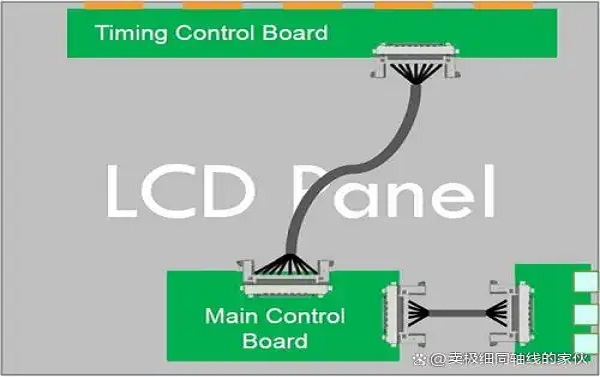
The application value of ultra-fine coaxial fiber bundles in 8K display
The extremely thin coaxial cable束 adopts a center conductor and multi-layer shielding structure design, which can maintain a stable characteristic impedance during high-speed transmission, effectively reducing reflection and signal jitter. Its high-density shielding structure significantly enhances the anti-electromagnetic interference capability, suitable for complex electromagnetic environments such as industrial sites. At the same time, the extremely thin wire diameter and good flexibility allow it to be applied in space-limited display modules, industrial cameras, and high-density equipment interiors, while meeting 8K bandwidth requirements and considering the freedom of structural design.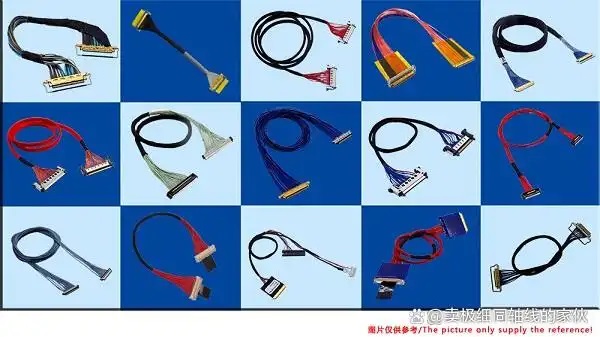
“Without the consent or authorization of this site, no one shall reproduce, reprint, distribute, cite, change, broadcast or publish the content in whole or in part in any form, nor shall there be any other violation of the copyright of this site.