


Categorization:Harness Component
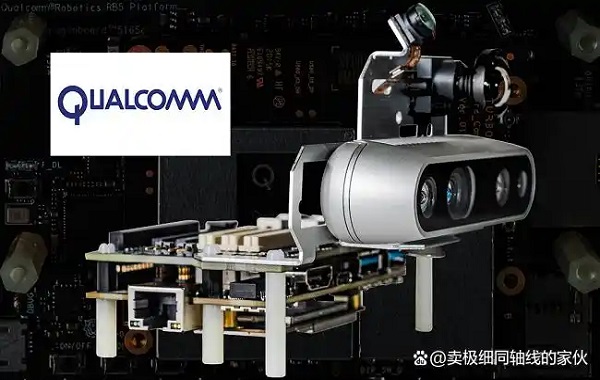
The importance of impedance matching in high-speed transmission
In high-speed signal environments, the harness is no longer just a current path, but a complete transmission line system. When the signal rate reaches the GHz level, effects such as reflection, crosstalk, and standing waves will significantly affect signal integrity. If the harness impedance does not match the system design value, reflections and waveform distortion will occur, leading to eye diagram shrinkage, increased error rate, and even link dropout. For Qualcomm platforms with dense high-speed interfaces and complex operating frequency bands, any impedance deviation will be amplified, thereby affecting the overall system stability.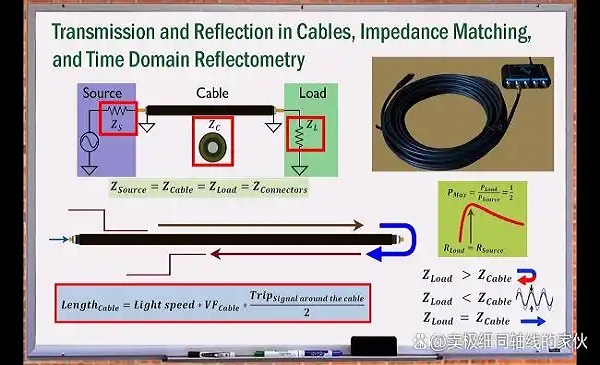
Section 2: Structural Characteristics and Challenges of Ultra-Fine Coaxial Fiber Beams
The extremely thin coaxial cable束 achieves a high degree of miniaturization in structural dimensions, with an extremely small distance between the conductor, dielectric layer, and shielding layer. While this brings higher bandwidth density and better flexibility, it also significantly increases the difficulty of impedance control. Geometric deviations at the micron level can cause significant changes in impedance, and the tight structure between the shielding layer and the inner core also makes bending and compression more likely to trigger local impedance mutations. At the same time, extremely thin coaxial cables typically carry high-speed differential signals such as MIPI, USB4, PCIe, CSI, and eDP, with extremely low tolerance for impedance consistency, making their application on Qualcomm platforms more sensitive.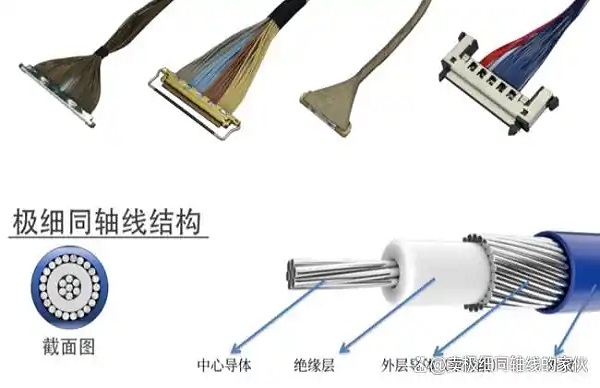
Section 3: Special Requirements of Qualcomm Platform for Cables
The Qualcomm platform often integrates high-speed digital signals with WiFi, Bluetooth, 5G, and other radio frequency communication links, posing dual requirements for impedance matching. The radio frequency channel usually requires an accurate 50Ω impedance, while the high-speed data channel requires a 90Ω or 100Ω differential impedance. Once the harness deviation exceeds the range, it not only affects data integrity but may also cause EMI to exceed the standard. In addition, the highly integrated system structure keeps the distance between the chip, module, and antenna extremely short, and any impedance discontinuity will quickly amplify the problem. Moreover, the strict interface and radio frequency certification tests make the Qualcomm platform set a higher threshold for harness design in the design stage and require long-term stability in complex environments.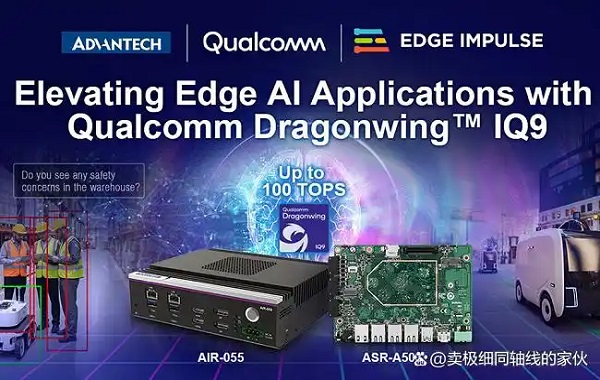
“Without the consent or authorization of this site, no one shall reproduce, reprint, distribute, cite, change, broadcast or publish the content in whole or in part in any form, nor shall there be any other violation of the copyright of this site.