


Categorization:Product Information
With the development of electronic devices towards miniaturization, high integration, and high-speed data transmission, camera modules, displays, industrial vision equipment, and AR/VR devices have higher requirements for internal connection solutions. FPC (Flexible Printed Circuit) has been applied to internal connections of electronic devices for a long time due to its characteristics of thinness, flatness, and flexible routing layout. However, when transmission speeds are constantly increasing and there are complex bends, limited space, or strong electromagnetic interference inside the device, traditional FPC solutions may need to make more trade-offs between signal integrity, structural design, and mechanical reliability. At this point, ultra-thin coaxial cables are gradually becoming another consideration for high-speed connection solutions. It should be made clear that FPC and ultra-thin coaxial cables are not simple substitutes; they are two different structural internal high-speed signal connection methods, each with its own advantages.
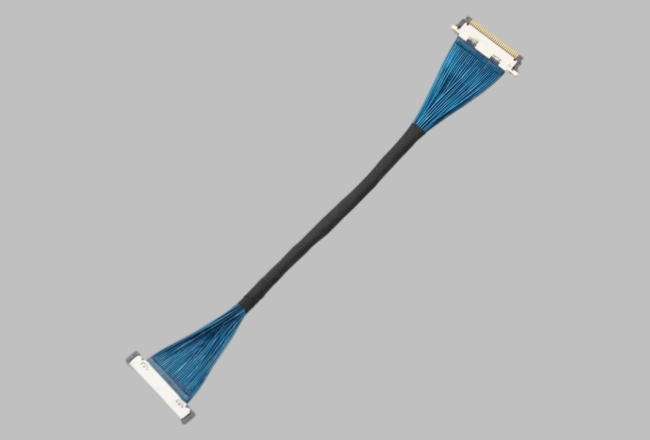
FPC achieves the connection between different circuits by forming copper lines on flexible insulating substrates. Its greatest advantage lies in its flat structure, which can be attached to the device shell or internal structure layout, enabling the concentrated transmission of multiple signals in spaces with limited height. At the same time, the spacing of FPC lines, the width of the routing, and the reference ground plane can be controlled through design, which is conducive to achieving impedance control and consistency in line layout. For applications with short connection distances, fixed routing paths, and the need for multi-channel concentrated connections, FPC has better design advantages. However, the high-speed performance of FPC is affected by factors such as the dielectric properties of the substrate, the copper foil structure, the line length, the stacked design, and the connector interface; under high-frequency transmission conditions, attention also needs to be paid to dielectric loss, crosstalk, and the structural changes in the bending areas. In addition, if complex three-dimensional routing or repeated bending is required inside the device, the structural design and dynamic bending life of FPC also need to be evaluated.
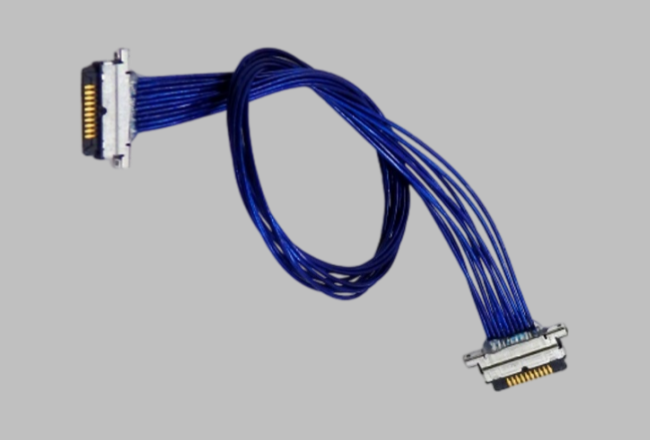
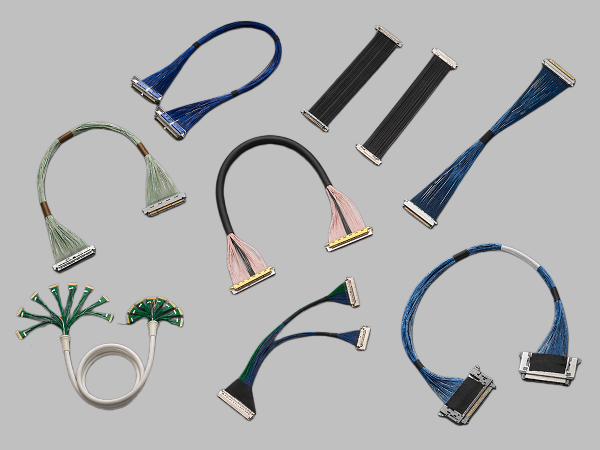
Extremely fine coaxial cables are composed of a central conductor, insulating medium, outer conductor shielding layer, and external sheath, providing a relatively stable transmission structure for high-speed signals. Compared with ordinary flat lines, their independent shielding structure helps to reduce external electromagnetic interference and signal coupling between adjacent channels, while also having good impedance control capabilities. For high-speed camera applications, display modules, and multi-channel data transmission, extremely fine coaxial cables can be customized according to connector specifications, cable length, channel count, and internal space of the equipment. Due to their good flexibility, they are also easier to adapt to some complex three-dimensional routing paths and bending spaces. However, extremely fine coaxial cables also need to consider wire diameter, shielding structure, bending radius, termination process, and connector size, and cannot simply assume that using a coaxial structure will meet all high-speed transmission requirements.
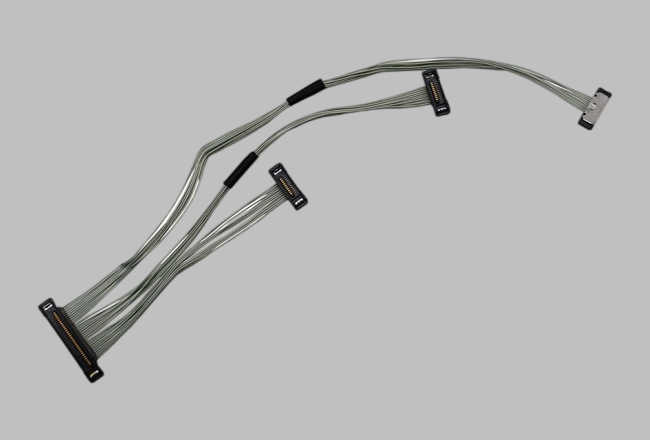
The main differences between the two schemes lie in the structural form, signal transmission characteristics, and mechanical adaptability. If the internal space of the device is highly restricted, flat wiring, fixed circuit layout, and signal channels that can meet electrical requirements through FPC design are required, then FPC still has a significant advantage. If the application has higher requirements for high-speed signal shielding, complex space wiring, flexible bending, and independent channel transmission, then the ultra-thin coaxial cable bundles can be evaluated. Especially in high-speed camera modules, laptop display connections, VR devices, and precision industrial vision systems, ultra-thin coaxial cable bundles can provide more structural design choices for internal high-speed connections. It should be noted that both schemes can achieve high-speed signal transmission, and the final choice should be made based on a comprehensive judgment of actual transmission speed, impedance requirements, insertion loss, return loss, crosstalk, cable length, and dynamic bending conditions, rather than just based on product names or cable appearance.
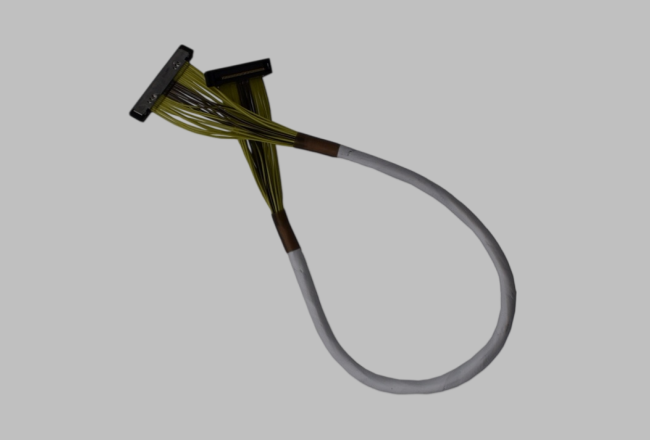
When the existing FPC scheme cannot fully meet the product's high-speed transmission or space wiring requirements, a re-evaluation can be conducted from three aspects: connector compatibility, signal channel definition, and harness structure. Firstly, confirm the connector models, interface directions, pin counts, and spacing at both ends of the device; secondly, determine the specifications, impedance, length, and channel arrangement of the ultra-fine coaxial cable based on the actual signal requirements; finally, verify the overall connection performance through tests such as TDR, S-parameters, crosstalk, and eye diagrams. At the same time, it is also necessary to evaluate the bending radius, fixing method, and long-term reliability of use in combination with the actual installation environment. As a manufacturer and solution provider for ultra-fine coaxial cable harness components, we can provide customized ultra-fine coaxial cable harnesses, compatible alternatives, sample development, and mass production services based on the customer's existing FPC connection requirements, equipment structure, and connector interfaces, helping customers explore more suitable internal high-speed connection solutions for their products.
“Without the consent or authorization of this site, no one shall reproduce, reprint, distribute, cite, change, broadcast or publish the content in whole or in part in any form, nor shall there be any other violation of the copyright of this site.