


Categorization:Product Information
With the continuous upgrade of laptops, smart cameras, display equipment, and industrial electronic products, the data transmission rate inside the devices is also continuously increasing. Compared with ordinary low-speed connections, high-speed signals put higher requirements on the electrical performance and structural design of the harness. In the past, selection may have only required attention to cable outer diameter, length, and connector model. However, in high-speed transmission applications, even if the cable can be connected normally, it does not mean that the signal can be transmitted stably. Especially in electronic devices with multi-channel, high-density wiring, the impedance, loss, shielding structure, and connection technology of the harness may all affect the signal quality of the entire system.
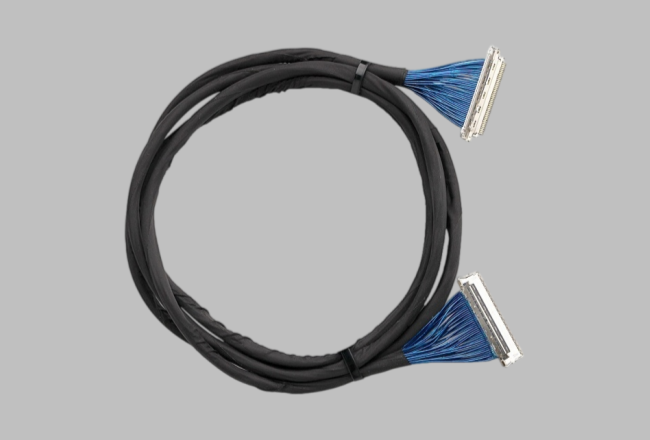
The higher the transmission rate, the more attention needs to be paid to the integrity of the signal during transmission. Extremely thin coaxial cable bundles mainly transmit signals through the central conductor, with the outer conductor providing shielding and grounding paths. The internal structure and materials affect the characteristic impedance and transmission loss. If there is impedance discontinuity between the cable and the connector, signal reflections may occur, affecting the data recognition at the receiving end. At the same time, insertion loss varies with factors such as transmission frequency and cable length, so when selecting, it is necessary to combine actual transmission requirements, evaluate the characteristic impedance, insertion loss, and echo loss of the cable bundle, and cannot rely solely on cable appearance or rated specifications to determine its applicability.
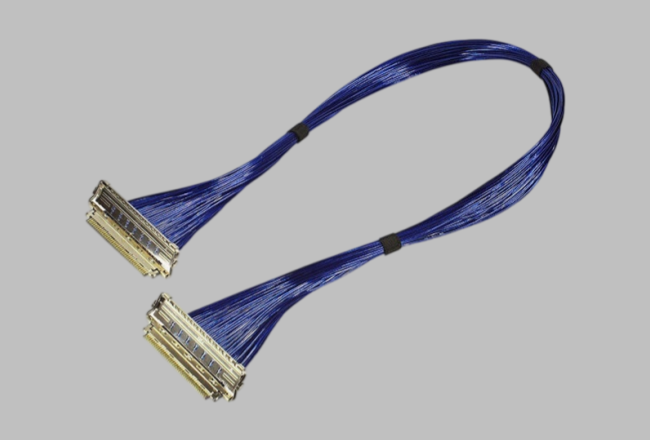
In miniaturized electronic devices, multiple high-speed signal channels are often arranged closely together, with a short distance between cables, making them susceptible to adjacent signal coupling and external electromagnetic interference. If the shielding structure is not reasonable, or if the connection between the shielding layer and the grounding part of the connector is unreliable, it may increase the risk of signal interference. Extremely thin coaxial cable bundles use an independent outer conductor shielding structure, which can meet the needs of high-speed signal transmission and electromagnetic shielding in a limited space. However, the actual effect also depends on the continuity of the shielding layer, the grounding design of the connector, the arrangement of the cables, and the termination process. For multi-channel high-speed connections, attention also needs to be paid to the crosstalk performance between adjacent channels.
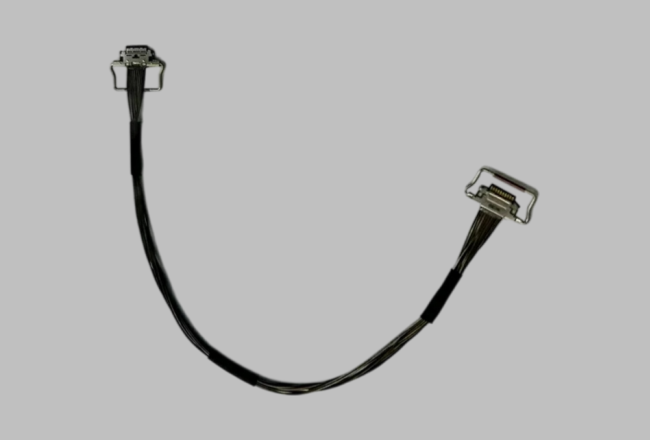
High-speed harness is not the thinner, the better, nor is it necessarily that the shorter it is, the more it can meet all performance requirements. American Wire Gauge (AWG) wire size affects conductor size and resistance, cable length affects transmission loss, and the insulation material and cable structure also affect impedance and signal propagation characteristics. Therefore, it is necessary to select the appropriate cable based on the target transmission rate, connector compatibility specifications, product internal space, and actual routing path. In addition, the stripping length of extremely thin coaxial cable bundles, termination of the central conductor, shielding layer processing, and connector welding accuracy are also important. Even minor differences in the manufacturing process may affect the electrical performance of the final component and the consistency of the batch.
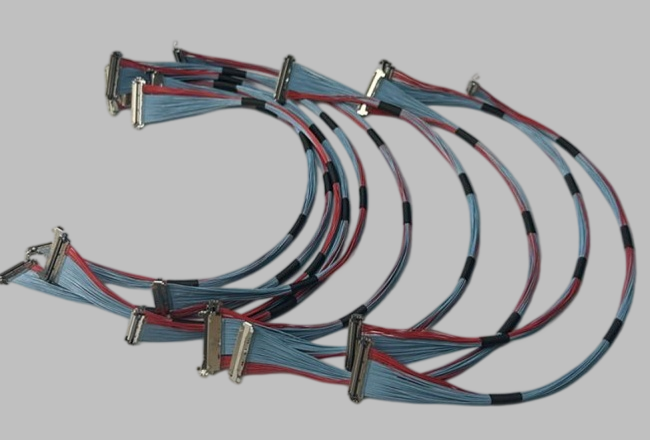
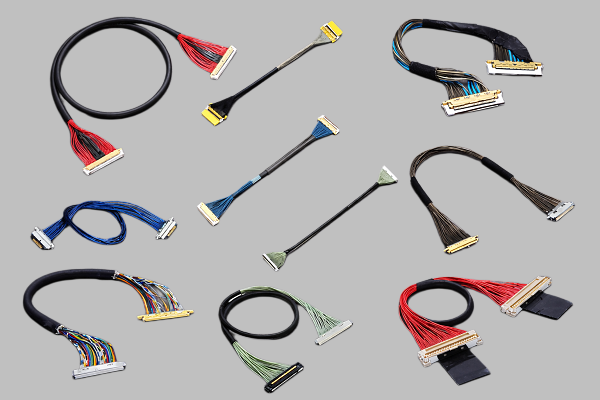
The higher the transmission rate, the more it is not advisable for the cable harness to only focus on the outer diameter, length, and whether the connector matches. Impedance continuity, insertion loss, return loss, shielding performance, crosstalk control, and processing accuracy are all important factors affecting high-speed signal transmission. For miniaturized, high-density electronic devices, choosing ultra-fine coaxial cable harnesses reasonably and making good connector matching and overall performance evaluation in advance can help improve the stability and reliability of internal connections.
“Without the consent or authorization of this site, no one shall reproduce, reprint, distribute, cite, change, broadcast or publish the content in whole or in part in any form, nor shall there be any other violation of the copyright of this site.