


Categorization:Harness Component
The cable design inside the robot joints is different from that of ordinary fixed devices, as it not only needs to transmit high-speed signals but also needs to meet the requirements of limited space, narrow routing channels, frequent movement of the moving mechanism, and the need for the cable to move with the mechanism. Therefore, when engineers choose internal high-speed signal cables, they usually need to consider factors such as wire diameter, bending space, connector size, signal integrity, and assembly reliability simultaneously. The I-PEX CABLINE®-UA II adopts a 0.3mm terminal pitch, Vertical Right Angle vertical right-angle structure, 1.27±0.1mm mating height, and provides 26/32/40/50Pin configurations; official materials also show that a 26Pin cable with an outer diameter of approximately 0.29mm coaxial cable can pass through a shaft or hose with an inner diameter of Φ2.65mm, indicating that this type of extremely thin coaxial connection solution is indeed suitable for very compact shafts, hinges, and narrow channel wiring scenarios.
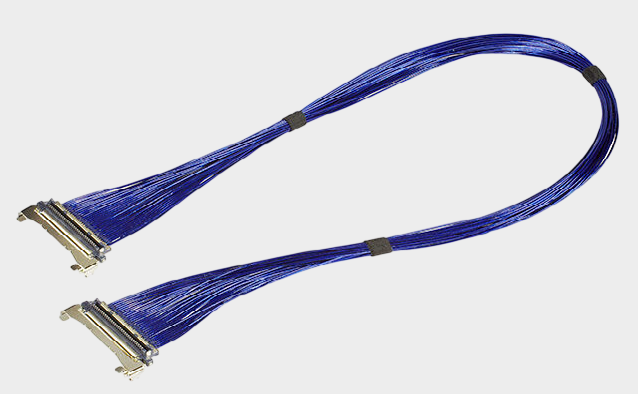
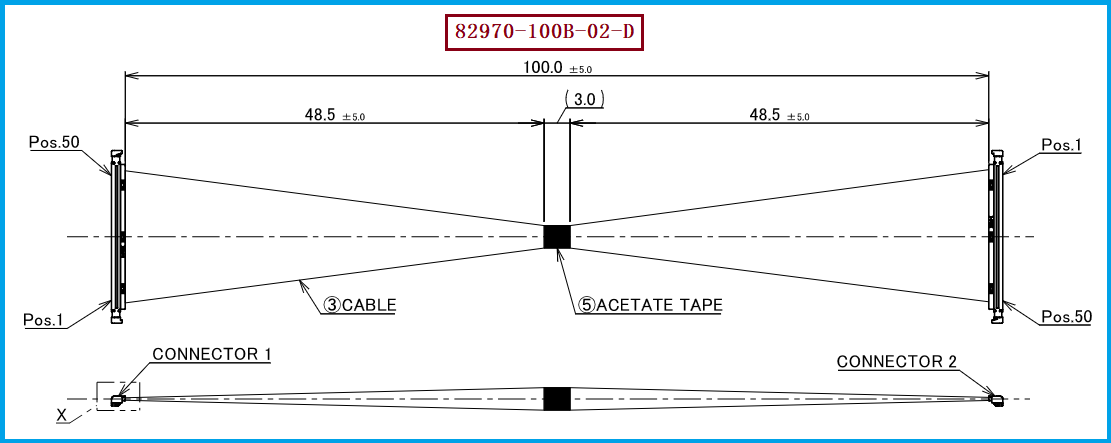
The product introduced this time is I-PEX 82970-100B-02-D, which belongs to the CABLINE®-UA II 50Pin ultra-thin coaxial cable assembly. According to the I-PEX official model data, this evaluation cable assembly is 50Pin, Micro-Coaxial, AWG44, L=100mm, 1-N structure. The cable assembly is matched with the wire end connector model 20497-050T-30, which belongs to the CABLINE®-UA II 50Pin Plug Housing; the I-PEX official recommended parts list also clearly lists this model, and the Micro-Coaxial adapter range of CABLINE®-UA II includes AWG42, AWG44, AWG46, therefore, the AWG#44 used in this scheme matches the connector specifications. For robot vision, encoder, sensor, display and other high-speed data modules, if multiple channel signal connections need to be realized within a limited space, the 50Pin high-density ultra-thin coaxial cable assembly can provide a larger integrated space for engineering layout.
From the perspective of engineering applications, extremely thin coaxial cables can be used for internal wiring of robot joints, but it cannot be simply understood as "any thin wire is suitable for dynamic bending." Robot joints belong to motion scenarios, and actual selection requires verification based on bending radius, motion angle, reciprocation frequency, chain or shaft structure, fixing method, and the force state of the cable bundle. For high-speed signals, further attention should be paid to impedance, insertion loss, return loss, crosstalk, and connector termination quality. The CABLINE®-UA II officially provided reference transmission capability is 5Gbps/lane NRZ, and it also has a multi-point grounding structure, which is beneficial for EMI control in high-speed signal environments. However, whether the specific robot project can reach the target speed still needs to be verified by combining the actual wire material, length, PCB, and overall system-in-package (SiP) design, and cannot be directly judged solely based on the reference parameters of the connector. Therefore, for dynamic applications such as robot joints, it is recommended to simultaneously carry out bending life, dynamic motion, signal stability, and termination reliability tests at the sample stage.
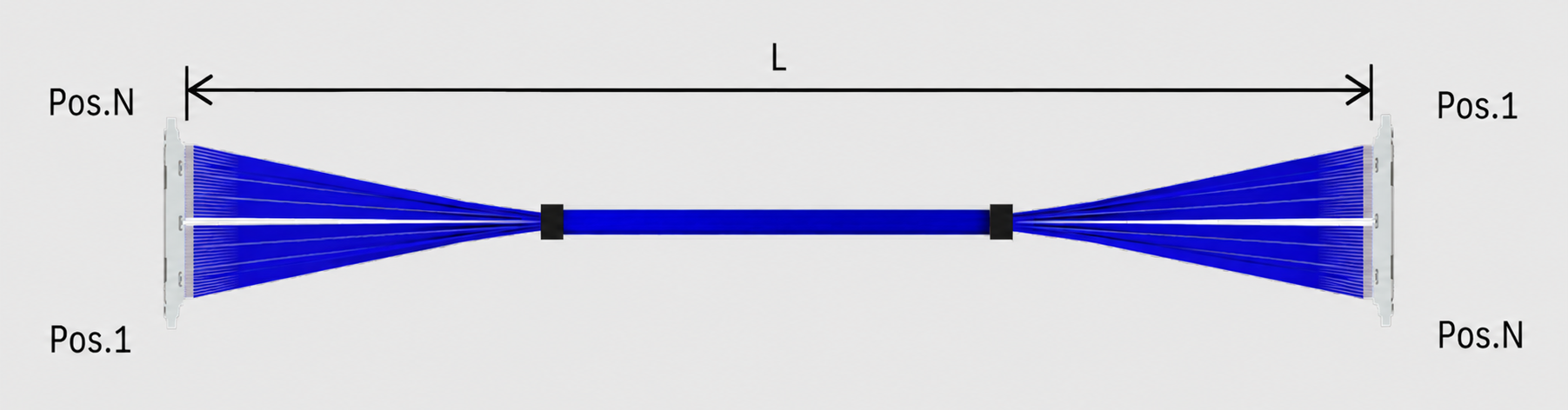
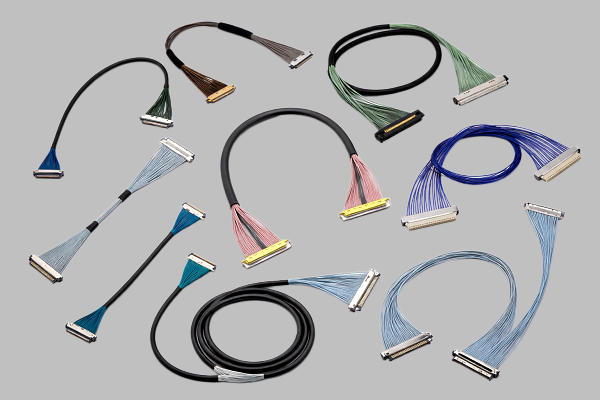
For projects requiring replacement of I-PEX 82970-100B-02-D-02, it is recommended to first confirm the CABLINE®-UA II series, 50Pin, 0.3mm Pitch, AWG#44 Micro-Coax, 100mm length, and 1-N termination structure, and check the matching relationship between the wire material end connector 20497-050T-30 and the equipment end interface. I-PEX also provides 50Pin evaluation cables such as 82445-100B-02-D (200mm) and 82971-100B-02-D (300mm) for reference to different length requirements. For robot joint applications, if the project has continuous movement or repeated bending requirements, it is not recommended to replace it directly according to static dimensions only, but to focus on confirming the dynamic bending performance, outer diameter, minimum bending radius, shielding structure, and termination process of the wire material. Our company can provide: I-PEX 82970-100B-02-D-02 compatible alternative cable solutions, which can be matched and developed according to the actual Pin number, wire length, AWG specification, connector model, and wiring space of the customer's equipment, providing an ultra-fine coaxial cable solution for engineering verification, domestic substitution, and bulk procurement.
“Without the consent or authorization of this site, no one shall reproduce, reprint, distribute, cite, change, broadcast or publish the content in whole or in part in any form, nor shall there be any other violation of the copyright of this site.