


Categorization:Harness Component
For example, the I-PEX CABLINE®-SS series is officially positioned as a high-speed application at 16Gbps/Lane, and lists reference applications such as V-by-One US 16Gbps/Lane, HDMI 2.1 12Gbps/Lane, USB 3.2 Gen2 10Gbps/Lane, HDMI 2.0 6Gbps/Lane, eDP HBR2 5.4Gbps/Lane, and USB 3.1 Gen1 5Gbps/Lane. The official also provides high-speed measurement results under the conditions of CABLINE-SS 40P, AWG#40, 45Ω, and 100mm. Here, "Gbps/Lane" refers to the data transmission rate and cannot be simply converted into a fixed working frequency of a single cable assembly. Therefore, when selecting engineering models, the actual interface and SI test results should still be the basis.
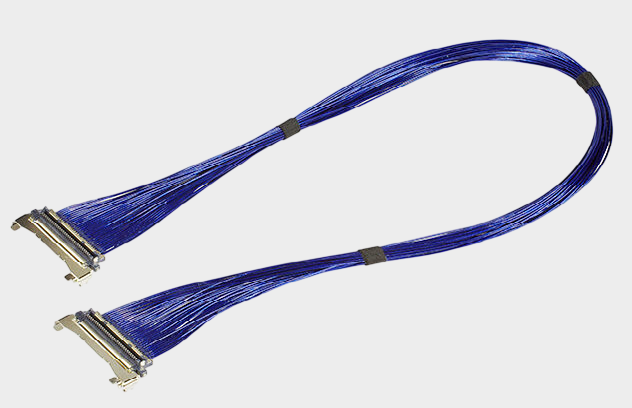
For this type of 200mm ultra-fine coaxial cable assembly, it cannot be simply assumed that "supporting 16Gbps/Lane means it can cover a fixed GHz frequency." High-speed digital signals contain rich spectral components, and the actual frequency that needs to be transmitted depends on the signal edge rate, encoding method, and receiver tolerance. For example, for a 16Gbps NRZ signal, its Nyquist frequency is approximately 8GHz, but this is only an important reference point for describing the frequency spectrum of digital signals and does not mean that the 83014 cable assembly necessarily meets certain insertion loss or return loss specifications at 8GHz. Therefore, when engineers design, they should more focus on the S-parameter curves of the actual cable assembly in the target frequency band, especially S21 insertion loss and S11 return loss, rather than judging solely based on data rate.
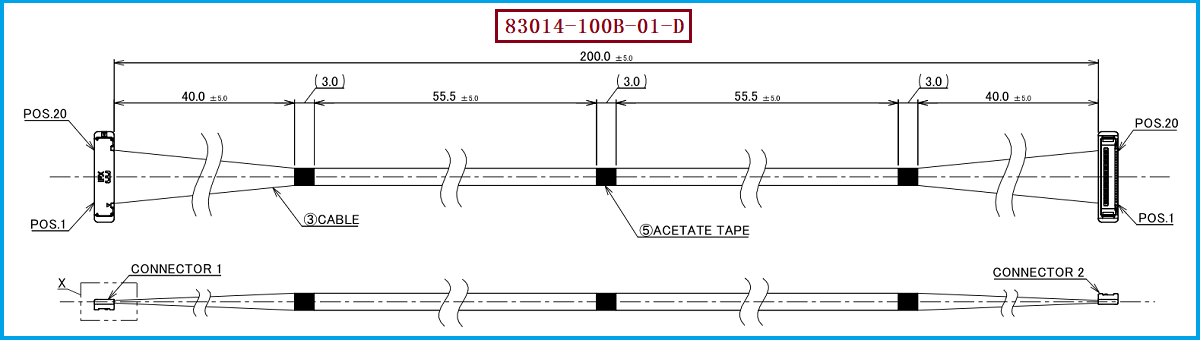
For I-PEX 83014-100B-01-D, AWG#40 and 50Ω are important parameters in the Harness drawings, while the CABLINE®-SS platform supports Micro-Coaxial Cable specifications such as AWG36, AWG38, AWG40, and AWG42. The official statement particularly points out that there is a characteristic impedance mismatch issue with AWG42, so thinner wire diameter is not necessarily more suitable for all high-speed applications. For engineers, if the target application falls into data transmission scenarios of 5Gbps, 10Gbps, or even higher, it is necessary to select the appropriate wire impedance and structure based on the actual working frequency band and link budget, and confirm through testing whether insertion loss, return loss, and crosstalk meet the system requirements.
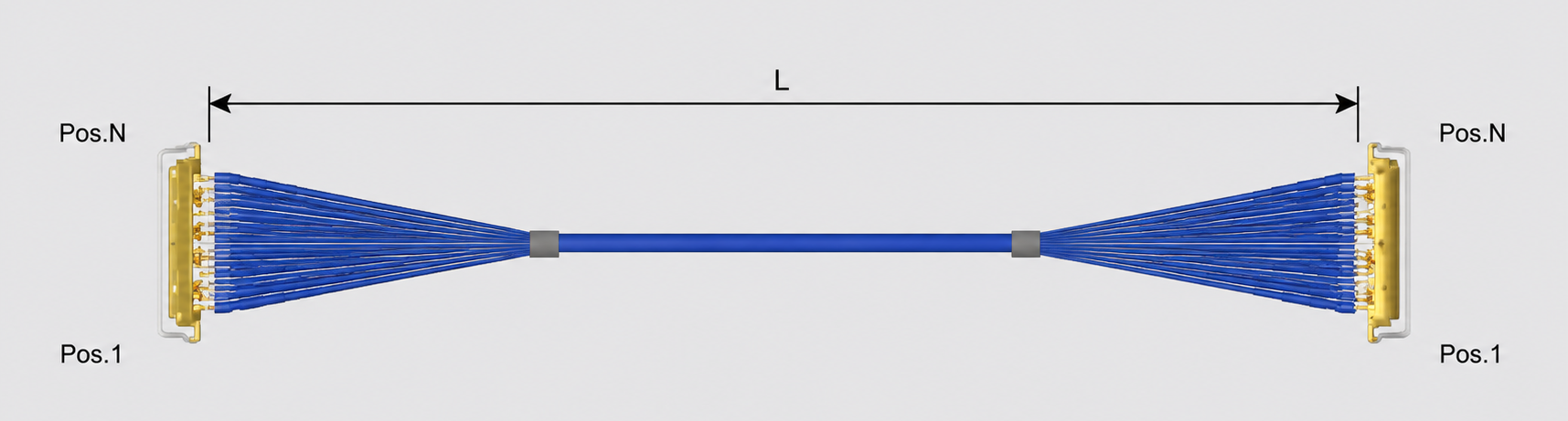
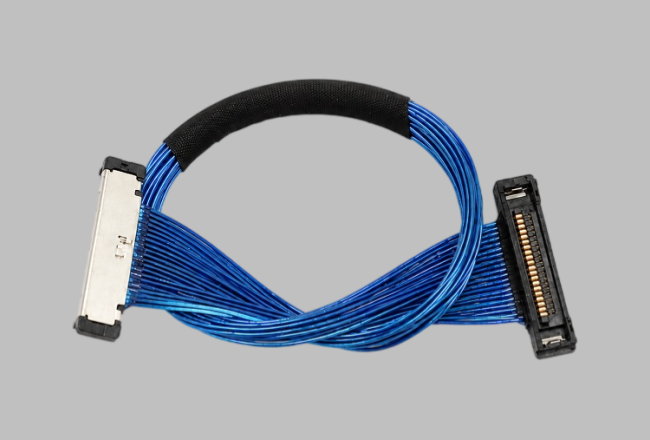
From the perspective of frequency applicability, the official high-speed application data of I-PEX CABLINE®-SS can be used as a selection reference at the platform level, but the official 100mm, 45Ω testing conditions should not be directly applied to this 83014 model's 200mm, 50Ω cable harness. For domestic replacement or compatibility development, a more reasonable verification method is to conduct insertion loss, return loss, and crosstalk tests under the same 200mm length, the same AWG#40 wire material, the same connector configuration, and the same testing conditions, and then judge whether it meets the application requirements in combination with the actual interface rate of the customer. Our company can provide: I-PEX 83014-100B-01-D compatibility replacement cable harness solution, which can be developed and produced for extremely thin coaxial cable harness compatibility around the 20373-R20T-06 connector, AWG#40 wire material, 200mm length, and 1-1 sequence requirements.
“Without the consent or authorization of this site, no one shall reproduce, reprint, distribute, cite, change, broadcast or publish the content in whole or in part in any form, nor shall there be any other violation of the copyright of this site.