


Categorization:Harness Component
In laptops, display modules, camera modules, and other space-limited devices, extremely thin coaxial cables often need to pass through hinges, bend areas, or narrow structures. Therefore, engineers often ask when selecting: "How many bends can the extremely thin coaxial cable withstand before breaking?" In fact, this question does not have a fixed answer applicable to all extremely thin coaxial cables. The bendability of extremely thin coaxial cables is related to factors such as wire diameter, conductor structure, insulating material, shielding layer structure, bending radius, bending angle, reciprocating frequency, and the method of fixing at both ends. Particularly for AWG40 such extremely thin wires, although they have good space adaptability, if they are repeatedly bent at excessively small bending radii for a long time, it may lead to conductor fatigue, insulation layer damage, shielding layer performance changes, and even cause impedance and high-speed signal performance degradation. Therefore, in engineering design, it is not advisable to simply judge the service life of the wire material based on "how many bends it can withstand," but rather determine the allowable bending radius and dynamic bending conditions based on the actual installation structure, and verify them through special bendability tests. For purchasers, it is also recommended to specify the wire material specifications, bending radius, movement method, and life requirements when inquiring about prices, rather than simply asking "how many bends it can withstand."
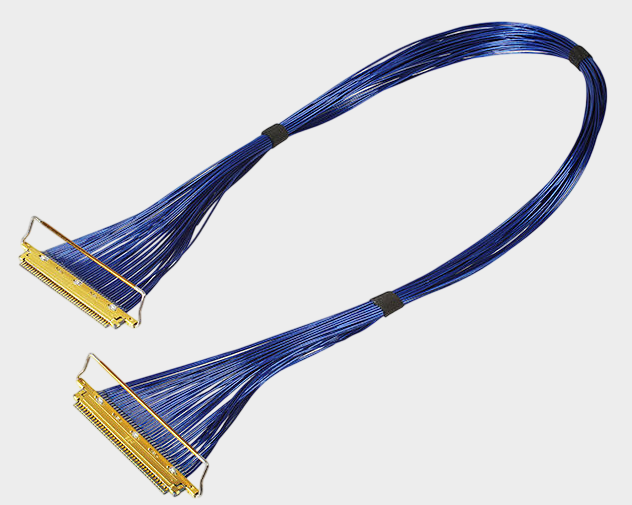
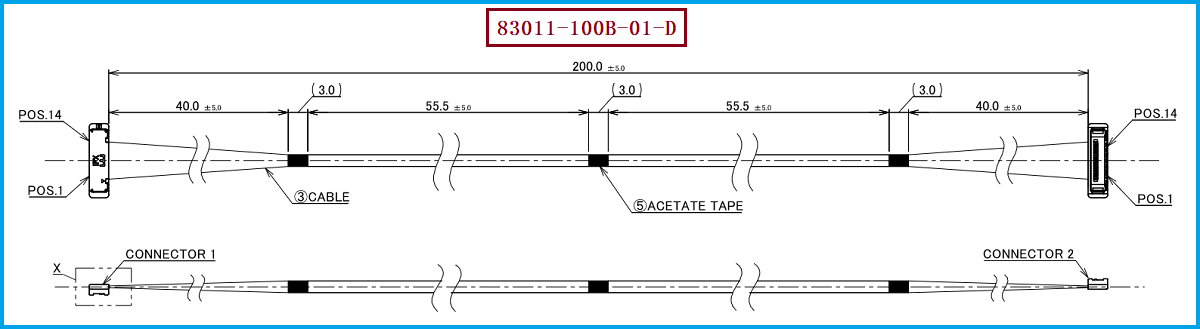
The product introduced this time is I-PEX 83011-100B-01-D, which belongs to the I-PEX CABLINE®-SS series 14 Pin ultra-thin coaxial cable assembly. According to the official information of I-PEX, this model adopts Micro-Coaxial Cable 40AWG, with a length of 200 mm, and Pin Assignment of 1-1; the CABLINE®-SS connector uses a 0.4 mm Contact Pitch and Vertical Right Angle structure, with a Mated Height of 1.65±0.2 mm and a Depth of 3 mm. The cable assembly uses the wire end connector model 20373-R14T-06, corresponding to the CABLINE®-SS 14 Pin Plug Housing; the official recommended material numbers also list the 14 Pin Plug Cable Assembly 20380-R14T-06 and the matching end Receptacle 20374-R14E-31. For this product, when customers select the model, they need to focus on confirming key conditions such as 14 Pin, AWG40, 200MM, 1-1 wire sequence, and connector model. The wire position definition/specification of the ultra-thin coaxial cable assembly in this article is defined as 200MM, and when actually producing replacements, the specific length tolerance and wire sequence requirements should be confirmed in combination with the customer's drawings.
For engineers, the bending issue of ultra-fine coaxial cables is not just a mechanical reliability problem but may also affect high-speed signal integrity. The official data of CABLINE®-SS indicates that its high-speed performance tests use a 40 Pin connector, AWG40 Micro-Coaxial Cable, 45Ω, 100 mm cable length, and GSSGSSG Pin Assignment, and are verified with 16Gbps/Lane high-speed transmission applications; at the same time, the official listed reference applications include V-By-One US, HDMI 2.1, USB 3.2 Gen 2, HDMI 2.0, eDP HBR2, etc. Therefore, when designing a 200MM ultra-fine coaxial cable bundle, if the cable needs to pass through the pivot or dynamic bending area frequently, one cannot only focus on whether the "cable is broken or not" but also pay attention to whether the bending resistance, insertion loss, return loss, crosstalk, and shielding performance still meet the system requirements. For procurement personnel, it is also not enough to substitute purchase only based on appearance, length, and connector model, but it is necessary to confirm whether the wire specification, impedance, termination process, and high-speed performance match the original design. Our company can provide: I-PEX 83011-100B-01-D compatible replacement cable solutions, which can be matched and produced according to the actual use environment of customers, including 14 Pin, AWG40, 200MM, and corresponding connector termination structures, to provide cable manufacturing support for original model replacement, bulk procurement, and subsequent customization.
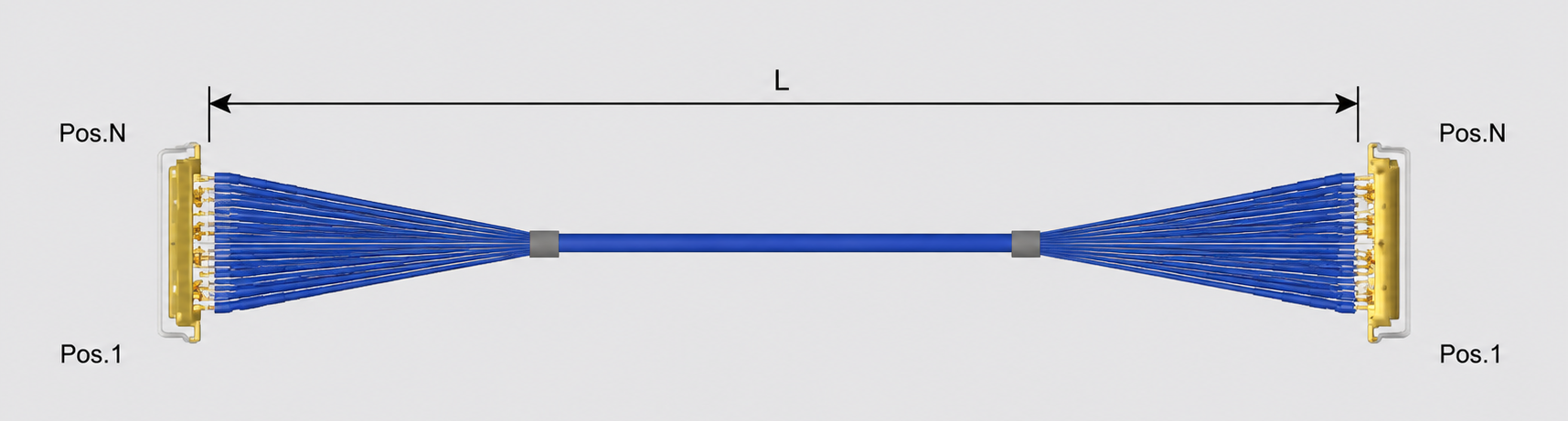
For the compatibility substitute of I-PEX 83011-100B-01-D, engineers recommend first checking if the connector matches when importing the substitute cable harness. The connector model used at the end of this product line is 20373-R14T-06, and it is also necessary to confirm the mating end, Pin count, and 0.4 mm Pitch structure. Secondly, confirm that the extremely thin coaxial cable uses AWG40 specification and check the impedance and transmission performance according to the high-speed signal requirements. Thirdly, confirm that the cable harness length is 200MM and the original product's 1-1 wire position definition. The official I-PEX CABLINE®-SS page also lists 1-1 cable harness models such as 83010 with 14 Pins and 100 mm length, 83011 with 200 mm length, and 83012 with 300 mm length, so purchasing personnel should pay special attention to not confuse the model, Pin count, length, and wire sequence when inquiring for prices. If the product is applied to structures with repeated movement such as laptop hinges, display modules, camera modules, etc., it is also recommended to add a bend life test during the sample verification stage and verify according to the actual bending radius, movement stroke, and number of cycles, rather than directly using a fixed "number of bends". Our company can provide the corresponding extremely thin coaxial cable harness compatibility substitute production plan based on the original factory model, drawings, or samples provided by the customer, and can match the length, Pin count, wire sequence, and cable material specifications.
“Without the consent or authorization of this site, no one shall reproduce, reprint, distribute, cite, change, broadcast or publish the content in whole or in part in any form, nor shall there be any other violation of the copyright of this site.