


Categorization:Harness Component
In notebook computers, display modules, industrial cameras, AI vision equipment, and high-speed computing devices, high-speed signals such as eDP, MIPI, DisplayPort, and USB4 place higher requirements on the signal integrity of cables. Therefore, when engineers select ultra-fine coaxial cables, they cannot simply judge based on "how many pins, how many millimeters," but should comprehensively confirm the signal type, transmission speed, impedance, wire diameter, pin count, wire sequence, connector, and wiring space. The product introduced in this article is the I-PEX CABLINE®-VS series ultra-fine coaxial cable, with product material number/model I-PEX 83066-100B-01-D, connector model at the cable end 20454-250T, and cable length 300MM. According to the corresponding PDF materials, this cable uses 50 independent Micro-Coaxial Cable AWG#40, 50Ω ultra-fine coaxial wires, both ends using the CABLINE®-VS Plug structure, and a 1-1 straight-through wire sequence. For engineers, these parameters determine whether the cable can match the specific high-speed signal chain and equipment structure; for purchasing personnel, it is the basic specification that needs to be emphasized when confirming original factory material number and looking for compatible alternative suppliers.
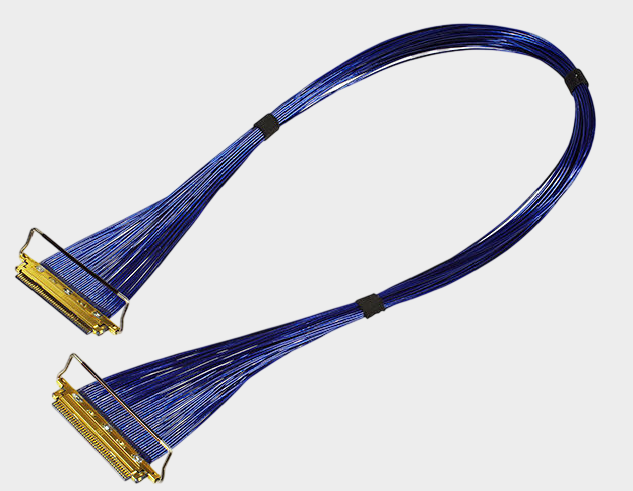
For high-speed signals such as eDP, MIPI, etc., the first step in selecting a cable harness should be to confirm the signal type and transmission rate, and then match it with the connector and cable material parameters. CABLINE®-VS is positioned for high-speed data transmission applications, and the high-speed transmission reference performance provided by the official documentation can reach 32Gbps/Lane, and involves high-speed interface applications such as DisplayPort UHBR20, eDP, MIPI, USB4, and Thunderbolt. For high-speed display signals like eDP, engineers should focus on the consistency of cable impedance, insertion loss, return loss, crosstalk, and the overall signal integrity after connector mating; for high-speed differential signals like MIPI, it is necessary to confirm the cable harness structure based on the specific interface version, Lane number, rate, and device Pin definition. Taking 83066-100B-01-D as an example, its 50Ω AWG#40 Micro-Coaxial Cable is suitable for high-speed signal connections, but in actual projects, it cannot be simply assumed that "connectors supporting eDP/MIPI are equal to all eDP/MIPI cable harnesses being interchangeable." It still needs to be verified based on actual rate, cable length, impedance, and system test results. Therefore, signal standards determine performance requirements, connectors determine interface matching, cable specifications determine the foundation for high-speed transmission, and cable harness structure determines the final assembly reliability. These factors need to be confirmed simultaneously.
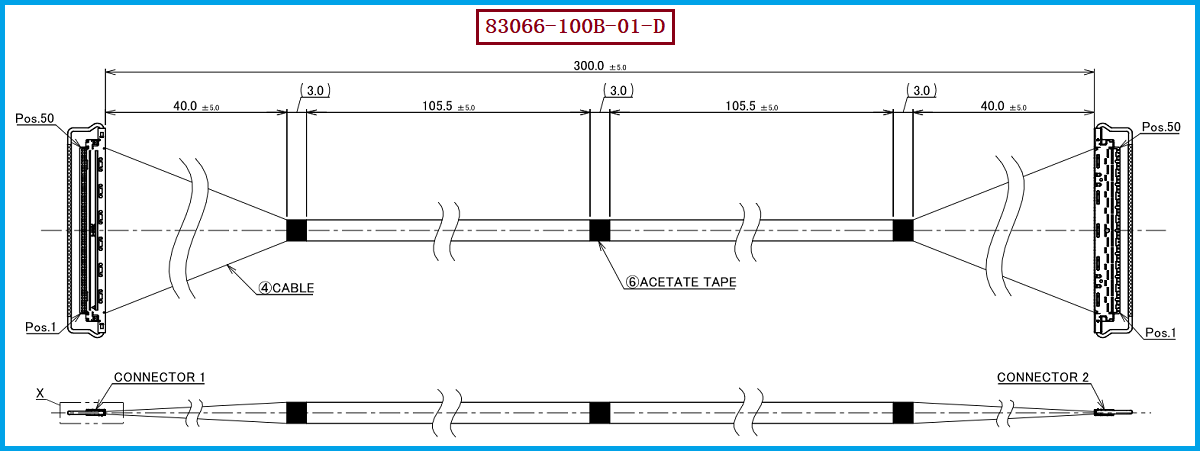
For projects requiring the import of alternative harnesses, it is recommended that engineers establish a complete specification baseline first before performing sample verification. The I-PEX 83066-100B-01-D corresponds to the CABLINE®-VS 50Pin harness scheme, with wire-end connectors as 20454-250T, length of 300MM, wire as AWG#40, 50Ω Micro-Coaxial Cable, and using 1-1 wire sequence. At the same time, it is also necessary to confirm whether the 0.5mm Pitch, horizontal plug-in structure, and approximately 1.0±0.1mm plug-in height of CABLINE®-VS are compatible with the device-end space. If applied to high-speed signal chains such as eDP, MIPI, etc., further verification of the signal integrity of the alternative harness should be conducted through TDR, insertion loss, return loss, crosstalk, and actual high-speed communication testing of the equipment. For purchasers, it is recommended to use the I-PEX part number, 20454-250T connector, 50Pin, AWG#40, 50Ω, 300MM, and 1-1 wire sequence as the core conditions for quotation and supplier specification confirmation, rather than just providing the "83066-100B-01-D" part number and letting suppliers judge by themselves. This can reduce the risk of mismatched materials caused by inconsistent specifications understanding among different suppliers.
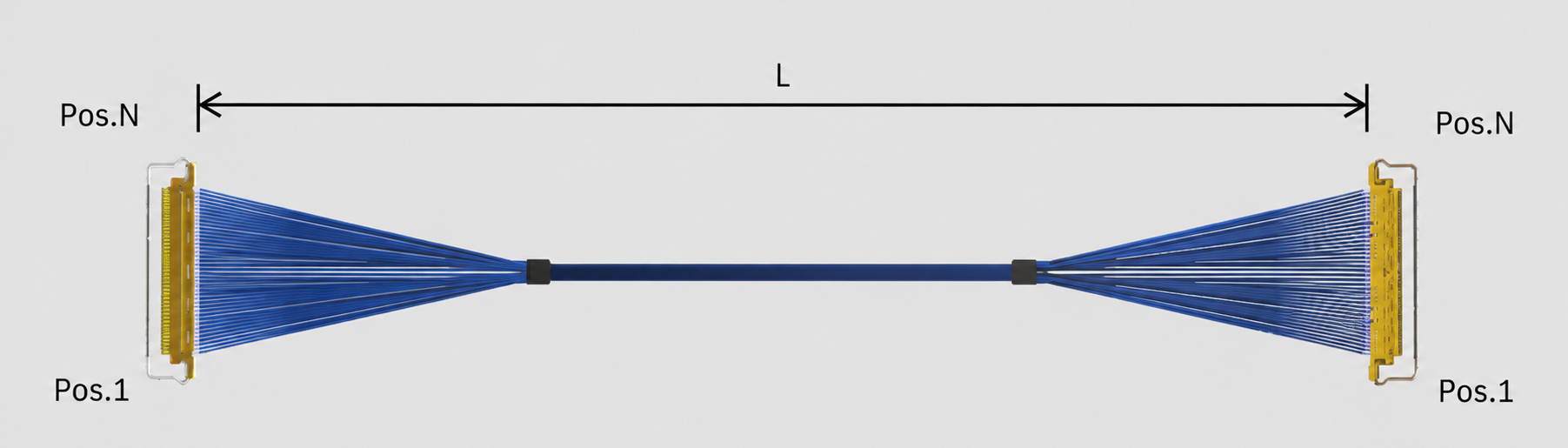
When I-PEX original cable harnesses require domestic substitution, second supplier introduction, delivery period optimization, or cost optimization, the substitution can be carried out according to the思路 of "connector compatibility + wire specification matching + structural size consistency + electrical performance verification". For I-PEX 83066-100B-01-D, the substitution plan should focus on confirming the CABLINE®-VS 50Pin structure, 20454-250T connector, AWG#40 Micro-Coaxial Cable, 50Ω impedance, 300MM length, and 1-1 wire sequence. At the same time, sample testing and installation verification should be combined with the customer's equipment eDP, MIPI, or other high-speed signal requirements. Our company can provide: I-PEX 83066-100B-01-D compatible substitute cable harness solutions, which can produce corresponding ultra-thin coaxial cables according to customer's actual project requirements, and produce corresponding production for wire specifications, connector matching, length, Pin number, wire sequence, and terminal processing structure. For engineers, it is recommended to focus on verifying high-speed signal integrity and mechanical assembly before substitution; for purchasing personnel, it is recommended to confirm sample recognition, batch consistency, delivery period, and supply capacity at the same time, and then proceed with batch introduction after technical verification is passed.
“Without the consent or authorization of this site, no one shall reproduce, reprint, distribute, cite, change, broadcast or publish the content in whole or in part in any form, nor shall there be any other violation of the copyright of this site.